
16.8K
Downloads
1455
Episodes
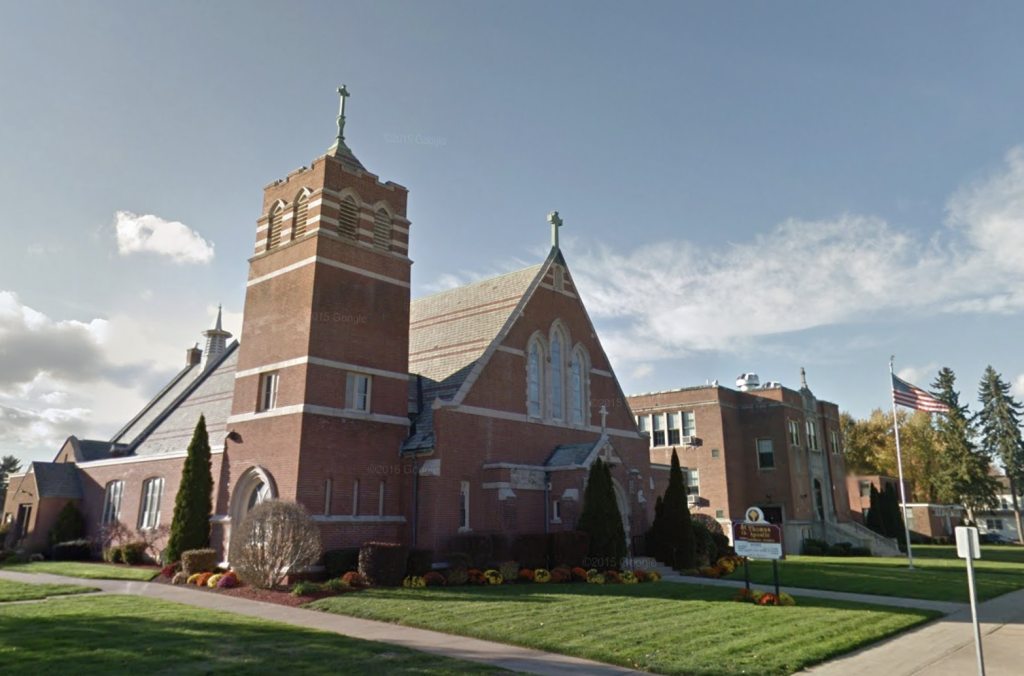
Podcast for St. Thomas of the Apostle Parish.
Episodes
Wednesday May 06, 2020
Wednesday May 06, 2020
We know from the Acts of the Apostles that Paul and Barnabas were sent forth to preach the Gospel of Jesus Christ. Of course, as Baptized people, we, too, are called to go forth to preach the Good News. And yet, here we find ourselves being told to stay home as a result of the COVID-19 Pandemic.
Although the current situation in our world does limit our activities, it doesn’t really limit us in our answering that call to go forth and to spread the Good News, In fact, because we have slowed down so much and we are not hampered by the busyness of the “old normal,” it may have opened up new ways and new opportunities to be present to others as ambassadors of God in sharing His love and mercy.
A phone call, a video chat, or sending a card or letter to someone with whom we may not have much contact when we are normally so busy, might be a good way to share the love and compassion of Christ. These people may be relatives or long-lost friends; they may be an elderly or sick neighbor who has no family or who may be alone most of the time.
To all of these, this may be a wonderful time to reach out with compassion and love and mercy and to let them know that we care and that we do so in the name of Jesus Christ.+
Tuesday May 05, 2020
Tuesday May 05, 2020
I once had a woman in her early sixties come up to me, clearly frustrated, and even a bit angry. The feelings were directed at her adult children who would no longer go to church and at her inability to convince them to practice their faith. She went on for several minutes about how she tells her sons and daughters that they must go to Church or they risk going to hell, and she told me about how she goes on and on about Church teachings, etc., etc. The longer she talked to me, the more frustrated she got and the louder she got. To be honest, after listening to her for a few minutes, I understood why her children didn’t want to go to church; I wasn’t sure I wanted to go to Church anymore!
What a contrast to the reception of the Apostles in the areas surrounding Jerusalem that we hear about in our reading from the Acts of the Apostles today. Despite being in fear for their lives, especially after the death of Stephen, they are out and about spreading the Good News. And despite the threats against those who converted to Christianity, the Apostles were winning them over.
What was at work there, which wasn’t at work for the woman who approached me about her adult children, was a sense of joy, a sense of commitment. Despite all the dangers and all that they had been through, they conveyed commitment by risking their lives to spread the Good News of Jesus; they exuded joy in their faith in Him. This joy was so evident and powerful to the people to whom they preached, that many of them couldn’t help but to joyfully and whole-heartedly accept faith in Jesus Christ.
All of us, as we know, are called to preach the Good News of our salvation in Jesus. Do we do so with a sense of joy or a sense of fear? Do we do so with a sense of the freedom of God’s children or with a sense of obligation? Do we do so with a spirit of the letter of the law or with a spirit that embraces the commandments of Jesus to love God above all things and our neighbor as ourselves? Do we do so with a sense of judgment or with the kind of mercy compassion Jesus showed when he ate with the sinner?
Let us pray for a spirit of commitment and joy that will truly attract others to our faith.+
Monday May 04, 2020
Monday May 04, 2020
Our Gospel reading describes Jesus as the shepherd of a flock. A shepherd’s role is to hold the flock together and to protect it from anything that could harm it.
The message is clear. We need Jesus in our lives. We need the power and the love of Jesus in our lives if we are to live as God asks us to live; if we are to live lives that are in accord with God’s will and if we are to live lives of faith, hope, and love. If we remove Jesus from our lives, we have no access to these wonderful gifts that God has given to us and we have no way to share them with others and thus fulfill our mission to spread the Good News to all those we meet.+
Just a reminder that St. Thomas has a daily Mass online that posts Monday through Saturday at 8 AM and our LORD’s day Masses post at 4 PM on Saturday and 8 AM on Sunday. The most recent Mass is always available to accommodate your schedule or time preference. Links to the Mass may be found by clicking any of these links:
Sunday May 03, 2020
Sunday May 03, 2020
In the course of everyday life, there are a lot of words that get thrown around without giving the true meaning of the word any real justice. One of those words is "hero."
Being a hero is not just being good at something, it’s not just doing good things, it’s not just sacrificing our time and our resources. Being a hero means doing these things even when one’s own health and safety and even when one’s very life is put in jeopardy; it means doing these things even when one is frightened because others need help.
Back on September 11, 2001, we had a close-up view of what it meant to call one a true hero. Watching firefighters, EMTs, police officers, and even ordinary citizens rushing into the two World Trade Center towers to do whatever they could, despite the risks, despite the dangers, despite their fears, was truly heroic, and many did pay with their lives
Today, we are once again getting a glimpse of what true heroism is. We see it in our first responders, once again, who go in and out of situations from which their lives can be in danger from the invisible threat of the coronavirus.
But we are also seeing what true heroism is in some places that we may not have seen it or recognized it before. We see it in essential workers who face the same invisible threat in their interactions with their co-workers and customers, and in going in and out of various environments. We see it in volunteers who are reaching out to help those most in need, despite the dangers of contracting the coronavirus.
Perhaps we see the true meaning of the word hero most, in this particular situation, in our healthcare workers, especially those working in hospitals and nursing facilities. These people are not only working incredibly hard to save the lives of those entrusted to their care; they also see, firsthand, the ravages of this insidious infection. They know exactly what may await them if they contract the coronavirus. And yet, they get up each day, don their uniforms, and bravely drive from their homes to their workplaces and, perhaps with a sense of dread, walk from their cars to the buildings, with that knowledge and fear of what may happen. And yet, they do it. That’s heroism. They work to heal their patients and, remotely, they work to give comfort and solace to the families and loved ones of the afflicted. That’s heroism with compassion.
Such is the voice of Christ, the Good Shepherd, assuring us of His peace and presence in every moment of our lives, calling us in the depths of our souls to compassion despite our own anxiety, to forgiveness despite our own hurts, to justice despite our own suffering, to healing despite our own woundedness, to giving strength despite our own weakness, and to generosity despite our own needs.+
Saturday May 02, 2020
Saturday May 02, 2020
The conversations in today’s Gospel passage follows Jesus’ assertion that whoever eats His flesh and drinks His blood will have eternal life.[1] This was simply too much for some of His followers and they left. In leaving, they were, perhaps, like the seed that fell on the path, the rocky ground, or among the thorns. Their faith wasn’t strong, and their interest in Jesus’ message was gone.[2]
In response to Jesus’ subsequent question to the Twelve as to whether or not they would also leave Him, Peter makes a profound statement of faith: “Master, to whom shall we go? You have the words of eternal life. We have come to believe and are convinced that you are the Holy One of God.”[3]
For someone with that strength of faith, there would be no reason to leave Jesus; there would be no reason to look elsewhere, despite the distractions, despite the challenges and difficulties that often come with being His followers, for, in Christ, we have everything we truly need.
Perhaps a prayer of St. Julian of Norwich might also be ours. I often begin my day with this prayer: “God, of your goodness, give me yourself, for you are enough for me, and I can ask for nothing which is less which can pay you full worship. And if I ask for anything else, always I am in want; but in you do I have everything.”[4]
[4] Julian of Norwich, Showings, 1978, Paulist Press, New York, NY, p. 184.
Friday May 01, 2020
Friday May 01, 2020
Go out to all the world and tell the Good News.
The refrain from our Responsorial Psalm today is the basic command to all the Baptized: to go forth to the world and share with others the Good News of our salvation in Christ, the Good News of the Gospel, the Good News of our mission as ambassadors of the healing presence of Jesus in world.
Our first reading tells us the story of Saul, (later Paul) on the road to Damascus. He has a terrifying encounter with Jesus that leaves him traumatized. In his recovery, he hears all about Jesus, and, as soon as he feels better, he begins to tell the Good News with great zeal, and he would do so for the rest of his life.
May we, too, fulfill that call with energy, dedication, and faithfulness to the responsibility that is ours as Baptized members of Christ’s Body, the Church.
Thursday Apr 30, 2020
Thursday Apr 30, 2020
In our first reading today, a devout pilgrim from Ethiopia, returning from a pilgrimage to the Jerusalem temple, stopped to read the Scriptures and was very touched by a passage in Isaiah. This led him to ask questions, which led to his receiving Baptism into the Church at the hands of Philip. Then, in the gospel passage, Jesus promised the bread that He would give for the life of the world; a clear reference to the Eucharist. God’s Word, Baptism, and Eucharist are strongly present in our readings today; each of them plays a part in nurturing the followers of Jesus.
In most parishes, the usual sequence is Baptism, God’s Word, and then the Eucharist. Most of us were baptized as infants; then introduced to Jesus through the gospels, with pieces of the Acts of the Apostles and the letters of St. Paul, and the great texts of the Jewish Scriptures. This led to our receiving Holy Communion. For the baptized, the connection between Word and Eucharist remains very strong.
At every Mass, we first have the Liturgy of the Word, and then the Liturgy of the Eucharist. The Word nourishes our faith, and it is out of that nourished faith that we come to the Eucharist. The bread of the Word prepares us for the bread of the Eucharist. The bread of the word is a necessary first course, as it were, preparing us to receive the Eucharist well.+
Wednesday Apr 29, 2020
Wednesday Apr 29, 2020
The deacon Philip shared the gospel with the people of Samaria and was warmly welcomed. In Luke’s first volume, Jesus tried to speak to the Samaritans, but they rejected Him because He was heading for Jerusalem. But later on, after hearing it from the lips of the cheerful and open-hearted Philip, they welcomed His gospel with great joy. God’s word can blossom even where it was first rejected. Even though we may turn from the Lord at times, He never turns His back on us. Indeed, we have Jesus’ own word that “I will not reject anyone who comes to me.”
Easter celebrates the total faithfulness of God to His Son Jesus, and to all of us. This encourages us to trust in Him; even after we have, in some ways, rejected Him, He will never reject us. Though we often fail to respond to the grace of Jesus Christ, He still gives Himself to us as the Bread of Life and continues to promise that if we come to Him, we will never hunger, and if we believe in Him, we will never thirst.+
Tuesday Apr 28, 2020
Tuesday Apr 28, 2020
Just as Jesus said, “Father, into your hands, I commend my spirit,” so Stephen prayed, “Lord Jesus, receive my spirit.” And then he prays, “Lord, do not hold this sin against them.” The message is that the attitudes of Jesus should be reproduced in His followers. The Risen Lord continues living in and through us, who are His followers today. Because He wants us to live by the guidance of His spirit, He invites us to receive Him as our Bread of Life. We hear him say, “I am the bread of life; whoever comes to me will never hunger.” Our coming to Jesus in the Eucharist gives us the spiritual nourishment and strength we need to live by His example.+
Monday Apr 27, 2020
Monday Apr 27, 2020
In today’s gospel passage, Jesus makes a distinction between bread that quickly grows stale and the bread, the food, that lasts into eternal life. He had fed the people with bread and fish since physical hunger had to be satisfied, but as they continued looking for more food to eat, He invited them to think of spiritual food that would satisfy their deeper desires. He came not just to feed people physically, but to give them the spiritually nourishing food of God’s own presence.
He reminds us that, while we do need material things because we are material beings, our searching must go deeper; there is more to life than satisfying our physical needs. We have a deeper, spiritual hunger that must be satisfied if we are to live our lives fully and be at peace with ourselves and with others.
Jesus Himself is the one who offers us the food of eternal life. He can satisfy the deepest hunger of our hearts. Our seeking must ultimately be directed towards God because, as St. Augustine said, “Our hearts cannot rest until they rest in God.”+