
16.8K
Downloads
1454
Episodes
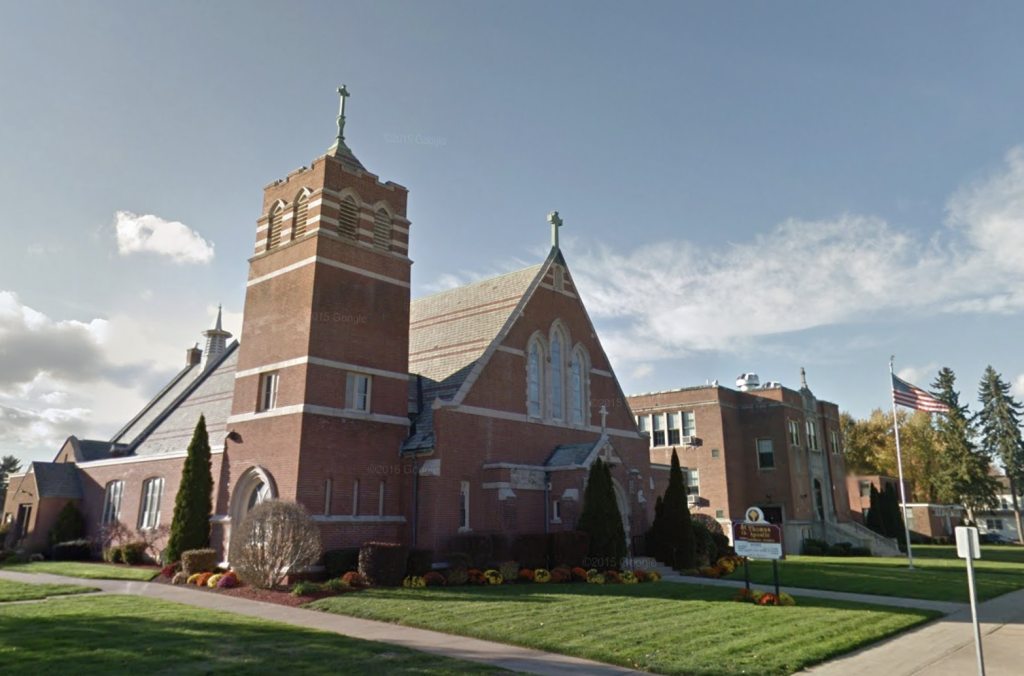
Podcast for St. Thomas of the Apostle Parish.
Episodes
Monday Jul 06, 2020
Monday Jul 06, 2020
In today's Gospel passage from Matthew, we have seen two people in need of help approaching Jesus, one of them a synagogue official who begs for help on behalf of his daughter, and the other, a woman suffering from bleeding, who comes to Jesus on her own behalf. The way these two people approach Jesus is quite different. The synagogue official approaches Jesus in a very public way, bowing low in front of Him and speaking his need and his request in a way that all can hear. The woman approaches Jesus secretively, just touching the tassel on His cloak, and talking only to herself, hoping that things might change for the better.
No two of us approach the LORD in the same way. Our way of relating to Jesus always has a quality that is unique to each of us personally, just as we each have a unique way of relating to other people. Both the synagogue official and the woman were people of faith, but they had different ways of expressing their faith. Our faith brings us together as a worshipping community, but in doing so, it does not suppress our individuality.
We see that, although the two approached Jesus in different ways, He responded generously to the needs of both. He made no distinction between them but was equally responsive to their need and their cry for help. God's response to us is always shaped by and respectful of the unique way that each of us approaches Him in our need.+
Sunday Jul 05, 2020
Sunday Jul 05, 2020
We feel burdened for all kinds of reasons: being overtired, overworked, a marriage in trouble, ill health, the stress of the pandemic, and numerous other difficulties in our lives.
Jesus spoke words of hope to people burdened by the demands of the Jewish Law, for in failing to observe them, they often felt marginalized. He did not offer them a new law. Instead, He offered Himself as their guide to life. He called them to learn from Him. “Come to me,” He said, and “learn from me.” We learn from His example as well as His words. His teaching is clearly visible in who He was (and is) and how He lived.
To learn from someone, we should spend time with them. In saying, “Come,” Jesus is saying, “Come and stay.” Jesus invites us into a friendship with Him. It is in being with Him that we learn to live as we ought to live. If we come to Him and remain with Him, we will find that his yoke is easy, and his burden is light.
The way of the Gospel is demanding, but our relationship with Jesus makes it much less demanding than it would otherwise be. St. Paul assures us that God’s power at work within us is “able to accomplish immeasurably far more than all we can ask or imagine.” It is by remaining in Jesus, as branches in the vine that our lives will flourish and bear much fruit.+
Saturday Jul 04, 2020
Saturday Jul 04, 2020
“No one patches a cloak with an unshrunken patch” and “New wine in new wineskins!” In these two verses, the Gospel today gives two different, yet similar sayings of Jesus, the patch of new cloth on an old cloak and the new wine in new skins. These examples are Jesus’ way of pointing out the main problem with the religious authority of his time, they were unwilling to change their ways – even to everyone’s detriment. A patch of new cloth is not put on an old cloak, because when it is washed, the new piece of cloth shrinks, pulling on the old cloak and tearing it. Instead of the cloth fixing the whole, the tear actually becomes bigger. Jesus’ second example is similar. No one puts new wine in old skins, because when the new wine ferments it will tear the old skins, causing them to burst and spilling the wine. It is always better to put new wine into new skins! The religion defended by the religious authority of the time was like the piece of old cloth or like the old wineskin, weak and prone to tear and fall apart.
Both the disciples of John the Baptist and the even the Pharisees tried to renew the religion and renew people’s beliefs. However, they simply put patches on it, and because of this, they ran the risk of compromising and harming both the new and the old uses, the old religion they were trying to renew, and the renewed religion itself. The new wine which Jesus brings to us, through his life, death, and resurrection causes the old skins not only tear but to burst. Jesus is not against what is “old,” but he does not want what is old to be imposed on that which is new and prevent us from moving forward and being renewed in our faith and our relationship with Him.+
Friday Jul 03, 2020
Friday Jul 03, 2020
Today, we celebrate the feast day of our parish’s patron saint, St. Thomas the Apostle.
We first hear from Thomas in John’s Gospel after the death of Lazarus. Some of the Apostles give voice to their fears about going with Jesus to Judea to visit the sisters of Lazarus. Thomas, says, “let us also go, that we may die with Him.”
Next, we hear from Thomas after Jesus explained that he was going to His heavenly Father and that, one day, the Apostles would join Him there. Thomas responded, saying, LORD, we do not know where you are going; how can we know the way?”
And we also hear from Thomas in the scene for which he is perhaps best known when he doubted that Jesus had risen from the dead and said he would not believe until he saw and touched the wounds of Jesus, which he did during a subsequent appearance by the Risen LORD. He is so well-known for this scene that people who are skeptical are often called “Doubting Thomases.”
Thomas had much more to say during his lifetime. He traveled to India and preached the Gospel, establishing seven churches before being martyred in 72 AD. It is also believed that he traveled to China and, possibly, to Indonesia.
As our patron Saint, let us pray asking St. Thomas' intercession, that our faith may be strong and that we may follow wherever the LORD calls.+
Thursday Jul 02, 2020
Thursday Jul 02, 2020
Mary Hedges was in a New York mall with her 13-year-old son, shopping for Halloween candy for underprivileged children, when two teen boys, performing a prank, dropped a shopping cart off a railing that came crashing down on her where she stood fifty feet below. Mary spent months recovering from a devastating brain injury and she lost sight in her left eye.
Several months later, while still dealing with her injuries and daily therapy sessions, discussing the boys who dropped the shopping carriage on her, she said that she wished them well and that she felt sorry for them. She acknowledged that the boys had some issues but seemed concerned about their welfare.
Mary Hedges’ story is a good one for us to hear today as we reflect on our Scriptures for the day. Indeed, Jesus points out that it is difficult to forgive the sins of others that have been committed against us; it can be difficult, too, to forgive the sins that people have committed against others, especially against those whom we love most.
Yet, this is what we are called to do. A lack of forgiveness is, itself sinful in nature; it may be a natural response to particular offenses, but we are called to free the other person – and ourselves – by our forgiveness.
Jesus came to earth that we might be forgiven by God for our transgressions. In response, people who felt threatened by His message put Him to death. And from the Cross, as He took His final breaths, He showed us how to forgives when He said, “Father, forgive them, for they know not what they do.”
St. Paul tells us to “be kind to one another, compassionate, forgiving one another as God has forgiven you in Christ.”+
Wednesday Jul 01, 2020
Wednesday Jul 01, 2020
Our Gospel reading today tells us an unsettling story about two people who were possessed by demons. They were very much out of control and prevented people from going into their area. They were more dead than alive, as is indicated by their living among the tombs. They were the absolute outsiders. Yet, Jesus engaged with them, and, as a result of their encounter, they were healed and their relationship with their community was restored. Having just calmed a storm at sea, Jesus calmed the storm in the minds and spirits of the two people who were possessed.
Hopefully, we may never be as troubled as the two people we just heard about, but we can all find ourselves out of sorts from time to time; out of sorts with ourselves and with others, feeling only half alive within ourselves, tossed and thrown about. It is then that we need to come before the LORD as did the people in the Gospel.
Their initial approach to the LORD was quite aggressive; it was full of anger, “What have you to do with us, Son of God?” Perhaps, when we are distressed, that can also be our starting point when we come before the LORD in prayer. Yet, He is never put off by our disturbance within. If we let Him, He will pour His peace into our hearts; He will calm us as He calmed the storm.+
Tuesday Jun 30, 2020
Tuesday Jun 30, 2020
In our Gospel reading today, we hear about a storm on the Sea of Galilee, which was sudden and unexpected. Sometimes our circumstances can change suddenly too. Without warning, we can suddenly find ourselves in some overwhelming crisis. If yesterday all seemed well, but today we are in crisis, then today’s Gospel passage has a vital message for us.
Matthew’s account of the storm links it more closely to his Church experience than Mark’s original version of this story. The shouted prayer of the disciples, “LORD, save us! We are perishing!” echoed the needs of St. Matthew’s readers. It is the cry of us all at some time in our lives. The message is that the LORD is near. Our desperate prayers for help will not go unanswered. The LORD is stronger than any storm that may threaten us, and in calling out “LORD, save us!” we will not be without help.+
Monday Jun 29, 2020
Monday Jun 29, 2020
What made St. Peter stand out from the other disciples was his divinely inspired awareness of the identity of Jesus as Messiah. It was because of this unique insight that Jesus gave Peter a unique role among His followers. He was to be the “rock” on which Jesus would build His Church. It was a very significant role for Jesus to give to any of His disciples. St. Peter’s position was further marked by Jesus giving to him “the keys to the Kingdom of heaven.” The image of the keys implied authority; the nature of that authority was expressed by Jesus in terms of binding and loosening. St. Peter received the task of authoritatively interpreting the teaching of Jesus for other members of the Church. Yet, this same Peter would try to deflect Jesus from taking the way of the Cross, and when Jesus did take that way, St. Peter would deny Him. Jesus gave a significant role to someone who remained very flawed.
Scripture associates teaching with St. Peter and preaching with St. Paul. St. Paul was the great preacher of the Gospel to the pagans throughout the Roman Empire. He preached it for the last time further west, in the city of Rome, where, like St. Peter, he was martyred for his faith in Christ. In a very moving text, probably written from prison in Rome, St. Paul wrote: “I have competed well; I have finished the race; I have kept the faith.” The image of the competition and the race suggests that “keeping the faith” was a struggle for St. Paul; it did not come easy for him, just as keeping the faith did not come easy for St. Peter.
Keeping the faith does not always come easy to any of us. St. Paul’s words show that he was very aware that keeping the faith was not due primarily to his efforts; it was the LORD who enabled him to keep the faith. He said, “The LORD stood by me and gave me strength.” It is the LORD who strengthens and empowers all of us to keep the faith; His faithfulness to us enables us to be faithful to Him; His faithful love encourages us to keep returning to Him, even after failure. The faithful witness of Saints Peter and Paul speak to us ultimately of the LORD’S faithfulness to us all.+
Sunday Jun 28, 2020
Sunday Jun 28, 2020
There is a sad scene in the movie American Anthem. It shows a young man who cannot accept the fact that he has lost one of his legs in an accident. The young man refuses to leave his room, and he tries to keep everyone out of it, including the young woman that he once admired and loved. He keeps the blinds pulled down and sits alone in his darkened room, playing music.
Now, contrast that scene with another scene. A friend of mine, Franciscan Sister Carla, lived in a small town in Virginia. She spent each day visiting with townsfolk, always smiling, always doing things for the poor and the needy. Even into her seventies, she continued to work 12-14 hours a day. Surprisingly, she had severe diabetes, and, like the young man in the movie, she had lost a leg. She frequently suffered infections in the remnant of her leg and was often in a wheelchair, but she was always on the go, and she was an eternal optimist.
Both of these scenes illustrate, in a moving way, one of the things that Jesus talks about in today’s Gospel reading when he says: “Whoever does not take up his cross and follow after me is not worthy of me.”
Without minimizing the difficulty, the young man in the movie endured, we look to the different responses from him and Sr. Carla, both of whom bore the same struggle or cross. And it’s this difference at which we look.
The young man, in his anguish, refused to take up his cross and follow Jesus; he refused to accept his new situation of having to face life with a prosthetic leg. His refusal brought deep sadness not only to him but to all those around him.
Sr. Carla had taken up her cross. She accepted her situation (although she would indeed have found it better to have two legs), and her acceptance brought deep peace not only to her but to everyone around her. She chose to focus not on her lack of a leg but on what she was called upon to do for others as a Christian.
All of us can relate to the situations of the young man in the movie and Sr. Carla. We, too, have experienced setbacks, sufferings, or tragedies in our lives. We, too, have experienced painful situations that we could not change. We, too, have faced the agonizing choice of how to respond to those situations. And, we have seen similar cases where one person comes away from a setback being very bitter and another person comes away being much better.
This raises a very significant question for us: Why is it that, for some people, a difficulty, a setback, or a tragedy is a stumbling block while, for others, the same situation is a steppingstone?
For an answer, I look to the late Dr. Viktor Frankl, who addressed this question in his book Man’s Search for Meaning. In the book, Dr. Frankl discussed his experiences as a prisoner of the Nazis in a concentration camp. He experienced firsthand the brutal climate in the concentration camp, which turned some prisoners into mean, bitter people, and others into saints. He experienced firsthand the evil that drove some prisoners to despair and hatred and others to hope and love.
Frankl said that the difference between these two responses was faith. This faith, he said, put the people who experienced it in touch with a power that helped them maintain their humanity even in the face of incredible inhumanity.
This brings us back to our original question: What gave my friend Sr. Carla the courage to roll her wheelchair through the streets of Middleburg, Virginia, greeting everyone with a smile, feeding the hungry, clothing those with little or no money, giving hope and encouragement to the downtrodden, while another person in the same situation could not find the courage to roll up the blinds and let in the light of day?
The answer is the same one that Dr. Frankl gave in his book: It is faith.
For the Christian, it is faith that, as Jesus brought new life into the world by taking up His Cross and carrying it, so we can bring new life into the world by taking up our cross and carrying it. It is faith in God’s word to us in today’s second reading, that just as we were buried with Christ in baptism, so we will be raised to new life with Him because of that same baptism. It is faith that, despite all the setbacks we endure in life, God has a purpose for each one of us, and God will help us to attain that purpose come what may.
Jesus’ agony and death could have been viewed as the death knell of Christianity, but, instead, it was just the beginning. From that pain and suffering and sacrifice sprang forth our salvation.
Let us pray for the faith and hope we need to move with and through our setbacks and obstacles and tragedies, so that we may live and love as God has called us to do.+
Saturday Jun 27, 2020
Saturday Jun 27, 2020
Whenever Jesus encountered a sick person, his compassion became immediately evident. The one needing help might be a foreigner, even an officer of the hated Roman force, or a leper, a poor widow, a person possessed by a demon roaming the countryside or someone he knew, like Peter’s mother-in-law. Regardless of the person’s nationality, gender, social level, mental or moral condition, what mattered was their obvious need, which touched his heart.
Jesus looked for trusting faith as the only condition for a cure, an attitude that was absent among many people, especially the religious leaders of the time. Through his miracles he came to be known most of all as a man of compassion, reaching out to suffering people. Jesus became “accustomed to infirmity” because the sick gravitated towards him. Jesus healed the sick and the possessed throughout his ministry. Each place he went he revealed God’s power through his ministry of healing.
Jesus stood within a long biblical tradition, in which people devoted to God showed mercy to strangers and sinners, the sick and defenseless. In the 1st Reading from the Book of Lamentations, we hear expressed the emotional grief at the destruction of the Davidic dynasty. In response to the ruin of the Holy City he prays, “Pour out your heart like water in the presence of the Lord; Lift up your hands to him, for the lives of your little ones.” This plea not only describes the healing ministry of Jesus but also the innermost feeling of the eternal Father throughout the Old Testament.
In our own times of sickness, both physical and spiritual, we ask for the Lord’s healing presence in our lives. We pray for his healing presence in our world as well, as we suffer from so many ills and hurts. Please, Lord, give us the strength to bring your healing presence into the world through all that we do and all that we say.+