
16.8K
Downloads
1455
Episodes
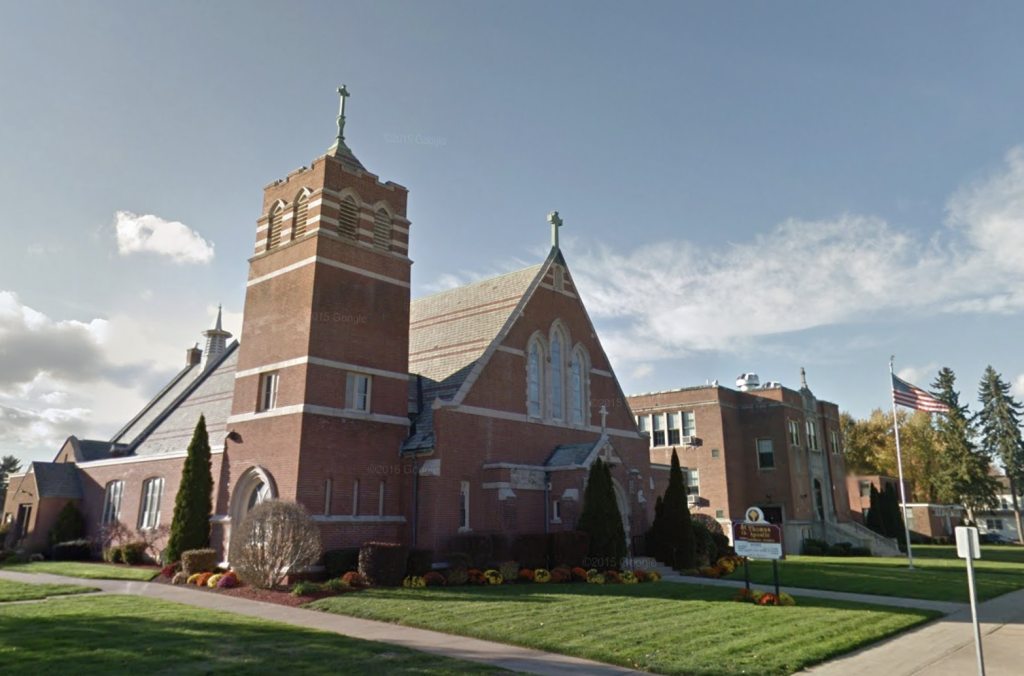
Podcast for St. Thomas of the Apostle Parish.
Episodes
Sunday Apr 26, 2020
Sunday Apr 26, 2020
We just heard about two distraught people from nearly 2,000 years ago. Consider the following scenarios from our own time:
A mom and dad rush their child to the hospital in the middle of the night. They’ve done everything they know to help their child, but the baby’s fever simply won’t subside. It’s a long night of waiting; trying not to think about the worst. It’s a night of second-guessing and desperate prayer. From the nursery to the hospital, from the emergency room to the waiting room – this young mom and dad walk that long road to Emmaus.
While not a complete surprise, it was still a terrible blow. Her job was one of the many that were eliminated in the merger of two companies. There would be a modest severance package and some help in finding a new job. But, to find a new job in her line of work at a comparable salary will mean a move to another city. Either that or she will have to retrain for a whole new career. And so, she begins her journey along that long road to Emmaus.
He had taken off a year of school to work on the campaign. He believed in what the candidate stood for. He believed in the political process. He believed in the principle that one person can make a difference. But, after a brutal campaign, his candidate lost. The idealism of this young man took a severe beating as he saw just how horrible, cruel, and ugly politics can be. He felt lost and didn’t know what would be next in his life. Thus, he began his journey down that long road to Emmaus.
Every one of us has walked that long road that the two disciples walked along on that first Easter night so long ago. It is the road of deep disappointment, sadness, despair, and anger. It is, certainly, a road that many, if not all of us, are walking down right now as we make this uncertain journey through this Pandemic.
But God assures us in His Easter promise that, as we travel those roads, we will see Him; He will greet us and make Himself known to us.
If our eyes, that is, the eyes of our souls, are open, we will meet Him in Jesus. Jesus who is present in the compassion and generosity of others; Jesus who is present in the breaking of the bread and the healing touch of others; Jesus who is present in the grace and the wisdom of His Spirit who is always in our midst.
We pray this day and always that our hearts and consciences will be open to behold the presence of Christ, our constant companion, along the many roads we walk to Emmaus.+
Saturday Apr 25, 2020
Saturday Apr 25, 2020
Today, the Church celebrates the Feast of St. Mark the Evangelist. We don’t know a lot about St. Mark. We know that he was not one of the original 12 Apostles, but he certainly knew them. There is a strong suggestion that, as a young boy, he was present at and witness to Jesus’ arrest in the Garden of Gethsemane.
Mark’s Gospel is the first of the four gospels. It is the shortest and is more to the point than the other three gospels of the New testament.
Today’s passage from St. Mark’s Gospel, tells the story of the Apostles going forth to continuing Jesus’ mission on earth. This mission is not just for some; Jesus commissions all of us to go forth and spread His message of love and mercy to all people. By virtue of our Baptism, we are all ambassadors of God’s action in our world.
Let us pray that we, like the Apostles, will take seriously the command to go forth and preach the Good News by our words, actions, and attitudes.+
Friday Apr 24, 2020
Friday Apr 24, 2020
Today’s Gospel tells a well-known story of Jesus feeding a large crowd with just five barley loaves and two fish and having twelve wicker baskets of leftovers when it was all done.
There’s a rather important detail to this story that is often overlooked. Where did Jesus get the five loaves and two fish with which he performed the miracle?
He got them from a small boy. The boy didn’t have much, but he gave what he had, and the LORD did all the rest.
There is an important truth in that detail: God relies on our cooperation in order for His will to be carried out. We need to offer our gifts, as meager as they may seem, and God will take our actions, our talents, our efforts, and make great things of them, especially when it comes to feeding the poor, finding shelter for the homeless, caring for the sick, standing up for the oppressed, bringing God’s love, mercy and providence to those who need it the most.
Let us pray that we will always be willing to use our gifts and talents for the good of others, trusting in the grace of God to complete our mission on earth.+
Thursday Apr 23, 2020
Thursday Apr 23, 2020
Our Scripture passage today presents us with a challenge that we face every day: the challenge to turn away from the expectations of the world and, instead, to follow the expectations of God; to obey the will of God rather than the whims of humanity.
The Apostles stand firm in their adherence to what Jesus asked them to do, even in a situation in which their safety and their lives were in danger.
Our challenge, too, is to stand firm in our obedience to God; to proclaim the truth of God’s love and of our redemption in Christ, even when the world doesn’t want to hear it; even when we are threatened, if not physically, then socially.
Let us pray that we will have the same courage as the Apostles and keep our eyes fixed firmly on heaven.+
Wednesday Apr 22, 2020
Wednesday Apr 22, 2020
We are noticing a stretch in the evenings these days, with daylight extending well beyond 7:00 PM. Most of us are pleased to know that daylight is lengthening every day at this time of the year. Our heart sinks a bit in Winter when we see how the days grow ever shorter. Even though most of us like the light, the gospel passage from John notes a sense in which people prefer darkness to light.
However, John is referring not to natural light, but to the One who is the “Light of the World:” None other than Jesus Himself.
Jesus declares that all who live by the truth come out into the light. All who seek the truth are already standing in the light of God’s grace, even though they may not be aware of it. People of faith, those who seek to be guided by the light of Christ, will always have something very fundamental in common with all who seek the truth with sincerity of heart.+
Tuesday Apr 21, 2020
Tuesday Apr 21, 2020
In today’s gospel passage, Nicodemus, a well-educated person, strong in his beliefs, seems flabbergasted in his conversation with Jesus.
His conversation with Jesus is a challenge for him because what Jesus is saying doesn’t fit with what he holds as truth. In response, Jesus encourages him to let the Holy Spirit dwell in him, that he may be reborn.
So often, we are told to surrender ourselves to the Spirit. In today’s passage though, Jesus is not asking us to surrender but to open minds and hearts to the Spirit. He is not asking us to give up anything but simply to “listen” to the Spirit.
Our relationship with God is just that: a relationship. That means we take an active part, both in speaking and in listening. It is in this relating to the Spirit that we understand who and what God is in our lives and in our souls, and who we are to God.
So, let us pray that we will truly open ourselves to the Holy Spirit in our lives, so that we may truly come to know God and keep Him in our awareness as an ever-present and influential reality in our lives.+
Monday Apr 20, 2020
Monday Apr 20, 2020
Many different kinds of people meet with Jesus in the progression of John’s gospel. In today’s passage, Nicodemus comes to Jesus by night. He was a Pharisee, a member of that group who is always hostile to Jesus. Yet, here was a Pharisee who stood apart from his peers. He was fascinated by Jesus, and he allowed himself to be drawn to Jesus, even though it meant going against his peers. His first approach to Jesus was cautious, coming to Jesus in the darkness of the night. His last appearance in John’s gospel is much less cautious; along with Joseph of Arimathea, he ensures that Jesus is given a dignified burial.
Nicodemus journeyed closer to Jesus in the progression of John’s gospel. His story encourages us to make growth in our own relationship with Jesus, even when that means going against our culture.
Even if our relationship with the Lord seems cautious at times, Nicodemus’ story encourages us to believe that it can become less so. Jesus’ words to Nicodemus in today’s gospel remind us, however, that our growing towards the Lord is not just our own doing; it is also the work of the Holy Spirit in our lives. Jesus proclaims that we need to be born of the Spirit to enter the kingdom of God.
As a sailboat needs the wind, so we need the Holy Spirit at our back if we are to make our way towards the Lord. That Spirit is available to us all. The season of Easter is a good time once again to invite the Spirit into our lives.
Just a reminder that St. Thomas has a daily Mass online that posts Monday through Saturday at 8 AM and our LORD’s day Masses post at 4 PM on Saturday and 8 AM on Sunday. The most recent Mass is always available to accommodate your schedule or time preference. Links to the Mass may be found on our website stthomaswestspringfield.org or on our Facebook page: www.facebook.com/stthomas01089
Sunday Apr 19, 2020
Sunday Apr 19, 2020
Author Max Lucado tells the story about a newspaper article about Chippie the Parakeet:
One day, Chippie was sitting peacefully in his cage. One minute he was there and the next minute he was gone.
It was time for Chippie’s owner to clean his cage and she decided that a more efficient way to do it was with a vacuum cleaner. Just as she stuck the neck of the hose into the cage, the telephone rang. Without thinking, she turned to answer the phone and she heard a terrible sound. Chippie had been sucked into the vacuum cleaner. In horror, she dropped the phone. She opened the vacuum cleaner bag and was relieved to see that Chippie was still alive, albeit quite dazed.
Since the bird was covered with dust and everything else that was in the bag, she picked him up and ran to the bathroom where held him under running water from the faucet to clean him off. She saw that Chippie was sopping wet and cold, so she grabbed the hairdryer and let the poor bird have it until he was dry.
Later that week, the reporter who had written about it, contacted Chippie’s owner to see how the bird was doing. “Well,” she said, “Chippie doesn’t sing much anymore; he just sits and stares.” [1]
It may be that we often feel like poor Chippie –disheartened, disappointed, distrustful. The optimism and joy of our youth can, if we are not careful, be replaced by cynicism, doubt, and scornfulness.
It is easy to understand the reaction of Thomas in today’s Gospel when he hears the shocking news that Jesus had risen from the dead. But the empty tomb calls us to move beyond our fears, sorrows, anger, and doubts in order to awaken the possibilities for resurrection along our journey to the Easter promise as well as the completion of that journey.
As Thomas experiences, Easter transforms our crippling sense of skepticism and cynicism into a sense of trust and hope in the providence of God.
Life will give us many reasons to have doubts about the goodness of human nature and life in general. But Jesus’ Resurrection and our annual celebration of this season of hope, give us reason to turn our sorrows into joys, our despair into hope, and our defeats into triumphs of faith.
Let us pray that this Easter season will be an opportunity for us to turn to God with our difficulties and ask God, with open hearts, to transform our lives through the joy of this season.+
REMINDER: St. Thomas has a daily Mass online that posts Monday through Saturday at 8 AM and our LORD’s day Masses post at 4 PM on Saturday and 8 AM on Sunday. The most recent Mass is always available to accommodate your schedule or time preference. Links to the Mass may be found on our website stthomaswestspringfield.org or on our Facebook page: www.facebook.com/stthomas01089
[1] Lucado, Max, “In the Eye of the Storm,” Thomas Nelson (HarperCollins Publishing), 2012.
Saturday Apr 18, 2020
Saturday Apr 18, 2020
Just as the Sanhedrin had scoffed at the idea that Jesus could be the Messiah, they disputed that he had risen from the dead. For them to believe this would mean a total reinterpretation of their traditions. Yet two humble fishermen, Peter and John, stood before the Council maintaining that the crucified Jesus was alive again, and now on the earth as a living influence for healing and renewal. In defiance of the Sanhedrin’s formal prohibition, they risked their own lives by making this statement. The message, though was far too important to be repressed by any merely human authority.
The Risen Christ rolled away more stones than the one blocking the entrance of his tomb. He flung wide the doors to the future and offered a glimpse of what lies beyond.
Like the disciples, we are called to accept that Jesus truly is our Savior. He casts new light on life and lets us reexamine all that we believe.
Are we willing to allow his love to shine brightly on our minds and hearts? If we trust in our hearts that He has risen, our lives will be energized by this faith.+
REMINDER: St. Thomas has a daily Mass online that posts Monday through Saturday at 8 AM and our LORD’s day Masses post at 4 PM on Saturday and 8 Am on Sunday. The most recent Mass is always available to accommodate your schedule or time preference. Links to the Mass may be found on our website stthomaswestspringfield.org or on our Facebook page: www.facebook.com/stthomas01089
Friday Apr 17, 2020
Friday Apr 17, 2020
After a night of fishing with nothing to show for it, the disciples are pretty dejected. In the morning, Jesus shows up on the shore. He takes the initiative and meets the disciples in the early morning light. He invites them to eat, saying, “Come and have breakfast.” He has placed before them an abundant table full of fish and bread. In their disappointment, Jesus is present to them and feeds them, physically, spiritually, and emotionally.
Jesus meets us at the edge of the water as well. He comes to us to offer comfort and food for the journey. But we, like the disciples, must recognize Him in our lives; wherever He is, in whomever He is, and make ourselves present to Him that we may hear His invitation.
In turn, nourished by the food of His Word and the sacrament of His Body and Blood, we become His presence to others, nourishing, healing and loving all those we meet.+
REMINDER: that St. Thomas has a daily Mass online that posts Monday through Saturday at 8 AM and our LORD’s day Masses post at 4 PM on Saturday and 8 Am on Sunday. The most recent Mass is always available to accommodate your schedule or time preference. Links to the Mass may be found on our website stthomaswestspringfield.org or on our Facebook page: www.facebook.com/stthomas01089