
16.8K
Downloads
1453
Episodes
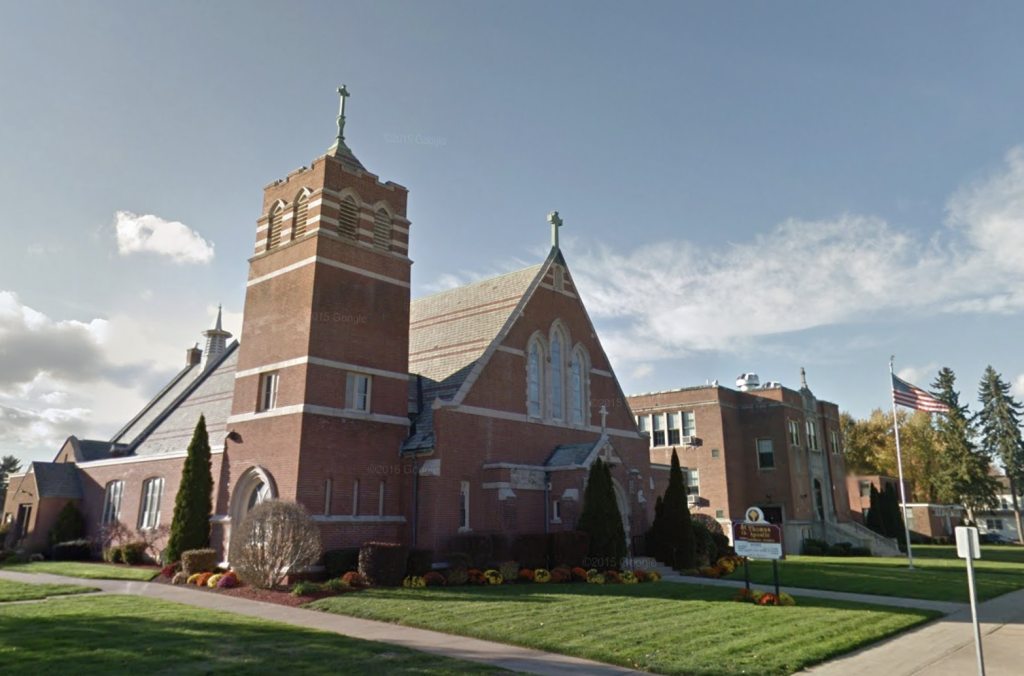
Podcast for St. Thomas of the Apostle Parish.
Episodes
Wednesday Jul 15, 2020
Wednesday Jul 15, 2020
In the list of things that we value most in our lives, close relationships with family and friends would probably be near the top of the list, along with health and life itself. Relationships and friendships are priceless, and without them, we could hardly get through life.
In a privileged moment, Jesus revealed the most important relationship in His life: His relationship with His heavenly Father. He spoke in terms of a mutual knowing, “nobody knows the Son except the Father, and nobody knows the Father except the Son.” There is a profound and unique intimacy to this relationship, but it is not a closed circle.
All of us receive an invitation into this bond of trust and love between Jesus and the Father. He reveals and shares the Father with us. They seek to draw us all into their mutual relationship. Our Psalm response says that God will not abandon us; the Father and the Son bring us into their shared love so that we can reflect that love to others. In response, our spirits must be receptive as a child, rather than closed with the self-assurance of the learned.+
Tuesday Jul 14, 2020
Tuesday Jul 14, 2020
The threats and warnings to Chorazin and Capernaum can make us question the reality and function of miracles. The people in those twin lakeside towns in northwest Galilee witnessed many miraculous signs and healings by Jesus but were unmoved by His message. With prophetic anger, He admonished their hardness of heart. His miracles were for conversion, a new perspective, and lifestyle, a turning away from selfishness, and showing new concern for the poor and the needy. His healings showed His love for suffering humanity; they were not intended to be a sort of magic show and draw Him into the limelight but, instead, to show God's desire for us all to form a wholesome, healthy family.
Many centuries before, Moses stood before Pharaoh with words of warning, bringing down ten plagues on Egypt.[1] It is notable that, like Jesus, Moses did not use this miraculous power for his glory but had to flee for his life into the desert.
Although he was raised in the luxury of Pharaoh's palace, as a young man, Moses showed a strong sense of justice. Sensitive to any oppression or mistreatment of others, he could not idly stand by when he saw an Egyptian striking a Hebrew; nor could he tolerate the sight of one slave being beaten by another. A passion for justice already burned in the young Moses, preparing him for his role as a liberator in later years.
We, too, are called to be liberators, to serve those most in need, and to help them to live in the freedom of God's children. Let us pray, then, for the desire and the courage to help those most in need.
[1] Exodus, Chapters 7-12
Monday Jul 13, 2020
Monday Jul 13, 2020
Our Gospel passage today completes a major sermon — the Missionary Discourse — spoken by Jesus to those who would continue His work. We are reminded by today’s Scriptures that following the will of God can be tough, and even disruptive of peace. Jesus even says, “I have come not to bring peace, but the sword.”[1]
In saying this, Jesus refers to the suffering and conflict that can occur in the course of our lives. We may remember Simeon’s “blessing” and words to Mary as she held the infant Jesus in her arms: “This child is destined to be the fall and the rise of many in Israel, and to be a sign that will be contradicted.”[2] And there are many documented incidents in which God’s people were oppressed because of racial bias and nationalistic envy.
Much like politics, disagreements about religion can stir trouble in families. What the Lord gives is not “peace at any price”, but a special kind of peace that comes from staying close to Jesus. If there is conflict within our family, let it be for the sake of personal conscience, and not from any dominating or judgmental spirit. We are called to be sincere, not authoritarian. Basically, Jesus wants us to be welcoming people, thankful for what others may offer us. Even such a simple gift as a cup of cold water will be noted to one’s credit, in the book of life.+
[1] Matthew 10:34
[2] Luke 2:34
Sunday Jul 12, 2020
Sunday Jul 12, 2020
Back when today’s Gospel passage was written, farmers sowed their seeds on top of the soil and then plowed them under. It was common for some seeds to be blown by the wind onto footpaths or into rows of briers that surrounded the fields to protect the crops from animals. Some seeds fell on very thin layers of soil that hid large rocks just below the surface. Jesus utilized this familiar situation in His parable of the sower. That parable still applies to life today. Consider four brief, true stories.
The first story is about the late Sir Kenneth Clark who was a British television celebrity. In his autobiography, he described a religious experience he had many years earlier. It was so intense that he considered making some drastic changes in the way he was living. After the experience passed, however, he decided against the changes.
Looking back on his decision, he said, “I think I was right. I was too deeply embedded in the world to change course. But that I had [felt God’s presence] I am quite sure.”
Clark’s response might be compared to the seed that fell along the footpath. It stands for those who receive God’s word, but find it snatched away before it can take root.
Our second story is about two brothers, Clarence and Robert, who had committed their lives to Jesus when they were kids. Clarence grew up to become a civil rights activist. Robert grew up and became a lawyer.
One day Clarence asked Robert for legal help in a civil rights matter. He refused, saying that it could hurt his political future. Clarence was stunned. He confronted Robert about his commitment to Jesus. Robert responded saying, “I do follow Jesus, but not to the Cross. I am not getting myself crucified.”
Robert’s situation is like the seed that fell on rocky ground. It stands for those who receive the message with joy but abandon it in time of temptation or when they have to go out on a limb.
Our third story is about a girl in Philadelphia. She wrote an essay about how she had met with her high school guidance counselor the year before. The counselor had given her some great advice about her education and preparation for college. She was very excited and made many resolutions about studying and learning. She realized, however, that she had not kept a single resolution.
The girl’s situation is like the seed that fell among thorns because she received her counselor’s words and resolved to make changes, but her good intentions were choked off and obscured by other activities and concerns.
Finally, our last story is about the late Christian writer, John R. Stott. In his book, Basic Christianity, he described an incident in his youth.
One night he knelt down and committed his life to Jesus. The next day he wrote in his journal: “Yesterday really was an eventful day!…. Behold, Jesus stands at the door and knocks. I have heard Him and now He has come into my house. He has cleansed it and now rules in it.”
Later on, he wrote these words: “I really have felt an immense and new joy…. It is the joy of being at peace with the world and of being in touch with God…. I never really knew him before.”
John’s commitment is like the seed that fell on good soil. It stands for those who hear God’s message and take it to heart and allow it to influence all aspects of their lives.
The Parable of the Sower belongs to that group of parables that are sometimes called mirror parables. They act as a mirror into which we can look and see ourselves. The Parable of the Sower invites us to ask ourselves what seed we are like.
Perhaps the answer is that we are like all of them. Perhaps there are different areas of our lives where we have opened ourselves to the grace of God more than we have in other areas. For guidance, as we pray for the openness, we need to let God’s grace come to fruition in our lives, we pray in the words we used to begin this celebration of the Eucharist:
"O God, who show the light of your truth to those who go astray, so that they may return to the right path, give all who for the faith they profess are accounted Christians the grace to reject whatever is contrary to the name of Christ and to strive after all that does it honor.+"
Saturday Jul 11, 2020
Saturday Jul 11, 2020
Jesus tells us that not even a sparrow falls to the ground without God’s knowledge. He tells us that with great love and care, God watches over the life and death of even the smallest of creatures. So, how much more is God watching over us?
Jesus puts aside any question about God’s concern for us individually, despite our vast numbers. So, God calls us into a personal relationship with Him, as well as a communal relationship with Him as the Church, the Body of Christ on earth.
Because God cares about the details of our lives, Jesus assures us, “There is no need to be afraid.” This is the kind of relationship Jesus Himself had with His Father. He knew beyond the shadow of a doubt that the Father was concerned about the details of His life. As a result, He entrusted Himself to the Father, even when His enemies seemed to have triumphed over him.
Jesus tells us that we can have the same relationship with the Father. He invites us to share in His relationship with the Father, with and in the unity of the Holy Spirit.+
Friday Jul 10, 2020
Friday Jul 10, 2020
In today's Gospel passage, Jesus is truthful about the kind of welcome we may receive when we share our faith. The response may be hostile, and that may even come from those to whom we are the closest. However, Jesus tells us that we will not be alone in facing this kind of rejection; The Holy Spirit will be present to give us guidance and support.
It may be true that contemporary society is not as hostile to the faith as when Jesus commissioned the first disciples. Yet, we know that Gospel values are often rejected in today's culture. Some people interpret those values as a threat, especially to human freedom.
We need the Holy Spirit today, as did the first disciples if we are to give witness to the LORD and His mission. We need the Holy Spirit to inspire us. The Church depends on the Holy Spirit today, just as it always has, and God's Spirit is just as available to us today as He was in the earliest days of the Church because its mission remains the same.+
Thursday Jul 09, 2020
Thursday Jul 09, 2020
Jesus is the fullest revelation possible in the human life of God’s tender and merciful love for humankind. Yet, He experienced the turning away of people from this love, their refusal to respond to it in any meaningful way.
When He sends out His disciples in today’s gospel passage, Jesus warns them to expect the same. They are to proclaim the Good News that the kingdom of God is at hand, the reign of God’s life-giving love, but they will encounter those who will not welcome them and will not listen to what they have to say. This negative response is not to deter them from their mission of proclaiming God’s loving presence by what they say and do. It certainly did not prevent Jesus when He suffered the ultimate rejection on the Cross; He announced the same Good News as Risen LORD to those who had turned away from Him and rejected Him.
So, as followers of Jesus Christ, we are to reveal the loving presence of God, regardless of how others receive us. An essential question for self-reflection, though, when others do not welcome us is this: Is this rejection of the message or rejection of the way the message is delivered and received? In all that we say and do in the name of the LORD, God’s rendered mercies must be evident.+
Wednesday Jul 08, 2020
Wednesday Jul 08, 2020
While on Facebook® a while back, I came across a meme; it was a photograph of the door department at The Home Depot®. Under it was the caption” “Training Center for Jehovah’s Witnesses.” Indeed, perhaps the sharpest image of the followers of this particular denomination is of them walking two by two and door to door to spread their message.
I was driving recently and saw two people, who appeared to be Jehovah’s Witnesses, walking as they did their mission work. I remembered that meme and, while we, as Catholics, have some significant dogmatic differences in our respective faiths, I thought that their willingness to go forth to evangelize is something to admire.
In our Gospel reading today, Jesus sends forth the Apostles to continue His work. He gives them a clear mandate and, as faithful followers, they do as He commands; most of them losing their lives in the process.
Each of us, by our Baptism, is given the same mandate. But we are called to do so, not in a judgmental way, nor in a nagging way, nor in an obnoxious way. We are called to do so by our words and by how we live our lives. Sometimes, this call means we lead by sharing our stories of faith and, sometimes, it means that we do so quietly, by example, in the way we live our lives, even in the most mundane moments.
So, today, let us pray for the wisdom to know how to answer the call to be evangelists of the Good News of Jesus Christ, and let us pray for the courage to do so.+
Tuesday Jul 07, 2020
Tuesday Jul 07, 2020
Spite is an interesting part of the human experience. It is a negative trait that most have experienced by being the object of spite or by being spiteful ourselves. In general, spiteful behavior should be embarrassing to the one who exhibits it, but, often, it is chis portrayed as a virtue.[1]
An excellent example of this would be when someone is not moving out of the passing lane quickly enough for the driver behind him. The driver seeking to get by might tailgate the “offender.” In what we know as “road rage,” they pass the slowpoke, move into their lane, and proceed to slow down well below the speed limit, letting the other driver know that their slow speed in the passing lane wasn’t appreciated, all while slowing both of them down. What a contradiction!
The Pharisees in our Gospel passage today were very spiteful toward Jesus. As people concerned with the letter of the law, they didn’t like the fact that Jesus was concerned less with the nuances of the law than he was with the spirit of what the law should be about: mercy and love. In their opposition to Jesus, they took good things that he did – like healing the demoniac – and attributed them to the work of Satan, acting through Jesus. Again, what a contradiction!
We have been told that living according to Gospel principles is not easy; that it often goes against our natural responses to the world. Things like forgiveness, humility, charity, and mercy can be challenging to live out, especially when we feel slighted. Nonetheless, to live out these virtues is the mark of a good Christian and, really, of any good person.
Let us pray, today and always, that the Holy Spirit may guide us to wisdom and understanding of ourselves and others when we feel wronged, and may our response not only bring us closer to the will of God but also those who hurt us.
[1] Angier, Natalie, The New York Times, March 31, 2014
Monday Jul 06, 2020
Monday Jul 06, 2020
In today's Gospel passage from Matthew, we have seen two people in need of help approaching Jesus, one of them a synagogue official who begs for help on behalf of his daughter, and the other, a woman suffering from bleeding, who comes to Jesus on her own behalf. The way these two people approach Jesus is quite different. The synagogue official approaches Jesus in a very public way, bowing low in front of Him and speaking his need and his request in a way that all can hear. The woman approaches Jesus secretively, just touching the tassel on His cloak, and talking only to herself, hoping that things might change for the better.
No two of us approach the LORD in the same way. Our way of relating to Jesus always has a quality that is unique to each of us personally, just as we each have a unique way of relating to other people. Both the synagogue official and the woman were people of faith, but they had different ways of expressing their faith. Our faith brings us together as a worshipping community, but in doing so, it does not suppress our individuality.
We see that, although the two approached Jesus in different ways, He responded generously to the needs of both. He made no distinction between them but was equally responsive to their need and their cry for help. God's response to us is always shaped by and respectful of the unique way that each of us approaches Him in our need.+