
16.8K
Downloads
1450
Episodes
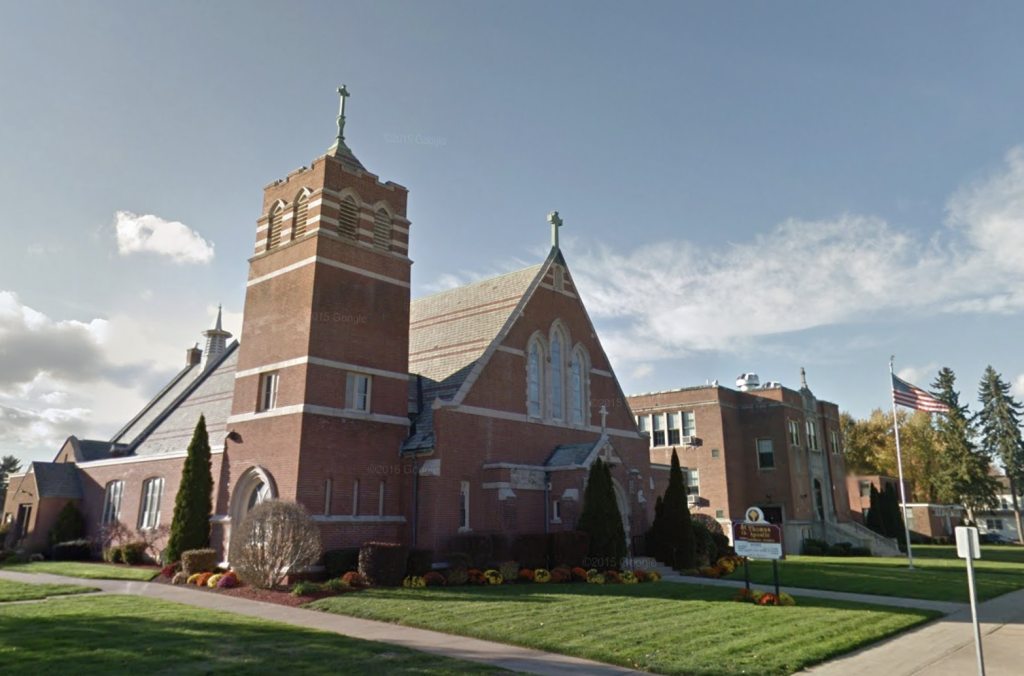
Podcast for St. Thomas of the Apostle Parish.
Episodes
Wednesday Dec 02, 2020
Wednesday Dec 02, 2020
Both of today’s readings refer to the high ground. In the first reading, the prophet speaks of a mountain where the LORD invites all people to an abundant banquet, where there will rich food and fine wines. All mourning, sadness, and shame will be taken away; even death will be destroyed. Here is a vision that lifts us up beyond the world as we know it towards another world where everything is exactly as God wants it to be.
In today’s Gospel passage, Jesus goes up a mountainside and a large crowd follows Him. There, in the heights above the Sea of Galilee, Jesus restores speech to the mute, mobility to the lame, and sight to the blind. He goes on to feed the hungry with very limited resources. He feeds them so well that all ate as much as they wanted and, even then, there were seven baskets full of leftovers.
The vision of Isaiah in the first reading becomes something of a reality in the Gospel. Both readings speak to us of God, who wants us to have life and to have it to the full. It was Saint Irenaeus who said that the glory of God is the human person fully alive. In the Gospel, the LORD needed others to bring the sick to Him; He needed the disciples to help Him feed the crowd. He continues to need us if His life-giving work is to get done. Advent calls on all of us to be instruments of the LORD’S life-giving and healing presence in the world. In Advent, we pray, “Come, LORD Jesus.” We also offer ourselves as channels for the LORD’s coming. +
Tuesday Dec 01, 2020
Tuesday Dec 01, 2020
All people receive gifts from the Holy Spirit; gifts that help us to live as the children of God; gifts that enable us to be instruments of God’s love and grace to people in our world.
We are a sacramental Church, opening ourselves up to the creative grace of God, our loving Father, to the compassionate and loving grace of Jesus Christ, to the transforming grace of the Holy Spirit. In the Sacrament of Confirmation, we receive the gifts of the Holy Spirit, described in our first reading from the prophet Isaiah: wisdom and understanding, counsel and strength, holiness, and knowledge and fear of the LORD.
If we are genuinely open to the Spirit, to God’s love and grace, then we will be transformed by these gifts, and, of course, real transformation means that we must use these gifts for our good and for the good of all people.
This Advent season calls us to slow down and consider how we have been gifted by the Holy Spirit and how we are called to use these gifts.
But we can’t stop there; we must always work to actually use them, that God’s love and peace may flow through us, that we may fulfill our vocation to bring ourselves and others to God’s kingdom of love.
And so, we pray...
Come Holy Spirit, fill the hearts of your faithful and kindle in them the fire of your love. Send forth your Spirit, and they shall be created. And You shall renew the face of the earth.
O, God, who by the light of the Holy Spirit, did instruct the hearts of the faithful, grant that by the same Holy Spirit we may be truly wise and ever enjoy His consolations. Through Christ Our LORD. Amen. +
Monday Nov 30, 2020
Monday Nov 30, 2020
There is a beautiful simplicity to the story of the call of Andrew and his brother Simon, as well as the other set of brothers, James and John. Jesus saw Simon and Andrew casting a net into the sea, going about their daily work, and He called out to them, “Come after me, and I will make you fishers of men.” We are told that the brothers immediately followed Him.
However, it’s possible that Matthew may have simplified the conversion experience of these two fishermen, which may have been more complicated. It would be natural to expect some resistance to the call of Jesus because answering it would mean leaving behind all that they ever knew, as well as their whole livelihood, and heading out into “uncharted waters.” Catching people is harder than catching fish. However, whatever tentativeness Andrew and Simon may or may not have felt, they clearly overcame it and went with Jesus and they became great evangelists, preaching well of the gospel of Christ.
Perhaps it could be said that the LORD works in our lives in much the same way as He did the lives of Andrew and Simon, and James and John. He often calls us out to people in the midst of their daily tasks; in the ordinary and sometimes humdrum moments of our lives. He calls us to go beyond where we are, beyond the familiar, beyond our comfort zone, into the service of God’s kingdom. That call can come to us in small and subtle ways. We may find ourselves resisting it, but if we listen to it and allow it to echo within us, and respond positively to it, we may find that the LORD works through us for good in ways that can surprise us. +
Sunday Nov 29, 2020
Sunday Nov 29, 2020
The late Senator Robert F. Kennedy addressed the young people of South Africa in 1966 with these words: “Some believe there is nothing one man or woman can do against the enormous array of the world’s ills. Yet many of the world’s great movements of thought and action have flowed from the work of a single person…
“These people moved the world, and so can we all. Few will have the greatness to bend history itself, but each person can work to change a small portion of events, and in the total of all those acts will be written the history of this generation.
“It is from numberless diverse acts of courage and belief that human history is shaped. Each time a person stands up for an ideal, or acts to improve the lot of others, or strikes out against injustice, he or she sends forth a tiny ripple of hope. And crossing each other from a million different centers of energy and daring, those ripples build a current that can sweep down the mightiest walls of oppression and resistance.”
This week we begin a new Church year with the Season of Advent. This is a season of hope that focuses on the one who changed the course of human history. The season of Advent proclaims the message that God has not abandoned His people. He sent His Son among us to come to our aid and to free us from our sins.
This holy season celebrates the abiding presence of Christ in our world and His birth in each one of our hearts. This season tells us about the beginning and future ending of the story of our redemption. While we look forward to Christmas and the celebration of the birth of Christ, we cast a glance into the future and to that great day when Christ will come in glory. In the meantime, we are to wait in joyful hope for our LORD and Savior to be revealed.
Echoed and re-echoed throughout the readings is the warning, "Be on your guard, stay awake because you never know when the time will come." The real challenge of Advent is to prepare ourselves for that great moment, by letting God's presence and power work in our lives.
Life is incomplete without God and we are useless and inadequate without God’s presence in our lives. God alone can satisfy our deepest longings and fill us with inner peace. St. Julian of Norwich prays, “God, of your goodness, give me yourself, for you are enough for me, and I can ask for nothing which is less which can pay you full worship. And if I ask for anything else, always I am in want; but in you do I have everything.”[1]
Advent makes us aware of our need to turn to God in hope and humble prayer, begging God to save us. It is a time for soul searching and renewal, for becoming more conscious of our sins and asking for pardon. If we have abandoned God, neglected prayer or broken the Commandments, now is the time to make a fresh start at building a closer relationship with God. There is not much point in Christ coming into our world if He is not at home and alive in our hearts. God values our response to His love.
We are invited to listen to the voice of God in the countless ways He speaks to us every day and we're called upon to recognize and share this love. The challenge of God in Jesus is around every corner — at work or school, on the street, while we are with friends, at home, or in the sometimes-dull routine of daily life. There is never a day when God does not knock at the door of our hearts. Advent is about recognizing the many ways in which, and in many people through whom God announces Himself in our lives.[2]
[1] Julian of Norwich, Showings, 1978, Paulist Press, New York, NY, p. 184.
[2] Desmond Knowles, Voicing A Thought On Sundays, 1991, Columbia Press/ Twenty-Third Publications, Mystic, CT, pp. 138-9.
Saturday Nov 28, 2020
Saturday Nov 28, 2020
Today the Church celebrates the last day of our liturgical year, and our Scripture readings all seem to be giving us a few parting words of hope: a vision of heaven, a calling out to Jesus to come to us, and a final word of advice on how to get to the Promised Land.
This Sunday, we begin anew, once again, with the season of Advent, a season of reflection and anticipation of God's incarnation by the birth of our Savior Jesus Christ.
Let us pray that this coming holy season and the whole of the year ahead will bring us closer to God and one another as the People of God, giving praise to our Creator and being His instruments of love, peace, and mercy in our world.+
Friday Nov 27, 2020
Friday Nov 27, 2020
We live in a world that is constantly changing and doing so at a rapid rate. A lot of people find change a very difficult thing to face; most of us need some constants in our lives, and we find change easier to manage if certain things remain the same.
In today’s gospel passage, Jesus speaks about immensely significant change. He proclaims that even heaven and earth will pass away; it is hard to imagine a more profound change than that. Yet, He immediately names something that will never change; something that will never pass away when He says, “My words will not pass away.”
In the midst of even the most drastic changes, the LORD’s word remains strong and unyielding, because the LORD Himself remains perpetual and true. He is the rock that stands sentinel when all else passes away. In the midst of unsettling change, we know that the LORD remains, and when everything else is moving, He remains steady. Our relationship with Him will help to keep us firm when all else seems ready to fall apart. +
Thursday Nov 26, 2020
Thursday Nov 26, 2020
Today, we in the United States celebrate Thanksgiving Day. Traditionally, this is a day to gather with family and friends and share a meal, time together, and perhaps, a football game.
For many, that is not going to happen this year. Restrictions and safety concerns with the COVID-19 Pandemic will keep many families and groups of friends from gathering together, sharing time, laughter, and a meal. For many, this may even get in the way of feeling any sense of gratitude.
But Saint Paul tells us to be grateful in all circumstances. Indeed, there is always a reason to be grateful to God for our gifts are many, even in trying times such as these.
We have the gift of life, and the gift of God’s love that we share with so many others. We can be grateful for our family and friends and the love that we share with them. We can be grateful for those whose work helps us in times of crisis: first responders, police, fire fighters, EMTs, doctors, nurses, medical workers, those whose work becomes the action of God’s mercy in our world. We can be grateful for those who teach and care for our youth. We can be grateful for those who work to stock grocery store shelves, those who deliver goods to our homes, those who work in the restaurant and food industries. We can be grateful for the air we breathe, the water, we drink, the food we eat. And in all these things, in all these people, we can be grateful for the hand of God at work in our world.
This Thanksgiving, let us be mindful of the ways God is present to us, ways that we may miss when life is not so difficult, and let us give thanks for that presence in its many manifestations.+
Wednesday Nov 25, 2020
Wednesday Nov 25, 2020
Jesus tells us today that by our perseverance, we will save our lives. Jesus’ talk about perseverance reflects the hard reality of life for the Church, especially in the first century. Being witnesses to Jesus and to His values under the harsh rule of imperial Rome meant risking prison and even death. The faith of a believer might be betrayed by one of their own family or by a friend. To be recognized as a Christian could cost a person their life. It was possible to keep secret one’s faith and to live a quiet life, but the danger was always there. The risk of following Jesus was very real, especially in the early days of Christianity.
Our own relationship with Jesus today isn’t meant to be hidden, it should not be a private thing that is of no concern to anyone. If our friendship with Jesus is the most important relationship in our lives, it will affect our other relationships, and guide us in what we say and do. We don’t just keep our faith private but try to live it in a visible way. In today's culture, that is not always an easy thing to do. However, we can trust that God gives us the resources we need to live as Jesus’ disciples and as witnesses to our faith. His abiding presence gives us the motivation to truly live as His followers. +
Tuesday Nov 24, 2020
Tuesday Nov 24, 2020
As we come toward the end of the liturgical year, the readings focus on the darker side of human experience, the experience of destruction, loss, conflict, and deception. It is as if the liturgy is in harmony with the dark days of the end of this month of November.
This coming weekend, we will begin a new liturgical year with our celebration of the first Sunday of Advent. As we do so, the days will remain dark, but the liturgical readings will take on a much brighter tone as they invite us to look forward to the coming of the light.
In today’s Gospel passage, Jesus speaks of the destruction of the awesome Temple in Jerusalem, as well as of other dark events. No one looking at the Temple in Jerusalem in Jesus’ day could imagine its destruction. After all, it had taken nearly fifty years to build and was still unfinished in the time of Jesus. But even the strongest and finest buildings only last so long.
Today’s Gospel cautions us not to become attached to that which does not last. Instead, we are to attach ourselves to the One who says of Himself in Matthew’s Gospel that “something greater than the Temple is here.” When all else fails and disappears and turns to dust, He endures, and through our relationship with Him, we too endure. +
Monday Nov 23, 2020
Monday Nov 23, 2020
The phrase “widow’s mite” has come into our language from the Gospel passage we have just heard. It illustrates the paradox that, sometimes, in giving much, some people are actually giving very little, while other people, in giving a little, are actually giving an awful lot.
In terms of the actual amount of money, the widow gave less than anybody else to the temple treasury but, in reality, she gave a huge amount, because she gave everything she had.
That paradox is true even in our own lives. There are times when we may appear to be giving very little but, in reality, we are giving a lot, because we are giving as much as we can give. Our health may be troubling us; our energy level may be low because of some personal issues we are struggling with. What we have within ourselves to give is much less than it usually is. In those situations, even giving a little of ourselves can be giving a great deal.
The widow in today’s gospel reminds us that, even when we have little to give, we can still be extremely generous. +