
16.8K
Downloads
1450
Episodes
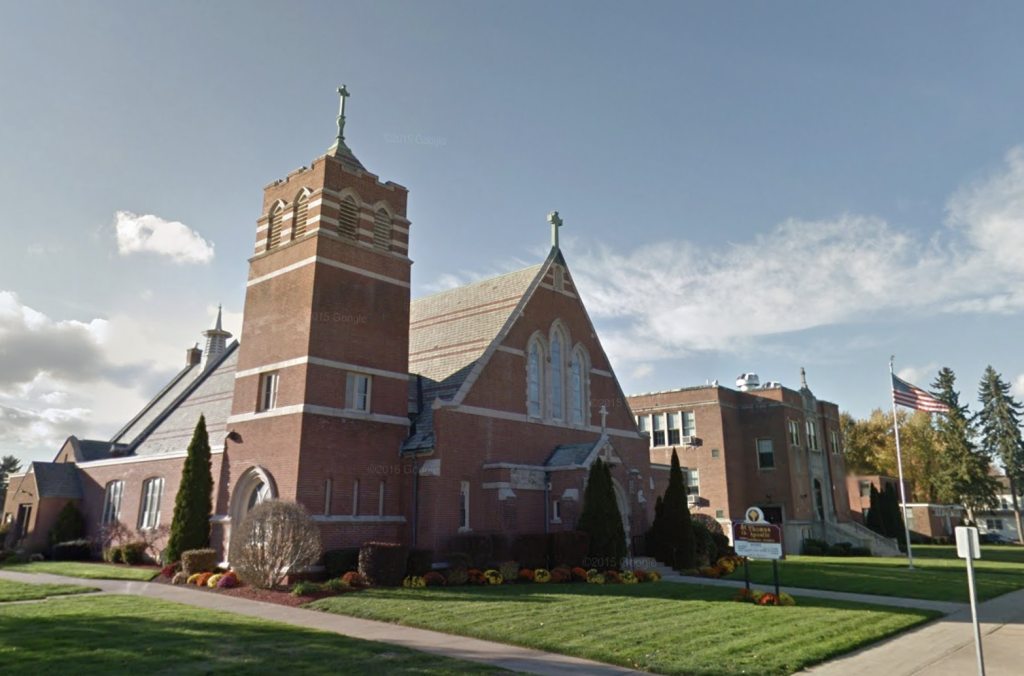
Podcast for St. Thomas of the Apostle Parish.
Episodes
Wednesday Dec 23, 2020
Wednesday Dec 23, 2020
The process of naming a child has been known to cause rifts in some families. Different people have different inclinations for naming their children, but, in the end, the name of the child is the choice of the parents.
The relatives and neighbors of Zechariah and Elizabeth expected them to follow custom and to name their son Zechariah after his father. But Zechariah and Elizabeth believed this was not the name God wanted for their child.
At this moment in history, convention and custom were put aside because God was doing something new. This child would be different from other children. Relatives and neighbors wondered, "What will this child turn out to be?”
John the Baptist's privileged role was to prepare people for the coming of One greater than himself, One who would be called Emmanuel, God-is-with-us. God was working in a new way, making a new covenant with humanity. It is this wonderful gift that we celebrate at Christmas, and it should never cease to fill us with joy and gratitude. +
Tuesday Dec 22, 2020
Tuesday Dec 22, 2020
In our Gospel reading today, we just heard the beautiful words of the Magnificat, Mary's response to her cousin Elizabeth after she acknowledged Mary as the Mother of our LORD. This prayer is proclaimed every day around the globe in the official Evening Prayer of the Church.
Mary's response is one of joy and jubilation in the LORD. She speaks of the lowly, those perhaps looked down upon by others, as being favored by God. She speaks of the reversal of human fortunes and the fulfillment of God's promises as found in the Old Testament.
Mary's response praises God and acknowledges God's presence and providence in the lives of all those who inhabit the earth.
May we, too, recognize God's presence in our lives and may our response be one of praise for God, as well as a sharing of that presence with all those we meet.+
Monday Dec 21, 2020
Monday Dec 21, 2020
Several years ago, an infant named Liam was born with a heart missing one of the four chambers needed to pump blood through his tiny body. By the time he was two, Liam had undergone surgery twice to rebuild his heart.
His parents, Brian and Mary, were frightened by the experience. However, his father said that the family’s trauma was also a moment of grace. He said that the first operation was terrifying, but it happened so fast and was so necessary and so soon after his birth that the family just staggered through it.
By the second operation, Liam was two years old and had developed a wonderful personality. This time, in even greater fear of losing Liam, Brian went into a deep and dark place of fear. However, his wife’s hand touched him like a hawk and ripped him away from that dark place. He said her touch was a moment of pure grace that truly saved his soul.
In today’s Gospel reading, we witness such a moment of grace between Mary and Elizabeth. We see the love that enabled one cousin to put aside her situation to help the other cousin. We also see the compassion that allowed the older woman to offer comfort and joy to the younger woman in her anguish.
Elizabeth mirrors family at its best. As husbands and wives, as mothers, fathers, sisters, and brothers, God has given us one another to create a safe, welcoming place called family. And for some, the family is found outside these relationships. It is in these relationships – all called family – that we experience the saving grace of God.+
Sunday Dec 20, 2020
Sunday Dec 20, 2020
Several years ago, journalist Maura Rossi wrote an article on Anne Donaghue, a Georgetown University graduate who was doing volunteer work for Covenant House in New York City. The purpose of this house is to provide shelter for homeless runaways.
Every night at about ten o'clock, Anne and another volunteer would put gallons of hot chocolate and bags of sandwiches in the Covenant House van. For the next couple of hours, they would tour the city's toughest areas and offer free sandwiches and hot chocolate to the runaways who were working on the street.
One might ask what the volunteers hoped to accomplish on these nightly excursions. Anne answered that question saying, "We're out there because we know that a lot of kids haven't tried Covenant House yet. Most have never heard of us."
Anne said that they accomplish something else, too. They show these kids that someone cares, that somebody is out there who is neither buying nor selling them. Referring to her first year as a volunteer, Anne says, "I was very depressed. What kind of God would let kids suffer so much? Finally, it got through to me: God is not going to come down and show us His love; we have to let God's love work through us."
Anne's story is a good one, and her last two comments say it all. First, she says, "God is not going to come down and show us His love." She's right; God has already done that in the person of Jesus. That's what Advent is all about. It's preparing to celebrate this great mystery of what God has already done for us by living among us as a human being.
Second, Anne says, "We have to let God's love work through us." Again, she is right. When Jesus ascended to His Father after His life on earth, He commissioned us to continue His work. Just as the Father worked through Jesus during His life on earth, so His Father works through us in our life on earth. We are to be channels of God's grace to others just as Jesus was.
That is what Anne was doing as she drove her van: she was serving as a channel of God's grace to many needy young people. She was doing what Mary was doing in today's Gospel reading. She was saying "yes" to God's invitation to be a vehicle of love in today's world.
And we do what Mary and Anne did. We do this as a parish in our ministries to the needy in our neighborhood and world, in our visitations to the sick and the elderly, in our providing education to our youth, in our teaching the faith tour youth through CCD and our parish school, in our gathering together each week as a community of faith. These are just some of the many ways we are channels of God's grace. Through prayer, worship, work, and socializing together, we are God's presence to one another.
Christmas is a time when we introduce our young people and those who have not had exposure to Christ to the great mystery that Jesus brought God down to us. But we cannot stop there. If we do, we've told only half our Christmas story. We must teach them why Jesus brought God down to us. It was to show us that we, too, must bring God to others.
Let us pray for an awareness of the many ways each day that God seeks to work through us. May we be open to the will of God in our lives, that we may be channels of God's peace and love in the world, and, through our willingness to be instruments of the LORD, may we help to make the world a better place.+
Saturday Dec 19, 2020
Saturday Dec 19, 2020
The angel Gabriel is sent to Zechariah to bring him the good news that his wife, Elizabeth, who has been barren, will soon give birth to a son, and a special son at that; someone whose calling it would be to prepare for the LORD a people fit for him. However, this good news was too much for Zechariah to hear, and he could not bring himself to believe the words that Gabriel spoke to him.
Perhaps there is something of Zechariah in all of us. We sometimes find it hard to believe good news, perhaps because we are so used to hearing bad news. In particular, we can sometimes find it hard to believe the Good News that comes to us from God; or we may believe the Good News from God in a general way, but not as Good News addressed us personally.
The dimension of God’s Good News that we celebrate at this time of the year is that God, the God of Abraham, Isaac, and Jacob, has become God-with-us, Emmanuel, in and through Mary’s son, Jesus. This is God’s Good News addressed to us as a people and addressed to us as individuals. God is with us in Christ, and Christ is beside us, behind us, before us, above us, below us. This is the Good News we are asked to believe and, indeed, rejoice in during these days.+
Friday Dec 18, 2020
Friday Dec 18, 2020
Unlike the other Gospels, the Gospel of Matthew does not tell the story of the Annunciation to Mary. However, it does describe an angel's message to Joseph.
In Luke's Gospel, the angel says to Mary, "Do not be afraid." In Matthew's Gospel, an angel tells the same thing to Joseph, "Do not be afraid."
God was doing something new and unusual in Mary and Joseph's life, something vital for the life of the human race. The conception of Jesus was a miracle of God's grace that, understandably, raised questions in the hearts of those most directly affected, Mary and Joseph. They both needed reassurance to handle the challenge they faced.
In times of transition, change, and challenge, we all need this same reassurance: "Do not be afraid." May we put our trust in God's presence, in Emmanuel — God is with us — just as Mary and Joseph did and, by doing so, may we be willing participants in God's plan for us. +
Thursday Dec 17, 2020
Thursday Dec 17, 2020
Even though Christmas is the celebration of Jesus’ birth, it took about 300 years before His birth was formally celebrated by the Church.
Christmas and Advent are the newest additions to our liturgical calendar. While the early Church celebrated the LORD’s Resurrection from its very beginnings, the first reference to a celebration of the LORD’s birth is dated between the years 274 and 336. The Romans observed an annual festival called Sol Invictus – the “Birthday of the Invincible Sun,” celebrated on what was then the shortest day of the year, December 25th. It was the first day of the new sun – from then on, daylight would extend longer and longer.
As Christianity grew throughout the Roman world, the Church adopted the Birthday of the Invincible Sun to celebrate the dawning of the Son of God. Over the next centuries, the liturgical season of Advent developed as a time of prayer and preparation for Christmas.
In today’s Gospel, Matthew compiles a genealogy of Jesus’ ancestors. Both Matthew’s account of Jesus’ ancestry and the early Church’s adoption of the date of the pagan festival of the sun celebrate our belief that Jesus is the fulfillment of a world that God envisioned from the first moment of creation, a world created in the justice and peace of its Creator. Jesus dawns upon our world as a “new” sun to illuminate it once again in the peace and justice of God. +
Wednesday Dec 16, 2020
Wednesday Dec 16, 2020
As we just heard, from his prison cell, John the Baptist sent two of his disciples to Jesus to ask, “Are you the one who is to come, or should we look for another?” It could appear that, as John sat in his cell, he was having doubts about Jesus.
After all, John proclaimed that Jesus would be a fiery prophet of judgment, with His winnowing fan in His hand, gathering the wheat into the barn and burning the chaff with unquenchable fire.
That is not exactly how Jesus showed up. In His first sermon, according to St. Luke, Jesus declared that He had come to proclaim a year acceptable to the LORD. That lacked some of the intensity with which John said He would come.
Jesus was the One who was to come, and His work was to reveal the welcoming love of God for all. He was less judgemental and more hospitable than John had foreseen. Jesus’ coming was good news, a moment of joy, especially for those broken and battered in body, mind, or spirit.
When we come to God in our brokenness, poverty, weakness, and need, we will experience His presence as healing, life-giving, and renewing. That is good news for the Church and the whole world, especially in these difficult days.
Tuesday Dec 15, 2020
Tuesday Dec 15, 2020
Jesus tells a brief parable today about two sons, one saying he would do his father’s will but failing to and the other who, at first, refused but then did so.
True discipleship, that is, following the will of God is found in the depths of our hearts and our souls and it is expressed most powerfully in our actions, but in our words and attitudes as well. Discipleship is the expression of a deep desire to follow the will of God and to serve God with humility and, through our words, actions and attitudes, to mirror to others Christ’s love for us.
Many things keep us from answering the call of discipleship: human limitations, imperfections, and sinfulness. But the true disciple humbly acknowledges these failures and limitations and continues to work toward the fullest expression of what it means to call oneself a follower of Christ.
Let us ask God for the graces we need to truly live as Disciples of Christ. May Christ dwell in the depths of our hearts and souls and may we live, learn, and love as His faithful followers.+
Monday Dec 14, 2020
Monday Dec 14, 2020
The question posed to Jesus by the chief priests and the elders in today’s Gospel passage comes soon after He expelled the merchants and money changers from the Temple in Jerusalem. As we heard, they wanted to know by whose authority He could do such things. They asserted authority for themselves over the Temple, and they had not given Jesus permission to do what He did.
Jesus did not answer the question about His authority, but the careful reader of the Gospel knows the source of His authority. From before His birth, Jesus was called Emmanuel, meaning “God-with-us.”
Because Jesus is “God-with-us,” He has the authority to say how God’s Temple was used. He knows that it was not being used nor operated with due faith and reverence. And He responded with righteous anger.
As we draw closer to the celebration of the birth of our Emmanuel, He shows us how to honor God rightly and helps us by filling our hearts with the grace of the Holy Spirit. May our hearts be truly open to that grace, who is always present and always active in our lives.+