
16.8K
Downloads
1449
Episodes
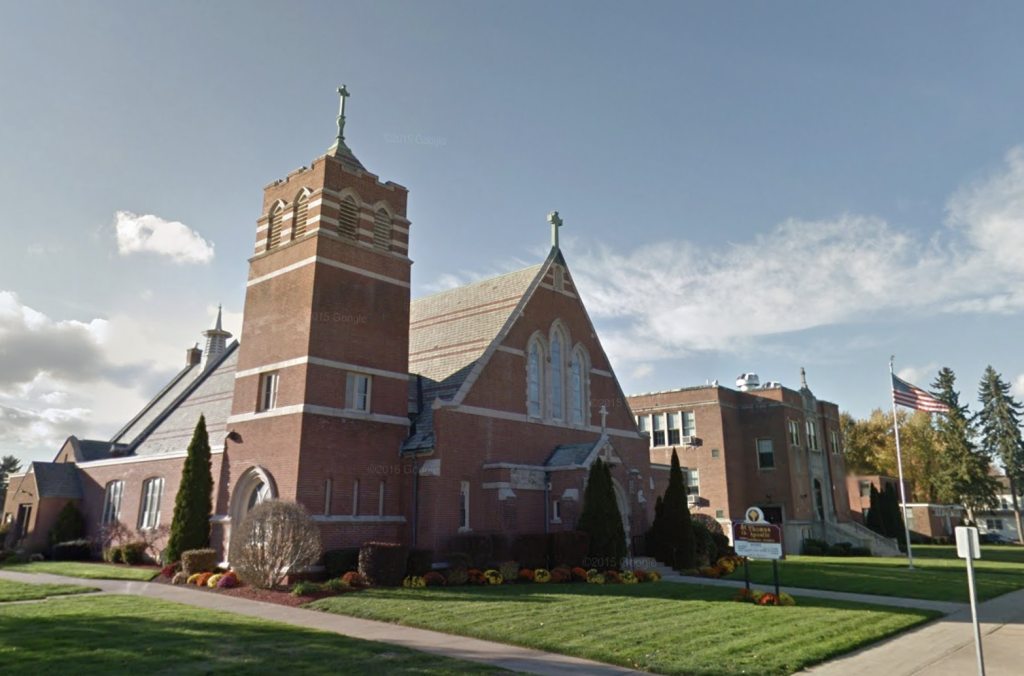
Podcast for St. Thomas of the Apostle Parish.
Episodes
Thursday Jan 21, 2021
Thursday Jan 21, 2021
During His ministry on earth, those who came to Jesus in the greatest numbers were people who were suffering, people who were distressed, those who had the least going for them in life. They recognized that He had come to bring them life; that He had come especially for the suffering, the broken, the lost.
We, too, come to the LORD with a sense of urgency when we are struggling, when we are in some kind of distress. Like the crowds in the gospel, we reach out to touch the LORD in our brokenness, recognizing Him as the source of healing and life. The LORD is as present to us as He was to the crowds in Galilee so long ago; He remains strength in our weakness, healing in our brokenness, life in our varied experiences of death. We can approach Him with the same sense of confidence of being well received as the crowds in Galilee that we hear about in today’s gospel.+
Wednesday Jan 20, 2021
Wednesday Jan 20, 2021
Jesus, as we have just heard, proclaims that works of love and mercy may—and should— be done on the Sabbath. He Himself does God’s work on the Sabbath by healing the withered hand of a man in the synagogue. Yet, irrationally, some religious and political leaders began to plot together to destroy Jesus for doing something they considered to be sinful. This story takes place in only the third chapter of Mark’s gospel, but it points ahead to the end of the gospel story. It was because Jesus was dedicated to doing God’s work among the poor and the marginalized—and put that work ahead of the letter of the law—that He was crucified.
Jesus’ life shows us that good works do not always bring their fitting reward in this life. It is an odd enigma, but one that is often true to life: good can provoke an evil response from some people. The goodness of some brings out the evil in others. Yet, Jesus teaches us that goodness is its own reward. He Himself persisted in the good work that His Father gave Him to do, regardless of the harsh response of the authorities.
Hopefully, we try to be faithful to what is right and good, not because of any praise it might bring us, but because it is what God wants us to do. Let us pray that we may persist in being faithful to our calling to share in the work of Jesus of bringing compassion, healing, and life to others, regardless of the cost. +
Tuesday Jan 19, 2021
Tuesday Jan 19, 2021
As we just heard, the Pharisees were critical of Jesus’ disciples for picking heads of grain on the Sabbath and then eating them. They believed this action was a form of work and was not allowed on the Sabbath. They believed that they knew what God expected of people on the Sabbath. In reality, they did not understand at all.
They believed that they were experts on the matter. In reality, they had critical things to learn from Jesus and His understanding of what was expected on the Sabbath.
When it comes to the ways of the LORD, we all have much to learn from the LORD. He still speaks to us and wants to teach us and enlighten us in and through His Word. And so, we must listen to the Scriptures in a spirit of openness and humility.
As learners, we come before the Word, not as experts, inviting the LORD to enlighten us and lead us further on our journey of discovery towards the complete truth.+
Monday Jan 18, 2021
Monday Jan 18, 2021
In the time of Jesus, wine was an essential element at a wedding feast, the beginning of a marriage, as was clear from the story of the Wedding Feast at Cana, which precedes today's gospel reading. When Jesus called Himself the bridegroom, He also compared His presence in the world to that of new wine.
The new wine of the LORD's loving presence and life-giving action calls for new wineskins, to hold it and to dispense it. The LORD's love is a gift, but it also makes certain demands on us, calling us to constantly renew our lives so that His love can truly mold us.
New wine, new wineskins: We have to keep shedding our old skin and develop new skin. We can never be fully content with where we are at any time of our lives.+
Sunday Jan 17, 2021
Sunday Jan 17, 2021
In our second reading today, St. Paul reminds us that we are temples of the Holy Spirit. The Holy Spirit dwells in the body, heart, mind, and soul of every person. Because we are temples of God's Spirit, we must give glory to God both in respect for ourselves and for others, including those with whom we may disagree.
We are living in a time when many people exhibit little tolerance for those with whom they have differences of opinion, perspective, or worldview. We see this in world, national, and local politics, on social media, in society, and in our Church. People are despised, put down, and dismissed - sometimes violently - because of differences of opinion or perspective.
Of course, this is nothing new. Throughout human history, we have seen it in national and global atrocities and in the interaction between individuals. It is an undeniable human trait. So, I have no great words of wisdom that will answer questions about moving through all of this.
I will, however, quote the late Bishop of Springfield, John Marshall. Soon after he became Bishop of our diocese, I had an opportunity to sit down and talk with him.
In our conversation, Bishop Marshall began to talk about the many differences between so-called liberals and so-called conservatives in the Catholic Church. He spoke about how people may lean one way or another, but that people who are entrenched in the extreme on either end of the spectrum reject Christ.
Bishop Marshall meant that when people are so caught up in and focused on their own perceptions, opinions, and positions, they tend to reject people who have any opinion that deviates even slightly from their own and, in turn, they reject the Holy Spirit who dwells in every person.
His warning against extremism is no less powerful in the political realm nor among our interactions with family, friends, and co-workers than for people of the Church.
Every person has gifts of the Holy Spirit that can be used in positive and constructive ways in the Church and the world, and we all use those gifts successfully to varying degrees. When we reject someone with whom we disagree, we ignore the many ways the Spirit works through that person, and, in doing so, we reject God and the action of God in our world.
Jesus gives us many commands and words of advice that teach us how we are to look upon, treat, and act toward those with whom we disagree.
He tells us to love our neighbor as ourselves. This does not mean that we simply give lip-service to acting like we love someone. It means challenging ourselves to treat others with the same respect with which we want to be treated. It means that we may disagree with a person's perspective or position, but we don't demonize them.
Jesus tells us to love our enemies. This, undoubtedly, is a difficult command to follow, but we are called to do just that. To see in those with whom we disagree, their good traits and, again, as temples of God's Spirit.
Finally, St. Paul cautions us to "let your conversation be always full of grace." Mary Flynn was a lifelong resident of Stockbridge, Massachusetts, and, at one time, was running for office. When being interviewed, a reporter referred to her political opponent as her enemy. She immediately and gently told the reporter that they weren't enemies but worthy adversaries." Those were words of grace and revelation of her respect for her opponent.
To put it as simply as possible: We need to recognize that we are all sinners, and we all fail to follow God's will in our lives, and yet, God loves us all and dwells in us all, and all of us are made in the image of God. If all of us approached one another with these facts in the forefront of our minds and hearts, we might all get along a little better and actually do something to make our world better and closer to the kingdom of heaven.+
Saturday Jan 16, 2021
Saturday Jan 16, 2021
Our Gospel passage today shows how Jesus wants us to share His message. He has shared a meal with many, sinners, tax collectors, and with others who would have been classified as not the equal of law-abiding Pharisees. He broke bread with sinners at table and, at the same time, more likely than not, He broke open God’s Word for them — God’s healing and merciful Word. In defense of this, He said, “I did not come to call the righteous but sinners.”
Jesus reveals His Father who does not withhold His living Word or His grace from us, even when we show that we are unworthy of it. The Lord continues to speak that word of love and light into the darkest and most troubled places of our lives. He keeps offering us the bread of His word to satisfy our deepest hunger. As He does so, He waits for us to take and eat.
We are called to mirror God’s mercy; we are called to invite all people to the table of the LORD and not only those who seem to measure up to the ideal of Christian living. All are called, especially sinners. God’s grace and mercy are not rewards for perfection but, instead, are a necessity in our striving to be perfect as our heavenly Father is perfect.+
Friday Jan 15, 2021
Friday Jan 15, 2021
In our Gospel reading today, we hear the famous story of Jesus healing the paralytic on the mat. The healing of the man was kind of a supporting part of the larger story: the forgiveness of sins. The healing of the man was to show the doubters and the critics that He had the power to forgive the sins of those who brought the paralyzed man to be healed by Him. And, again, as we see in most healing stories, it is because of their faith that they are healed; that they are forgiven. And this is not so much of a reward; their faith is what opens them up to God’s healing power, which is always there.
So, the main focus of this story really is not the healing of one’s body but the healing of our souls when we are transformed by God’s forgiveness of our sins and the healing of our relationships with God and one another. This healing came about for the friends of the paralyzed man who believed that Jesus could heal him. Indeed, their faith transformed their lives and the lives of their friend.
Let us pray for the faith we need to allow God’s healing power into our hearts and souls.+
Thursday Jan 14, 2021
Thursday Jan 14, 2021
Often, Jesus healed people by His spoken word alone, “Be healed!” But in His attention to the poor leper, Jesus not only spoke to him, but also touched him physically. In making physical contact with the man suffering from leprosy, Jesus did what was never done by people in that time and place.
For obvious reasons, people kept lepers at a distance, and lepers were expected to keep their distance from others. Yet, it was the character of Jesus to make contact with people and to keep no one at a distance, not even one as sick as this leper. No one was beyond His reach; no one was untouchable. He came to touch our lives in a very perceptible way, all of our lives, regardless of our condition.
The leper wasn’t sure whether Jesus wanted to heal him, as is clear from his opening words to Jesus, “If you wish, you can make me clean.” By touching him, Jesus very clearly showed that He wanted to heal him.
Jesus wants to touch all of our lives because He wants to bring life to us all. Nothing we do or fail to do, no circumstance in which we find ourselves, need place us beyond His reach. As St. Paul says in his letter to the Romans, “Nothing can come between us and the love of God made visible in Christ Jesus.” The LORD touches our lives, where we are, as we are. All we need is something of the leper’s initiative in reaching out to our LORD.+
Wednesday Jan 13, 2021
Wednesday Jan 13, 2021
In today’s gospel passage, we encounter two distinctive traits of the person of Jesus. The first is His ministry of healing. Jesus healed Simon’s mother-in-law, who was sick with fever, by grasping her hand and helping her to stand up. Later that evening, people brought to Him many people who were ill or possessed by demon. The entire town was there as he cured the sick and drove out many demons. So, it was a very public event.
The gospel passage then describes the second trait of the person of Jesus; this is a much more private trait. It says that, in the morning, He left to go to a deserted place to pray but Simon and many others pursued Him and would not let Him have this private time for prayer, rest and refreshment. They wanted Him to move on and continue His work. Wearily, perhaps, He gave in and said, "Let us go on to the nearby villages that I may preach there also. For this purpose have I come."
Jesus’ need for quiet time, rest, and solitude was not appreciated by Simon Peter and the others. They actually gave Him a kind of rebuke, saying, “Everyone is looking for you.” But Jesus knew that the source of His life-giving work was His relationship with God, which needed some time for prayer. The time given to prayer was as important to Him as His work of healing.
Prayer is as fundamental for us as it was for Jesus. We need to keep close to the Lord if we are to live as He wants us to live and if we are to share in some way in the Lord’s work. In prayer we acknowledge and give expression to our dependence on the Lord; we open ourselves to the Lord’s life-giving presence so that we may be channels of that presence to others.+
Tuesday Jan 12, 2021
Tuesday Jan 12, 2021
Just as the people of Capernaum crowded around Jesus, He also invites us to listen to His “new teaching with authority.” Jesus brought new life to those sitting in darkness, to those who needed a new vision. We are in no less need of this new life and new vision today.
The Old Testament often describes the difficulties of ordinary people and how they tackled them. Similar struggles within the people of His times are condensed in the stories about Jesus driving out devils and speaking with authority. Today’s scriptures beckon us to seek an answer to the profound, creative grace at the foundation of our existence; to wait patiently and prayerfully; to pour out our soul to God; to be ready for personal struggles through moments of simplicity and the emptying of ourselves; to realize that Jesus has experienced all our trials in His own person so that in Him we find our true glory and honor as children of God.+