
16.8K
Downloads
1448
Episodes
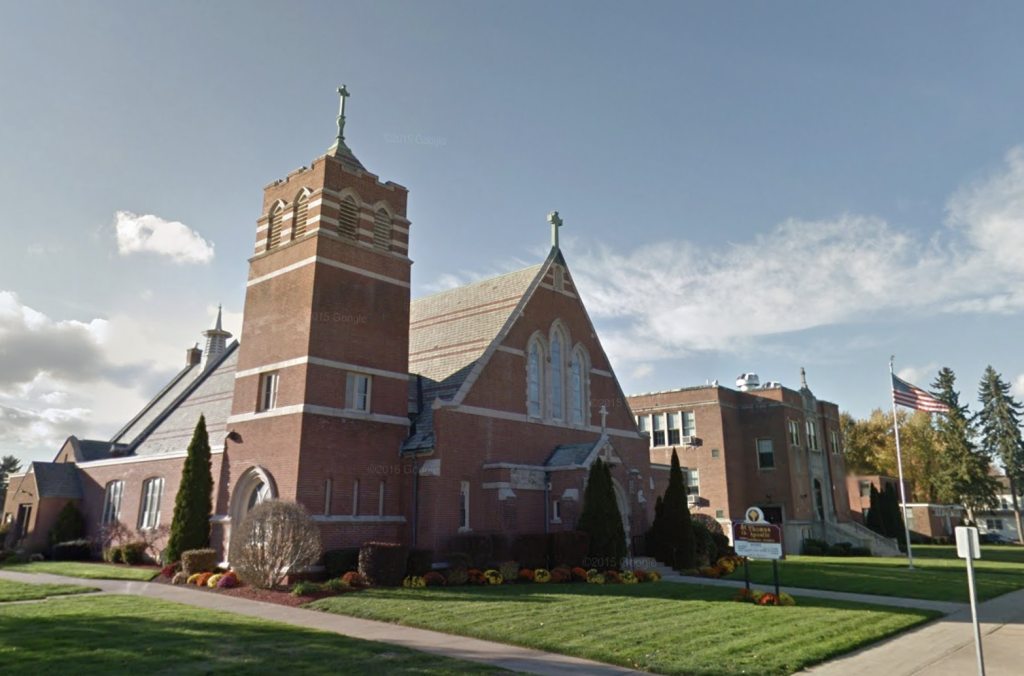
Podcast for St. Thomas of the Apostle Parish.
Episodes
Thursday Mar 11, 2021
Thursday Mar 11, 2021
Some of the people who witnessed Jesus driving out the demon from the mute man were utterly wrong about Jesus, declaring that He healed through Satan’s power. Instead of acknowledging that God was powerfully at work in Jesus, they proclaimed that Satan was at work in His life. It’s hard to imagine a more significant error than that. They were calling good evil.
In response to their severe misjudgment, Jesus professed that He did his healing work through the power of God. God was at work in Jesus, and some of His contemporaries couldn’t see it. We can all be blind to the working of God among us, especially when God is working through those with whom we don’t always agree.
Indeed, there are many ways in which we are graced, in some way, by God, and we hardly notice it. The LORD blesses us and, rather than recognizing the blessing and giving thanks for it, we focus on what we do not have or what is wrong in our lives.
We must pray for the gift to see as Jesus sees, which is the opposite of how people in the Gospel saw. Jesus saw the working of God in Creation, in the sower, the vineyard, in the flowers of the field, and birds of the air. He saw God’s presence in those many people had written off because of their imperfections and faults. Jesus teaches us to see with eyes of generosity, hope, and mercy. When we see with those kinds of eyes, then, in the words of St. Paul, we will be inspired to give thanks in all circumstances.+
Wednesday Mar 10, 2021
Wednesday Mar 10, 2021
Throughout His ministry, Jesus made brilliant use of imagery to describe what is important in life. In all three of the synoptic Gospels, He compared His ministry to new wine, then said that this new wine required new wine-skins, otherwise the skins would burst. In other words, the traditional way of doing things would no longer be enough. Yet, Jesus also had great respect for tradition, His Jewish tradition, and the Scriptures of His people nourished and inspired Him.
In the Sermon on the Mount, Jesus declared that He had come not to abolish the Law and the prophets but to complete them. He did not pretend to be starting from scratch. There was much in Jewish tradition that He valued, but He wanted to bring that tradition to a greater richness and fullness; He came to renew Israel’s tradition, not to toss it aside. His attitude suggests that we don’t simply discard our religious tradition, but neither should we idolize it into a set of absolute rules and dogmas.
The Church is always in need of reform and renewal. The work of renewal will always involve honoring what is best in our tradition by allowing its rich potential to be fully realized and being open to the inspiration of the Holy Spirit to guide us in ways that are new.+
Tuesday Mar 09, 2021
Tuesday Mar 09, 2021
Peter was a prominent figure in the community in which Matthew lived. It is only in Matthew’s gospel that Jesus calls Simon Peter the “rock” on which He will build His Church; it is only in Matthew’s gospel that Peter asks, “LORD, if my brother sins against me, how often must I forgive him? As many as seven times?”
In their culture, the number seven symbolized fullness and completion. If one were to forgive someone seven times, it would be seen as forgiving someone as much as possible. But Jesus says to Peter and to us, “I say to you, not seven times but seventy-seven times. What Jesus is telling us is that there should be no limit to our willingness to forgive one another.
Jesus knows that is a part of human nature to put harsh limits on our willingness to forgive, but He wants us to use God’s infinite mercy as an example of how we are to forgive.
In today’s parable, Jesus stresses how forgiving God was. Setting a high standard, He calls on us to emulate the mercy of God in our readiness to forgive those who have wronged us: In other words, as we hear in Chapter 5 of Matthew’s gospel, “Be perfect as your heavenly Father is perfect.”+
Monday Mar 08, 2021
Monday Mar 08, 2021
In our Gospel passage, Jesus confronts the somewhat limited view of God held by His fellow Nazoreans. They believed that God belonged only to the Israelites. When he reminded them of a couple of instances in the Scriptures when God seemed to prefer the pagans over the Jewish people, they resented it and drove Him away. His rejection in Nazareth predicted His even more violent rejection to come in Jerusalem.
The people's understanding of God was too narrow, and Jesus sought to expand their knowledge; He wanted them to see that (in the words of Peter) "God has no favorites."
Jesus wanted the people to know that God is more generous, more inclusive than they comprehended. He was always trying to show them that there was so much more to God than they could imagine. Jesus' vision of God remains a challenge for us today, but it is a vision of God that is primarily "Good News" for all who are open and willing to receive it.+
Sunday Mar 07, 2021
Sunday Mar 07, 2021
In the movie The Mission, Rodrigo Mendoza is a Spanish slave trader and mercenary in 18th Century Argentina. In a burst of anger, he kills his brother in a lover's triangle. Overcome with remorse and realizing his life's depravity, he seeks redemption with the Jesuit missionaries and goes to confession to Father Gabriel.
Father Gabriel and Mendoza agree on a penance: Mendoza will accompany the brothers to their new mission in a mountain jungle. Mendoza must drag behind him a net containing his armor on the journey, symbolizing the life he seeks to leave behind. It is a long, slow, painful haul.
The other missionaries confront Father Gabriel. They believe that Mendoza has done his penance long enough. Father Gabriel replies, saying, "But he doesn't think so; and until he does, neither do I."
On the last leg of the trip, the Jesuits and Mendoza must scale a dangerous cliff along a waterfall. He struggles to climb the dangerous height with the weight of the armor threatening to pull him into the surging river below. At the top of the falls, the indigenous people recognize Mendoza as a slave trader who oppressed them. Tensions rise — but a man steps forward with a machete and cuts the rope. The net with the heavy armor plunges into the river.
Mendoza breaks into tears. He is welcomed by the indigenous people and embraced by his new brothers. The anger and sin are drained from him, and he begins a new life at the mission.
All of us drag many things that weigh us down on our journey to God. Not only the things themselves but the pursuit of those things distract us from the real joys and meaning of life; things that distort our vision of the world as God created it to be.
Lent (which comes from the old English word for spring) is the season for a "spring cleaning" of our spirits and souls — to drive out of our lives whatever distracts us from the compassion and peace of God and to restore a sense of perspective to realize the joy and hope of God's presence in our lives.+
Saturday Mar 06, 2021
Saturday Mar 06, 2021
Forgiveness and reconciliation are the core of the Gospel of Jesus Christ. To be a true disciple of Jesus is to be dedicated to the work of reconciliation, to bring about a unity of spirit even when we have disagreements and differing opinions.
The work of reconciliation is not limited to a time or place, nor conditioned on any set of circumstances, nor offered only to specific individuals and people.
The work of forgiveness demands our facing our responsibility in hurting others, as did the Prodigal Son. Often, this entails putting aside our own agendas, desires, and control. Sometimes, it even entails setting aside our hurts for a time so that we can see the goal of reconciliation and work toward it. It is not an easy thing to do, but it is what the Gospel calls us to do. We are called to balance reconciliation and healing rather than vengeance and punishment. This is the same difficult path that the father in today’s Gospel reading must walk between his two sons.
May we dedicate ourselves to the work of reconciliation: to forgive without reprisal, to humbly work to bring healing to those we have hurt, and to restore hope and dignity to those who have suffered at our hands.+
Friday Mar 05, 2021
Friday Mar 05, 2021
As Christians, we call ourselves servants of the LORD. We are called to serve the LORD and to serve Him by our service to others. We are called to be ambassadors of God’s love and providence, recognizing that all we have comes to us from God and that we are called to share our gifts and our talents to bring about God’s kingdom on earth.
Let us pray that when we see an opportunity to help those in need, that we not see it as a burden but as an opportunity to do the work of the LORD.+
Thursday Mar 04, 2021
Thursday Mar 04, 2021
Today’s parable is not a condemnation of wealth per se. Rather, it asks those who have what they need (and more) whether or not they are sharing what they have. Have we helped in any way to lessen the gap between we who have, and those who have little?
While possessions are not evil in themselves, they must not turn our minds and hearts away from those people in the world who have so little. In the parable, the rich man uses his wealth only for himself, and so it is his complacency that is condemned. We may not think of ourselves as wealthy, but we can still become indifferent toward the poor. The whole story begs the question of whether or not we are even aware of the poor around us and among us.
The parable is left without an ending in that we never find out if the five brothers ever got the message about the consequences of ignoring the poor. And so, we get to write our own ending of what we will do with our lives in light of what just learned about the differences between the short-term riches of this world and the eternal riches of God’s world.+
Wednesday Mar 03, 2021
Wednesday Mar 03, 2021
As we just heard, Jesus asked James and John, “Can you drink the chalice that I am going to drink?” In other words, were they truly prepared to share His chalice, to cast their lots with Him, to follow where He would lead them, even though it could cost them their lives?
In the Garden of Gethsemane Jesus prayed, “Father, if it is possible, let this cup pass from me.” (Matthew 26:39) Yet, He went on to drink that cup on the Cross. At the Last Supper, He drank of the cup and then gave it to His disciples, who also drank from it. Yet, a little later, they deserted him and fled. Despite what they promised Him, James and John would not follow Him when things got really challenging.
We, too, are invited to drink from the LORD’S cup, the cup of sacrifice, the cup of suffering, the cup of the Eucharist. When we do so, we express our willingness to go where He leads and walk in His way, with all its challenges and joys.
Jesus teaches that His way of selfless service of others is that to which we are called. We pray that, in drinking from the LORD’S chalice today, we will be faithful to what that action signifies: walking in the footsteps of the Son of Man who came not to be served but to serve.+
Tuesday Mar 02, 2021
Tuesday Mar 02, 2021
In today's Gospel passage, Jesus places blame on the Pharisees for imposing heavy burdens on ordinary people's shoulders. By contrast, His invitation was, "Come to me, all you who labor and are burdened, and I will give you rest." (Matthew 11:28)
Most of us have to deal with various burdens as we go through life. Some of them are necessary and unavoidable; they are the burdens of love, from having responsibility for others. However, Jesus rejects the needless burdens place upon others.
We are called to make life less burdensome for the people around us and help them in any way we can. This would be in the spirit of the One who promised to give us rest from our labors.
May we turn to God when we are burdened, and may we allow God to work through us to ease the burdens of those around us.+