
16.7K
Downloads
1448
Episodes
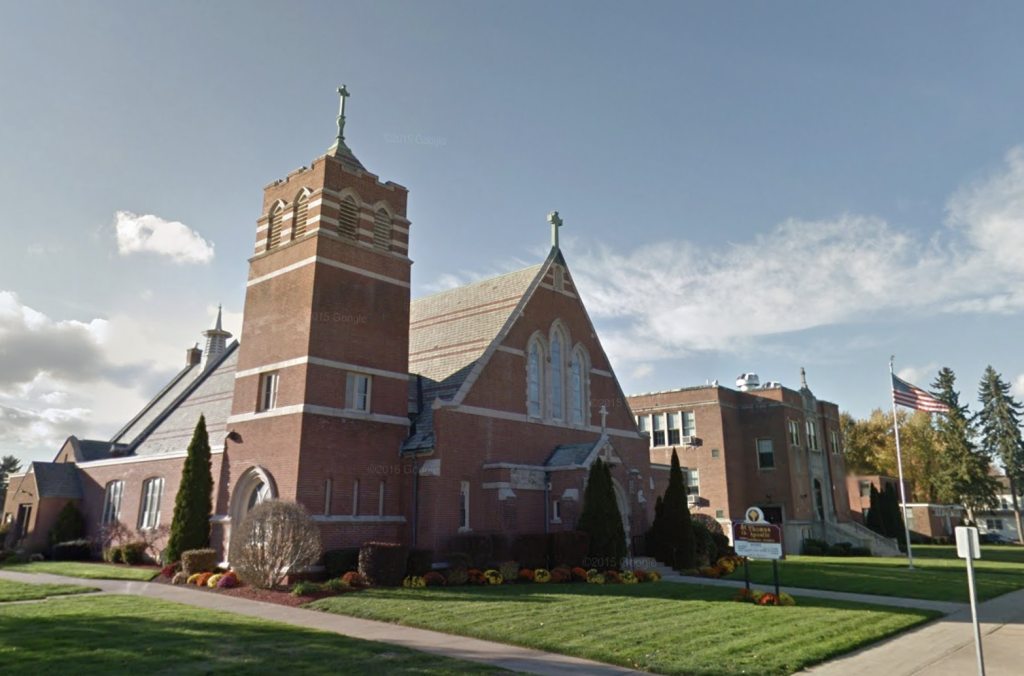
Podcast for St. Thomas of the Apostle Parish.
Episodes
Sunday May 30, 2021
Sunday May 30, 2021
There is a South African legend about a good king who ruled with great justice and wisdom. But a village in his kingdom was led by an arrogant, foolish chief who broke away from the king. The king could have very easily destroyed the chief and his henchmen. But instead, he sent a trusted messenger to the village.
The envoy journeyed alone to meet with the rebel chief to express the king's concern for the breakaway village. Had the king oppressed them? Had he treated them badly or offended them in any way? What was wrong? How could this be made right?
The chief and the elders knew that they had no grievance against the good king; they tried to mask their embarrassment with anger. Despite their harsh words, the messenger remained calm - which infuriated the chief and elders even more. So blind was their anger that they killed the king's messenger. Then, in a repulsive and despicable act, they sent to the king a clay pot filled with the murdered envoy's blood.
As news of the murder of the king's beloved advisor spread, everyone expected the king to send his warriors to destroy the evil village. But that is not what the good king did.
The king took the blood and poured it on the great flat rock that served as a meeting place for the king and his people. In the hot African sun, the liquid blood soon dried into a powder. The king then collected the powder into a medicine pouch made of lambskin. He sent the pouch to the rebellious village with this message:
"The blood of the messenger you killed is in this medicine pouch. It may bring you life or death. Though you killed him, I still invite you to come back into my kingdom on one condition. You must take some of the dry blood, mix it with water, and rub it on your hands. Then come and stand before me at the great flat rock and hold up your hands. In this way you will acknowledge your guilt in my messenger's death but that you now wish to be received back into my kingdom. If you trust my word and wear the blood of my messenger, his blood will be the means of reconciliation between us. There will be no punishment.
"But if you refuse to be reconciled by my messenger's blood, I shall send my warriors on you like locusts.
"The king has spoken. The medicine pouch is in your hands."
This South African folktale mirrors the God of the Trinity whom we have encountered in both Scripture and in the human experience: God who is "Father" of all and "king" who unites all of humanity under his providence; God who is "Son" and "messenger," who reveals the compassion of God for us and, by his blood, reconciles us to God; and God who is "Spirit," the "medicine" of reconciliation and mercy offered to all by God.
Today's solemnity of the Holy Trinity confronts us with God's "medicine pouch" - the realization of the limitless love of God for us and the decision before us every day of our lives to seek and embrace God's love in all things.+
Sunday May 23, 2021
Sunday May 23, 2021
Harry Winston’s name is legendary in the world of gemology. The company Harry Winston founded back in 1920 is considered one of the finest jewelers in the world.
There is a story about a salesman in Winston's firm who was showing a beautiful diamond to a rich Dutch merchant. The prospective customer listened thoughtfully to the expert description of the gem, but finally said, "It's a beautiful stone, but it’s not exactly what I want."
Winston had watched the scene unfold. As the merchant was making his way to the door, Winston stopped him and asked, "Do you mind if I show you that diamond once more?"
The merchant agreed. Winston took the stone in his hand. He didn’t repeat anything the salesman had said. He simply talked about the gem as an object of deep beauty. Abruptly the customer changed his mind and bought the diamond.
While he was waiting for the gem to be packaged, the customer turned to Winston and asked, "Why did I buy this diamond immediately from you when I had no difficulty at all saying ‘no’ to your salesman?"
Harry Winston answered, "That salesman is one of the best in the business. He knows diamonds - but I love them."
Today, on this Solemnity of Pentecost, we celebrate the Spirit of God: the real love, great love, that binds the Father to the Son and now binds us to God and to one another.
It is a love that transcends words and laws and sentiments and embraces the heart and soul of each one of us; it is a love that gives voice to the things we really believe but are too afraid to speak; it is a love that inspires us; it is the courage and grace to work for the dreams that we are sometimes too cynical or fearful to hope for.
May we always realize the Spirit of God within us, always aware of the presence of God in our lives that enables us to be the people God calls us to become.+
Sunday May 16, 2021
Sunday May 16, 2021
Charles Dickens wrote a novel called Great Expectations. It's about a boy named Pip who came from a poor, lower-class family in a small English town. He had no hope of ever leaving his surroundings, getting a good education, and amounting to something. He seemed doomed to a life of poverty.
Then, one day, Pip was playing in the hills outside his town, and he suddenly met up with an escaped prisoner who was in desperate need of help. Pip went out of his way to help him. Months later, a lawyer from London knocked on the door of Pip's home. He informed Pip's family that an anonymous donor arranged to send him to London to be brought up in an upper-class home and given the finest education.
From that moment on, Pip's life changed most remarkably. He was rescued from a life of poverty and given a life of hope and opportunity.
Years later, when Pip was a successful businessman living in a fine London home, a dirty, lower-class workingman knocked at his door. Pip treated him rudely and tried to get rid of him. The man was the prisoner that Pip had befriended years before.
This same man was the anonymous donor who rescued Pip from his life of poverty and ignorance and made possible the life of wealth and education he enjoyed. The man had used all of his resources to see that Pip was educated and living well, and he was so proud to see that Pip had, indeed, done very well.
That story is a kind of parable of Jesus and each one of us. Sin had doomed us to a life of slavery and despair. We were without any hope. We had nothing to which we could look forward.
But then came Jesus. He rescued us from that doomed life and gave us a life of freedom and spiritual opportunity. Everything we are, and have, and enjoy today, we owe to Jesus who bought it for us at the price of His own life.
Now we find ourselves in Pip's position. Just as he became aware of how much he owed the man at his door, so we are aware of how much we owe Jesus. And just as Pip suddenly faced an important decision, so do we: How will we use our new life of freedom and opportunity? How will we show our gratitude for all that Jesus has done for us?
And this brings us to today's Gospel reading. Like Pip, each of Jesus' Apostles had to decide what they would do with their new life of freedom and opportunity and how they would show their gratitude to Jesus.
Each one, except Judas, decided to commit to Jesus and to commit his life to the task of completing the work Jesus began. And so, Jesus prayed to His Father for them, asking Him to protect them and saying, "As you have sent me into the world, so I have sent them into the world."
Our presence here in this Church, celebrating the Eucharist, today says that, like the Apostles, we, too, have decided to cast our lot with Jesus. We, too, have decided to commit our lives to complete the task that Jesus began. And so that same prayer that Jesus prayed for the Apostles almost 2,000 years ago, He prays for us. Just as He sent the Apostles into the world, so He sends us into the world to complete His task on earth.
Let us close with the words from today's second reading: "Beloved, if God has loved us so, we must have the same love for one another… He has given us His Spirit. We have seen for ourselves the love God has for us."+
Sunday May 09, 2021
Sunday May 09, 2021
There’s an old story about a political dignitary who attended the coronation of King Edward VII in England. He witnessed the historic moment when the crown was placed on the king’s head. He danced at the coronation ball, and he mingled with royalty and celebrities.
When he returned home, someone asked him if there was a moment that stood out above all others. He said, “Yes.” It took place one night as he was returning to his hotel. It was bitter cold and, as he passed a vacant building, he saw two street children huddled together in the doorway. One was a boy of about twelve; the other was a girl about four, presumably his sister.
The boy had taken off his coat and put it around his little sister’s shoulders. And he had taken off his wool cap and put it around her feet. The dignitary said that the image completely eclipsed the pomp and ceremony of the coronation; it was an image he would remember for the rest of his life.
That story dramatizes the kind of love Jesus describes in today’s Gospel when he says, “Love one another as I love you.” And when he says, “No one has greater love than this, to lay down one’s life for one’s friends.”
It’s been said that love boils down to a question of giving: self-giving, forgiving, and thanksgiving.
We’ve seen how love is a question of self-giving in the story of the little boy huddled with his young sister as he tried to keep her warm while he must have been freezing.
Forgiveness, too, must be a part of every loving relationship, precisely because we are human. Being human, we sin against one another and hurt one another — even those we love most. For that reason, we must be ready to forgive one another, and we must be prepared to do this not just once, but, as Jesus says, “seventy times seven times.”
How often we say the LORD’s Prayer, with the words, “Forgive us our trespasses as we forgive those who trespass against us.” I used to have a friend in college who would annoy people around him at Mass because when he said the LORD’s Prayer, he changed the words and would say, “Forgive us our trespasses as we SHOULD forgive those who trespass against us.”
That was really avoidance. Jesus didn’t say that God the Father would do what we should do but don’t do; he told us to do as he does. He told us that he would deal with us with the same measure that we deal with others. The words in the LORD’s Prayer are not some feeble attempt at showing us how we might forgive. Instead, they give a clear mandate that we are to forgive one another, regardless of how hard or painful that might be, so that we may be released from the tombs that grudges and anger place us in.
The third kind of giving that love involves is thanksgiving. Thanksgiving is essential when it comes to our love for God. We don’t have much else to give God except thanks for all that God has given to us.
At the end of World War I, the late actress Helen Hayes was 18 years old, starring on Broadway.
During a rehearsal one day, someone came running into the theater, shouting news that the war was over. Immediately, the entire place went wild. The cast forgot about the rehearsal and took off to celebrate. But Helen didn’t join them. Instead, she left the theater and headed for St. Patrick’s Cathedral, making her way through the crowds of celebrating people.
She said she “had visions of being the only person in that vast chapel offering up a prayer of thanks to the LORD. But, when [she] got there, the Cathedral was so packed, [she] couldn’t get inside. [She] was forced to offer [her] prayer on the steps.”
And so, today, we are called upon to search out those areas in our lives where we can be more self-giving, more forgiving, and where we need to offer a prayer of thanksgiving. We’re called to recognize these areas and then to do something about them. Indeed, as St. Francis of Assisi prayed, “it is in giving that we receive, and it is in pardoning that we are pardoned.” In our thanks, we recognize our dependence on God and on all those we love. In doing these things, we touch the mystery of God’s love and share in that mystery as we become channels of God’s peace.+
Sunday May 02, 2021
Sunday May 02, 2021
The late Jesuit priest Fr. Mark Link told a story of two friends who grew up together. They were inseparable; when you saw one, you saw the other. What no one realized, though, was that one had a strong character, while the other had a weaker character. As long as they were together, the one with the weaker character was all right.
After high school, the two friends went to different colleges. It was only a matter of time before the weaker friend fell into temptation and made a wreck of his life. His family despaired and lost hope for him.
When the stronger friend heard what happened, he went to his former buddy and helped him out of his situation, and brought him back to where he was before. It was then that the weaker friend realized that needed his friend; he needed to stay in contact with him to draw inspiration and strength from him.
That’s something of the way it is with Jesus and each one of us. And that’s precisely what Jesus is telling us in today’s Gospel reading from John. United with him we can do anything. Separated from him we can do nothing.
And so, today’s Gospel reading is telling us two important things: First, it is telling us that Jesus is the new and true vine that God has planted in the vineyard. Second, it is telling us that only by uniting ourselves to Jesus will we bear fruit and grow into the persons God made us to be.
There is a movie called Shadow of the Hawk. In it a young couple and a Native American guide are making their way up a mountainside, fleeing from evil people. At one point the young woman slumps to the ground and says, “I cannot take another step.” The young man lifts her to her feet and says, “But… we must go on. We have no other choice!” She shakes her head and says, “I can’t go on.”
The guide says to the young man, “Hold her close to your heart. Let your strength and your courage flow out of your body and into hers.” The young man does this and, in a few minutes, the young woman says, “Now I can go on, now I can do it.” We do this for each other so often. We give one another encouragement and strength and energy to do amazing things in this life that we perhaps could not find the energy and courage to do on our own.
This is the same kind of role that Jesus wants to play in our lives. He wants to share with us not only his own strength and his own courage but also his very life. United with Jesus we can do great things. Separated from him we will struggle to do anything.+
Sunday Apr 25, 2021
Sunday Apr 25, 2021
The fall of Adam and Eve came about because of their lack of trust in God. Jesus came to win back that lost trust and to lead us away from our self-centered, fear-filled, sinful lives and back into His flock. By giving up His own life to atone for our sins, He showed that the Father deserves our trust, that He will forgive us, protect us, and lead us to rich pastures.
He is the Good Shepherd, the One we can trust, the One who cares more about our lives than we do ourselves, the One who came not to be served, but to serve, and to give His life as a ransom for ours.
It's not always easy to trust in God, but it is always possible.
We have been given the gift of faith; we just have to have the courage to use it.
After He had been elected Pope, Pius XI made his way to the study of his predecessor, Pope Benedict XV, who had tried to put an end to World War I. Pope Pius began to feel the crushing burden of his office. He fell to his knees in prayer. When he looked up, he saw on the desk a framed picture of Jesus quieting the storm at sea when He uttered the encouraging words: "Peace, be still." From that time on the new pope kept that picture on his desk to remind him of Christ’s calming presence.
St. Paul of the Cross wrote: "Stop listening to your fears. God is your guide and your Father, Teacher, and Spouse. Abandon yourself into [Him]. Keep up your spiritual exercises and be faithful in prayer." Christ, our Good Shepherd deserves nothing less than that.
All of us trust Jesus but we can learn to trust Him more. And if we trust Him more completely, we will follow Him more closely, and He will fill our lives more fully with strength, grace, and joy.
There are two easy ways to grow in this life-giving trust. First, through prayer. Every time we turn to God in prayer, either to thank Him for His blessings, to ask Him for help, or simply to praise Him, we put ourselves into contact with His goodness. And that contact strengthens our trust because knowing God better makes it easier to trust Him.
Second, through telling others the Good News of Christ's Gospel.
Just as in today's first reading Peter explained that Jesus is our Savior, our Good Shepherd, so we are called to share with others the treasure of faith we have received.
Each of us knows someone who is facing difficulty in life.
This is the perfect time to reach out to them, to support them, and to let them know that Jesus rose from the dead so that He could be their strength and their guide through life's struggles so that they wouldn't have to struggle alone. When we spread the light of faith to others, our own trust grows, because the light of a thousand candles brightens a room far more than the light of one candle.+
Sunday Apr 18, 2021
Sunday Apr 18, 2021
The message we receive in our Scripture readings today is that before Jesus could rise to glory on Easter, He first had to suffer and die. Peter puts it this way in our first reading today: “God has thus brought to fulfillment what he had announced beforehand through… all the prophets, that his Messiah would suffer [before being raised to glory].”
Jesus refers to this in our Gospel reading today. He adds elsewhere in the Gospel that what has happened to Him must also happen to us when He says, “Remember, no slave is greater than his master. If they persecuted me, they will also persecute you.”
What the Gospel is saying is that if we are to rise to glory as Jesus did, we must also suffer as He did. When this happens, we may beg God to take it away as Jesus begged His Father in the Garden of Gethsemane but, in the end, we will cry for joy just as Jesus did.
St. Augustine put this same message this way in a sermon more than 1,500 years ago. He said, “You are like a piece of pottery, shaped by instruction, fired by tribulation. When you are put in the oven, therefore, keep your thoughts on the time when you will be taken out again; for God is faithful and will guard both your going in and your coming out.”
Back in 1954, the great French painter, Henri Matisse died at the age of 86. In the last years of his life, arthritis crippled and deformed his hands making it painful for him to hold a paintbrush. Yet, he continued to paint, placing a cloth between his fingers and the brush to keep the brush from slipping.
One day, someone asked Matisse why he submitted his body to such suffering. Why did he continue to paint in the face of such great physical pain? Matisse replied, “The pain passes but the beauty remains.”
In a similar way, the pain you and I experience in being shaped into something useful and beautiful for God will pass. But the beauty of what we become in the process will remain for ever.+
Sunday Apr 11, 2021
Sunday Apr 11, 2021
Once there was a street vendor who sold hot dogs -- the best hot dogs in town. Because he was hard of hearing, he didn't have a radio; because he had trouble with his eyes, he didn't read a newspaper or watch much television. But he sold delicious hot dogs. He started with a few signs on the highway advertising them; every day he was at his favorite corner calling out to people to buy a hot dog. Soon the word was out about his great hot dogs. He increased his meat and bun orders. He bought a bigger stove to take care of his trade.
One day his son was home from college and decided to help out. He said to his father, "Dad, haven't you been listening to the radio? Haven't you been reading the newspapers? These are tough times. There's a recession on. The stock market is collapsing. The dollar is falling. Nobody's buying hot dogs anymore."
"Gee," the father thought, "my son's been to college, he reads the papers and listens to the radio, so he ought to know."
So, the hot dog vendor cut back his meat and bun orders, took down his few highway signs, and no longer went out with hot dog cart. His sales fell overnight.
"You're right, son," the hot dog vendor said. "I had no idea times were so hard. We certainly are in the middle of a big recession."
It's so easy to let bad news, disappointment, and hardship overwhelm us. Much like Thomas in today's Gospel, we can let ourselves become so beaten down and discouraged by life that our cynicism begins to destroy our spirits: We are no longer able to realize God's presence in our lives; we lose all reason to dream, to hope, to approach life with any enthusiasm; we let our discouragement and failures overwhelm the many good things that have happened to give our lives joy and meaning; we fail to see this life of ours as a gift from God, given in order that we might discover God and, in our search, discover ourselves.
Such faith is the antithesis of a cynicism we know too well, a cynicism that refuses to embrace the possibilities of resurrection in the throes of death. May our continuing celebration of Easter transform our attitudes and perspectives, opening our eyes and hearts and spirits to encounter God in all of creation; in every manifestation of selfless, joyful love; in every victory of light over darkness, of hope over despair, of good over evil.+
Friday Apr 02, 2021
Friday Apr 02, 2021
A few years ago, a woman was standing outside a church in New York City, hesitating about whether to go inside. Her name was Elaine Pagels, and she was a brilliant historian at Princeton University. Although her specialty was the history of ancient Christianity, it had been years since she herself had gone to church.
Now she was in a desperate frame of mind. Her young son lay in a hospital a few blocks away, just diagnosed with an incurable disease. As she listened to the music drift out of the church and heard the liturgy begin, she found herself drawn in. Writing about this moment in her book Beyond Belief, Pagels said that she was looking for a place to take her fears and grief. Inside the church, she thought, were people who knew “how to deal with death.”
Is that right? Are Christians people who know how to deal with death? Not in the sense that we have knockdown answers to the questions and the terrors that it brings. When the diagnosis comes back with our name on it when brutal injustice is done to us or our loved ones, our world is shattered like anyone else’s.
What we have, instead of answers, is Jesus Christ. In Him, God was pleased to dwell, and in Him, God Himself entered into the fear and the grief, the questions and the terrors of this life.
This is the amazing, fearful, and saving story that is our Gospel today. Fearful, for this reason: The anointed one of God, God’s beloved Son, did not escape suffering or death, did not escape injustice. As Isaiah says, He was “afflicted,” “pierced,” and “crushed.”
But this fearful story is the saving Word to us because of who Christ was and is. Because it was God, the Creator of the universe, who entered completely into this man’s journey toward death, entered even into the silence of the tomb, then our journey down that same road has to be seen in a new way. Our journey to Good Friday, and through all the Good Friday experiences along the way, is not a journey away from God or a journey away from life but part of the mysterious journey back to God.
This is why Jesus can say on the Cross, in His final moment, “It is finished,” and mean by that not “It is over” but “It is accomplished.” What has been accomplished? The fragile gift of life has been handed back to God.
The other Gospel accounts tell us that Jesus used His moments on the Cross to offer forgiveness to one of the men being executed beside Him and to pray for those who were putting Him to death. The Gospel of John, though, reports that after saying, “It is finished,” Jesus “gave up His spirit.” The Greek words for “gave up His spirit” are sometimes translated as “He delivered His spirit” or “He handed over” His spirit. That reading would be consistent with what Jesus is doing in the Gospel of John. He is trustingly handing His life over—not to Pilate or to Caesar but back to God.
Jesus hands His life back to God in a particular way: by first handing it on to others. In the last moments on the Cross, He hands Mary, His mother, and one of the disciples over to each other, creating a new family. He takes their grief and despair and turns it into the occasion for new relationships and new responsibilities.
This act of handing our life back to God is not something we do only at the end of life. It is in the nature of everyday existence. We are always expending ourselves, exerting ourselves. The question is whether we are exerting ourselves only to preserve our life and shore up what we have and the illusions of our immortality. Or, trusting that God is with us in this fleeting life, are we handing on life to others?
The One who went to the Cross, who embraces our life from womb to tomb, calls us to follow Him into the dark uncertainties of this world. In fellowship with Jesus Christ, we can live in a way that hands life back to God by handing it on to others. And then we wait.+
Thursday Apr 01, 2021
Thursday Apr 01, 2021
In our Gospel reading, we witness the scene of Jesus washing the feet of his disciples at the Last Supper. There is an incident from this scene that we don’t see in our reading today but it is provided for us in Luke’s Gospel and I think most of us are very familiar with it. In the midst of the incredible things that are happening in the Upper Room, some of the disciples begin to participate in a petty – and even childish – argument as to who it is that is greatest among them, and the argument is rather heated.
One has to wonder what Jesus’ inner reaction was to this completely meaningless question of His disciples. Did He shake his head? Did He roll his eyes? Did He bite His tongue? Did He weep or did He laugh because He saw the humor of it? What He did do was to figure that the nonsense of the disciples would give Him a way to teach them. He got up and picked up a towel and wrapped it around His waist. Then He took a pitcher and basin of water and began to wash His disciples’ feet.
As we know, Peter protested. This was because Peter, being the leader, saw the implications; he knew the same would be expected of him. He reacted much the same way we would react when someone of great importance would do something like that. We would shrink away from it. We know that we are supposed to be humble before God but it is difficult to see our God being humble before us.
This is difficult for us to take for two reasons. First, because we are faced with the fact that God did humble Himself for our sakes. God did this for each one of us. Second, because along with this act of humility, God gave us a command. We are given the command to serve and to break bread and, therefore, to reveal the presence of Christ. This is an awesome responsibility; this is an awesome call. Every time we gather to break the One Bread together and to share the One Chalice, the command is there.
This, very simply, is what our Eucharist, — our Mass— is all about: the presence of the Almighty in basic bread and the call to be bread to others. To break open the Word of Scripture, to consecrate bread and wine and so to bring Christ among us, both of these, become our comfort and our challenge.
This is what we celebrate on Holy Thursday: The gift of God who gives His Flesh and Blood and, with no apology, gives us the command to do the same.+