
16.7K
Downloads
1447
Episodes
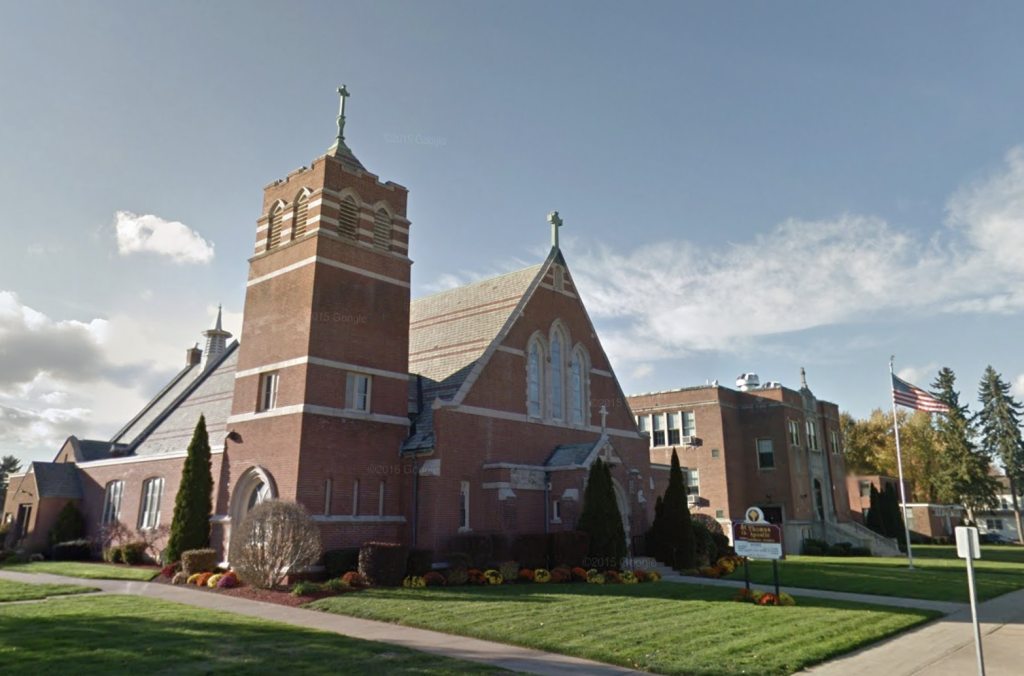
Podcast for St. Thomas of the Apostle Parish.
Episodes

Sunday Jan 08, 2023
Sunday Jan 08, 2023
On this Feast of the Epiphany, we place in our crèches, our Nativity scenes, statues representing the Three Kings or the Three Wise Men who came from the East. On seeing the star in the sky, the Three Kings began to follow it to Bethlehem, where they would offer the Infant Jesus their gifts of gold, frankincense, and myrrh.
These expensive gifts have a symbolic meaning: gold gives acclaim to the kingship of Jesus. The frankincense acknowledges and praises Jesus' divinity. Myrrh recognizes Jesus' humanity and that He would experience death and burial.
As we celebrate the Magi's visit to the Bethlehem Manger, we contemplate every Christian's commitment to spreading the Gospel. We are called to bring tidings of great joy to all people, not just in our words but in our actions, bringing the love and mercy of Jesus to those most in need.
A lesson that the visit of the Magi teaches us is that all of us are on a journey toward Christ, and some of us seem to come from afar, while some of us not so far. The Magi came from lofty places, yet they traveled afar to see a baby in a manger, a stable, for livestock. Instead of being repulsed by these surroundings, they fell to their knees in worship and adoration, filled with tremendous joy, a joy they would share with others as they told their story as they returned to their lands.
May our experience of the Manger Scene also fill us with great joy. May that joy and that knowledge of our Savior be shared by us in the ways we lead our lives and in the ways that we seek to bring the love, mercy, and peace of the Christ Child to all we meet.
Wednesday Sep 21, 2022
Wednesday Sep 21, 2022
Today’s Gospel story is one that we know well. Matthew is a tax collector and, presumably, a sinful man. Nevertheless, as did other sinners, he followed Jesus and ate with Him. The Pharisees objected to this because it violated their laws about ritual purity.
In His response to their objections, Jesus recalled Hosea when He said, “Go and learn the meaning of the words, ‘I desire mercy, not sacrifice.’” Jesus was referring to the acts of Temple sacrifice. If mercy is above these sacrifices, then how much more is it above the laws of ritual purity?
The Pharisees were well-versed in Scripture and the law; they saw adherence to these strict laws in every aspect of life as doing the will of God. However, Jesus put mercy and love above these laws and traditions.
St. Paul affirmed this by saying, “If I speak in human and angelic tongues but do not have love, I am a resounding gong or a clashing cymbal. And if I have the gift of prophecy and comprehend all mysteries and all knowledge; if I have all faith so as to move mountains but do not have love, I am nothing. If I give away everything I own, and if I hand my body over so that I may boast but do not have love, I gain nothing. Love is patient, love is kind.” (1 Corinthians 13:1-4a)
Mercy springs forth from love and not righteousness. Mercy is the voice of God’s love for us and His desire that we have life and have it to the fullest, on earth and in the kingdom to come. Exclusion and criticism of sinners – of those whom Jesus came to save – is not a part of a merciful response.
Pope Francis once said: “None of us must feel superior to anyone. None of us should look down at others from above. The only time we can look at a person in this way is when we are helping them to stand up.”
As we seek to answer the call to spread the Good News, let us pray that the mercy and love of God may be the source of all our actions, words, and attitudes toward and on behalf of the people we are called to serve.+
Tuesday Sep 20, 2022
Tuesday Sep 20, 2022
In response to the people telling Him that family members were looking for Him, Jesus said that His real family “are those who hear the Word of God and act on it.” It is clear from His response that Jesus wants to relate to us as His family. He calls us His brothers and sisters and wants us to belong to His spiritual family. For us to become His family is simple in theory: we need to hear the Word of God and put it into practice in our everyday lives.
Throughout His life and ministry, Jesus focused on the Word of God and the will of God. He heard that Word so fully that it shaped everything He said and did. John’s Gospel even calls Jesus the Word made flesh. (John 1:14)
As Christians, we are called to hear God's Word and act on it in everything we say and do. Like the seed that fell on rich soil, we must take the Word to our deepest selves and yield an abundant harvest. (Matthew 13:18) If we listen to God’s Word and let it shape us and our lives, then we are brothers and sisters to Jesus our LORD. +
Monday Sep 19, 2022
Monday Sep 19, 2022
The lamp about which Jesus speaks in our Gospel passage today was an oil lamp with a wick that could be lit. These lamps were an everyday household item in the time of Jesus and, really, for thousands of years. They were so common that, even today, it is not unusual to find one in the Mediterranean area completely intact. These lamps would light up an entire house at night. So, as Jesus said, no one would light such a lamp and then hide it under a bowl or a bed; that would make no sense.
In today’s Gospel, Jesus uses that light of the lamp as a metaphor for our faith. If the “light” of faith has been ignited in our hearts, minds, and souls, it is not meant to be covered or hidden. Rather, it should be shared so that it may cast light on others so that they, too, may know and have faith in God.
The light of our faith needs to shine in our lives. It should be seen in how we live: in what we do and how we do it. To make that light of faith shine brightly, we must kindle it by listening to God’s Word. Jesus says, “Take care, then, how you hear. To anyone who has, more will be given.” After listening to His Word, we must let that light of faith shine forth through our words and our way of life. +
Sunday Sep 18, 2022
Sunday Sep 18, 2022
It is a part of human nature that we move about our lives believing that we are building a life and a world that will last forever. But everything we have, create, or use will one day be gone.
Today’s Gospel reading calls us to let go of the temporal and material things that fill our lives and, instead, to seek to possess the lasting treasures of God:
- Love of family and friends.
- The meaning that comes from living the principles of justice and mercy.
- The joy of helping others attain their dreams and hopes for themselves and their families.
The loving relationships that we share gain us treasure in heaven. No act of terrorism, injustice, violence, hatred, or indifference can take away the love that we share. These things may change the way that we can express that love — we will not see our loved ones when they die, we will not relate to them in the ways to which we have grown accustomed, but nothing can take that love away, and nothing can keep that love from being fulfilled in the kingdom of God. All love comes from God, and it is the greatest treasure we have in this life and the only treasure that we will bring from this life into the next.
As we pray about our Gospel reading this week, may we recognize those areas of our lives that keep us from the love of God and one another, may we have the courage and the wisdom to change our lives in ways that will bring us closer to the love of God and closer to our salvation.+
Saturday Sep 17, 2022
Saturday Sep 17, 2022
Like most of Jesus’ parables, The Parable of the Sower challenges us to understand the ways of God and human nature and to get us to look deep into ourselves to understand how we must live to grow in the love of God and move closer to His kingdom. The Parable of the Sower invites us to ask ourselves what soil we are like.
Perhaps the answer is that we are like all of them. Perhaps there are different areas of our lives where we have opened ourselves to the grace of God more than we have in other areas.
Let us pray that we may open ourselves to become like the fertile soil where the seed of God’s grace may take root and flourish and produce great fruit in our lives and in the life of heaven.+
Friday Sep 16, 2022
Friday Sep 16, 2022
Throughout His ministry on earth, Jesus made it clear that He came not to be served but to serve. Although He lived on this earth both as God and as a human, He still needed the help of others to fulfill His mission; He wanted people to be a part of the mission.
In today’s Gospel passage, St. Luke says that as Jesus made His way preaching throughout many towns and villages, some women provided for Him out of their own resources. Their service to Him enabled Him to serve others.
If Jesus needed the help of others to complete His mission, then we are also in need of such help. As Christians, we are called to serve others, and we are also called to accept the service of others because we do need their help; we cannot answer God’s call simply using our own resources.
Serving others calls for a spirit of generosity and humility, wanting to do for others while recognizing our need for interdependence with others. St. Paul taught us that we are all interdependent within the Church, the Body of Christ on earth. The Spirit is at work in all our lives in many ways. We need others, and others need us. We all have something worthwhile to give and something worthwhile to receive.
Let us recognize our need for, and be grateful for, those who journey with us and help us through life.+
Thursday Sep 15, 2022
Thursday Sep 15, 2022
Whenever someone we love is suffering or in pain, we tend to suffer along with them. This is particularly true of parents. When their sons or daughters struggle physically, emotionally, or spiritually, parents suffer just as much as their children; sometimes, even more.
When we open our hearts to someone in love, there is always a chance they will be broken. Love, by its very nature, causes some suffering. The only way to avoid it is to close our hearts to love. But to do that is only to be half alive. The only way to live is to love and accept the inescapable suffering it brings.
As she stood at the foot of the Cross and watched Jesus die, Mary's heart was broken. Many years earlier, as he held the infant Jesus in his arms, Simeon had linked Jesus' suffering with that of his mother, saying to her, "And you yourself a sword will pierce."[1]
When our troubles are difficult to bear, we can look to Our Lady of Sorrows as our inspiration and help.+
Wednesday Sep 14, 2022
Wednesday Sep 14, 2022
In the time of Jesus, no one thought of crucifixion as exaltation or a victory. Yet, the exaltation, the triumph of the Cross on which Jesus' life was taken, is indeed what the Church celebrates today. In the trauma of crucifixion, Jesus was victorious. It was the triumph of love over hatred. As Saint John says, "God so loved the world that He gave His only Son.”[1] Jesus revealed God's love in all He said and did, but He demonstrated His love most fully as he hung on the Cross.
For St. Paul, the Cross of Christ reveals the power and wisdom of God. Shortly before that first Good Friday, Jesus foreknew His crucifixion would glorify Him. Authentic love is always life-giving, and that is particularly so of God's love. The Cross is the triumph of love over hatred and life over death. Jesus' execution on the Cross was cruel, but through His death, He passed over into a new life — a life now offered to us all. The blood and water that flowed from the side of Jesus speak to us of the life that flows through the death of Jesus.
The Cross is celebrated in Christian art as the Tree of Life. The triumph, the exaltation, of the Cross, which is the triumph of God the Father and Jesus Christ over Satan and all the forces of evil and death, is a triumph we all share. From the Cross, Jesus draws all of us into the love and life of God. As He said in John's gospel, "When I am lifted up from the earth, I will draw everyone to myself."[2] We must let ourselves be drawn to Him. +
Tuesday Sep 13, 2022
Tuesday Sep 13, 2022
In our Gospel reading, we hear about a widow mourning her only son. In the time and place where this scene occurs, a widow would have no means to provide for herself; she would have to rely on her son. In this case, her only son has died. She perhaps mourns not only for her dead son but also for the possibly destitute life ahead of her.
So, Jesus’ raising her son from the dead is not simply a miracle of life after death. It is another example of Jesus’ compassion for the poor, the suffering, and those who mourn. A compassion that is often lacking in our world.
Let us pray that the compassion of Jesus may fill our hearts and souls, as well as our words and actions, so that His love may be spread through us as His ambassadors in our world.+