
16.7K
Downloads
1447
Episodes
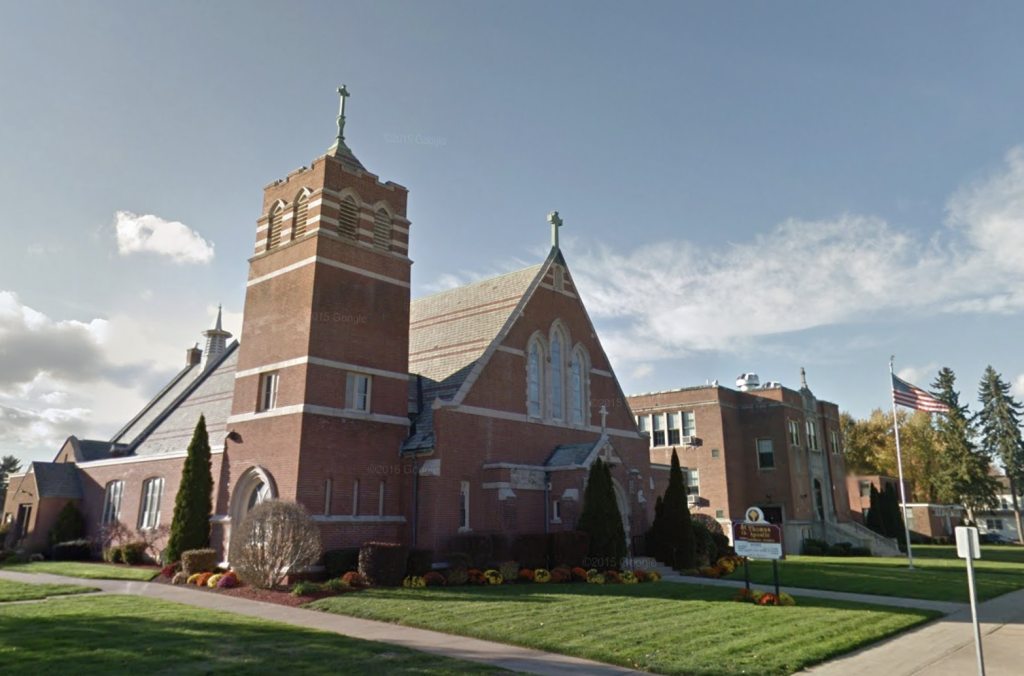
Podcast for St. Thomas of the Apostle Parish.
Episodes
Tuesday Oct 17, 2023
Tuesday Oct 17, 2023
The Gospels have many instances like the one we witness in today’s reading. Jesus is again in the company of the Pharisees – he has actually been invited to dine in the home of a Pharisee – and He is faced with their judgment based on the letter of the Law (as they interpret it).
Jesus sees that the Pharisee noted that He did not perform the customary ritual washings before reclining at table to dine. So, Jesus points out the error of the Pharisees in their emphasis on the letter of the Law rather than the spirit of the Law.
This really is at the heart of Jesus’ ongoing disagreement with the Pharisees. They focus on minute details of particular practices and rituals while disregarding God’s call for mercy and compassion for the sick, the suffering, and the oppressed.
In the story of the Good Samaritan, the people who refused to help the injured man were doing so not because they didn’t care but because they were observing the letter of the Law regarding purity; they couldn’t touch a bleeding person. The Samaritan, who was not beholden to these laws, fulfilled God’s Law by helping someone in need.
Sometimes, we can focus on tiny details while missing the big picture. Let us pray that all the things that we do in life, whether they be mundane or great, may focus on the two most important laws – love of God and love of neighbor – and may our doing so bring a spirit of purity to our lives and our souls, helping us to become the good people that God made each of us to be.
Monday Oct 16, 2023
Monday Oct 16, 2023
Jesus often appeared discouraged with those who wanted signs and were disinclined to put their faith in the power given to Him by His Father in heaven. He knew that, in actuality, no sign would give them faith; they would find themselves entertained by the "magic" of the sign and then move on to something else. They would totally miss the power and the authority behind such a sign.
Jesus points to the sign and the preaching of Jonah (a "mere" prophet) and how he led the Ninevites to repentance; yet, they had one among them who was far greater than Jonah. They couldn't see Him for who He was or understand what He was about. He was just too familiar for them.
Let us pray that the Holy Spirit will help us recognize when the power and presence of Jesus are active in the ordinary moments of our everyday lives; may that recognition lead us to greater faith in God's love, mercy, and active presence in our midst.
Sunday Oct 15, 2023
Sunday Oct 15, 2023
There is a story of a mother who lived with her young son in an apartment in a large city. She would take him to PreK in the morning and pick him up again on her way home from work in the evening.
A week before her son's fifth birthday, she decided to have a party for him. She invited five of his friends from PreK to be his guests. Not one of the five children showed up when the time came for his party. The mother was saddened because she knew how much this party meant to her little son; he had never had a party in his honor before.
The mother hurried across the hallway and asked the elderly couple who lived there to come to the party. She then called a co-worker and asked her to come to the party. And so, she did have a party for her son.
At first, the little boy cried when he learned that his friends were not coming. Soon, however, he began to have fun and enjoy the company of those who did come to the party.
That story resembles today's Parable. It also concerns guests who did not show up for a party and had to be replaced at the last minute. Like all of Jesus' Parables, today's Parable has three levels of meaning.
First, there is the literal meaning. It's simply the story Jesus tells: A king holds a wedding feast for his son. When the invited guests don't show up, the king replaces them with substitute guests.
The second level is the intended lesson Jesus wanted the people to learn from the story. The wedding feast stands for the kingdom of heaven. The invited guests were the Chosen People who made a covenant with God. The substitute guests were the sinners and Gentiles of Jesus' time. They were the people who accepted Jesus after God's Chosen People rejected him. Jesus wanted the people to understand that the kingdom of God is now open to all people, not just the Chosen People. No one is excluded, not even the Gentiles. This was a very revolutionary idea at the time of Jesus.
This brings us to the third level: What this Parable is supposed to say to us today, in our contemporary world. For us, the ending of the Parable is what is most surprising. It describes a substitute guest expelled from the feast because he came to it without a wedding garment or clothing considered worthy of a formal gathering. He wore the same clothes he might have worn to clean out his stables.
On the surface, this seems rather rude on the part of the king. After all, he invited the man at the last minute. But there is, of course, a deeper meaning to this. The man responded to the king's invitation — but on his own terms. He refused to conform to the etiquette standard in ancient times when people entered the king's presence.
Right here, we find the Parable's meaning in our contemporary lives. We are among the substitute guests whom God has invited to the feast in the kingdom of heaven. We have been asked to sit at the banquet of eternal life with His Son, Jesus. But God is clear that if we accept this invitation, we must do it on God's terms and not our own. We must surrender ourselves to the will of God and be transformed by God's power. The wedding garment is symbolic of our openness to the will and the grace of God. It means that we have prepared ourselves, that is, our lives and our souls, for the feast of heaven.
Concretely, this means that in our lives, we have positively answered God's call to love all people, especially the poor and the needy, and that our answering of this call shows up in our actions and attitudes. It shows up in our service of God and others. It means we have prepared our hearts and souls by participating in the Church's work of spreading the Gospel message of peace, love, and justice. It means bringing these ideals to reality in some way so that others may not just know of God's love but may experience it through the work of our hands.
Saturday Oct 14, 2023
Saturday Oct 14, 2023
Being only two verses, today's Gospel must be one of the shortest readings in our Lectionary. This quick story of the exchange between Jesus and a nameless woman is told only by St. Luke.
Women have a more central place in Luke's Gospel than they do in the other Gospels. Of the four Evangelists, Luke offers the best balance between the male and female disciples of Jesus.
On this particular occasion, a woman was so impressed by Jesus that she suddenly praised His mother, whom she proclaimed to be blessed for carrying Jesus in her womb.
While we know that Jesus loved His mother, He used the woman's words as a chance to praise a much wider group. Even happier and more blessed than His mother are those who hear the Word of God and keep it. Jesus' mother belonged to that broader group and heard and kept the Word of God more than anyone else.
Mary's blessedness is due to giving herself to hearing and doing God's Word. To that Word, her lifelong reply was, "May it be to me according to your word." [Luke 1:38] May we devote ourselves to hearing and doing God's Word, that we, too, may be blessed.
Friday Oct 13, 2023
Friday Oct 13, 2023
As we just heard in today's Gospel, some people, to test Him, asked Jesus for a sign, some miracle from heaven. They did so because they didn't recognize God's presence in the person of Jesus. So, they believed that if He performed some sign on demand, it would prove God was with Him.
In truth, God was powerfully at work in Jesus' ministry, but the people lacked eyes of faith to see it. There was no need for miracles for the people to accept His message. As Jesus would later say to Thomas after the Resurrection, "Blessed are they who have not seen and have believed." [John 20:29]
Sometimes, even people of faith can be enticed to seek "signs and wonders." We can fail to see that the LORD is present among us in and through the goodness, kindness, mercy, love, and hospitality of others, in all kinds of ordinary expressions of love, even in people's quiet prayerfulness.
We can miss the divine presence in the everyday and the familiar. The great Irish patriot and poet Joseph Mary Plunkett wrote of Jesus, "I see His blood upon the rose and in the stars the glory of His eyes." Nature spoke to him of Christ. The best of human nature and our relationships with one another can also speak to us of God.
Thursday Oct 12, 2023
Thursday Oct 12, 2023
Today's Gospel passage comes just after Jesus teaches His disciples how to pray what we now call the "The LORD's Prayer." The intentions in the prayer are simple and straightforward: We praise God and ask that His kingdom come upon the earth; we pray for that which we need each day, for the forgiveness of our sins in the same way we forgive, that we not be put to the final test, and that God will protect us from evil.
Jesus declares that we need to turn to our Father in heaven, in prayer, and ask for that which we genuinely need in this life. He does not tell us to pray for miracles, selfish things, or things as we would have them. Instead, He tells us to trust that the Father will give us good things; He tells us to trust that the Father will provide us with the Holy Spirit.
It is the Holy Spirit that will give us the courage, trust, and faith we need to ask in faith that God's will be done in our lives, to trust that, despite what we may believe to be the best for ourselves and our world, God's ways are better; to trust that even when things don't work out as we had hoped, our prayers are still answered in having God's Holy Spirit alive in our hearts, minds, and souls, giving us strength and wisdom as well as trust in the promise of redemption and eternal life.
Wednesday Oct 11, 2023
Wednesday Oct 11, 2023
Today's first reading illustrates the balance between principles and their practical application. There is a stark contradiction in Jonah's attitude: This prophet, who claimed to "worship the LORD, the God of heaven, who made the sea and the dry land" (Jonah 1:9), seeks to run from God by taking a long voyage on the sea.
The irony in today's passage is heartbreaking: Jonah knows that God is filled with mercy and grace and is slow to anger and rich in kindness. Yet, this made him disinclined to preach repentance in the name of such a God who would show mercy to the enemies of his people.
The enraged prophet cannot bear the idea of Israel's enemies becoming the recipients of God's mercy. Jonah is willing to avoid Nineveh and leave it to ruin but is angry when God fails to save the gourd plant. He selfishly believes God should have spared a little tree that shaded Jonah from the sun and wind. God's response shows how foolish was Jonah's attitude:
"You are concerned over the plant which cost you no labor and which you did not raise; it came up in one night and in one night it perished. And should I not be concerned over Nineveh, the great city, in which there are more than a hundred and twenty thousand persons who cannot distinguish their right hand from their left, not to mention the many cattle?" (Jonah 4:10-11)
Once again, we have proof that God's thoughts are not our thoughts, and God's ways are not ours. And thank God for that!
Tuesday Oct 10, 2023
Tuesday Oct 10, 2023
In today's familiar Gospel story, we hear about Martha working hard to prepare a meal for Jesus and His friends. When she questions whether Jesus cares that her sister Mary is not helping her, He declares that Mary has chosen the better part and will not be taken from her. That seems rather unjust to Martha.
Jesus was not opposed to people working hard in the service of others: In the Parable of the Good Samaritan, which we heard during yesterday's Mass, He commended the man's mercy and compassion when he cared for the man who was the robbers' victim. But, as the book of Ecclesiastes says, "There is an appointed time for everything, and a time for every affair under the heavens (Ecclesiastes 3:1)." So, there is a time to be active and a time to be quiet, reflective, and sit with open ears, hearts, and minds, to hear the Lord's voice.
When visiting Mary and Martha, Jesus saw it as a time for them to listen to what He had to say. Mary realized that this was the kind of hospitality Jesus wanted on this occasion: the hospitality of listening rather than the hospitality of serving. Mary was more attuned to what the LORD wanted than Martha. Wisdom consists in understanding when it's time to be active and busy in the LORD'S service and when it is time simply to sit and listen to His Word.
Monday Oct 09, 2023
Monday Oct 09, 2023
In today's Gospel, a lawyer asks Jesus two crucial questions: First, he asks, "Teacher, what must I do to inherit eternal life?" Jesus encourages the lawyer to answer the question by referring to the command to love God and neighbor. Second (perhaps to justify himself for not treating everyone as his neighbor), he asks, "And who is my neighbor?" In response to that question, Jesus tells the parable of the Good Samaritan.
Looking carefully at the parable, we see it doesn't answer the question, "Who is my neighbor?" Instead, it seems to answer another question, "Which of these three proved himself to be a neighbor?" The parable explains what it means to be a genuine neighbor. Jesus implies that being a neighbor to others is more important than defining who my neighbor is. The lesson is that everyone is my neighbor.
We could say that the answer to the lawyer's first question ("What must I do to inherit eternal life?") is to be a good neighbor. If you want to know what it means to be a neighbor, look at the Samaritan. The priest, Levite, and Samaritan noticed the wounded man by the roadside. What set the Samaritan apart is that he responded to what he noticed.
The priest and the Levite probably saw with eyes focused on the laws of purity, which they saw as more important than showing compassion. Their way of seeing precluded offering assistance to the man on the road. The Samaritan's way of seeing gave way to compassion and mercy. It is the kind of seeing that characterized Jesus Himself. His answer to the lawyer's first question is, "Be a good neighbor in the way that I am."
Sunday Oct 08, 2023
Sunday Oct 08, 2023
One of Aesop’s Fables is about a lion and a man arguing about humans being stronger than lions. The man insists that humans are stronger; to prove it, he takes the lion to a park and points out a statue of a man ripping apart the jaws of a lion. The lion looks at the statue and says, “That’s nothing! It was made by a man.”
Aesop’s point is this: Sometimes, we portray things not as they are but as we would like them to be.
Some theologians are concerned that contemporary Christians are doing that today regarding God, stressing the attributes of God we like while playing down the ones that don’t fit in with how we want to live our lives. They cite a tendency to stress God’s love and mercy while playing down the fact that God is a just judge to whom we will, one day, have to give an account of our lives.
The parable in our Gospel gives us a summary of the biblical view of God. It shows God as both a patient parent and a just judge.
Like the vineyard owner, God showed incredible patience with the leaders of Israel. He gave them every opportunity to change their ways. When it became clear, however, that more patience would be fruitless, God held them accountable for their actions.
We see this same pattern in Jesus. The same gentle Jesus who said to the people, “Learn from me for I am meek and humble of heart,” also “made a whip out of cords” and drove the money changers from the Temple. The same Jesus who said, “Everyone who acknowledges me before others I will acknowledge before my heavenly Father,” also said, “Whoever denies me before others, I will deny before my heavenly Father.”
We need to know that God is patient and a just judge. God does love us, and God is always ready to forgive. However, if we ask for forgiveness without a genuine change of heart or a true transformation of spirit, God will hold us accountable for our actions and attitudes.
I’d like to close with a time-honored prayer by Pope Clement XI. It takes into account both aspects of God.
Lord, I believe in you. Give me a firmer faith.
I hope in you; give me surer hope.
I love you; make me love you more and more.
I adore you as my first Beginning,
and long for you as my last End.
I praise you as my constant Benefactor,
and call upon you as my gracious Protector.
Guide me in your wisdom,
restrain me by your justice,
comfort me by your mercy,
defend me by your power.
I offer you
my thoughts, to be fixed on you;
my words, to have you as their theme;
my actions, to be done according to your will.