
16.7K
Downloads
1446
Episodes
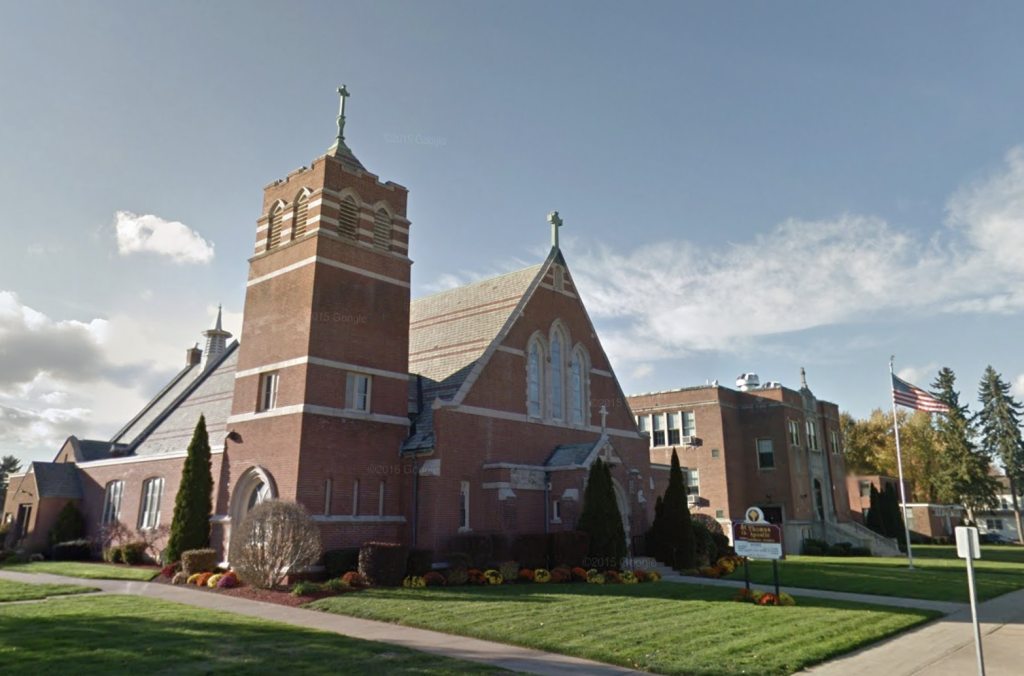
Podcast for St. Thomas of the Apostle Parish.
Episodes
Monday Nov 27, 2023
Monday Nov 27, 2023
The phrase "widow's mite" is based on the Gospel passage we just heard. This phrase illustrates the paradox that sometimes people who give the most are actually giving very little, while others who give a little are actually giving an enormous amount.
In terms of money, the widow gave less than everyone else to the temple treasury, but in reality, she gave a large amount because she gave everything she had.
This paradox holds true even in our own lives. There are times when we may appear to be giving very little, but in reality, we are giving a lot because we are giving as much as we can. Our health may be troubling us, or our energy level may be low due to some personal issues we are struggling with. What we have within ourselves to give is much less than usual. Even in these situations, giving a little of ourselves can be equivalent to giving a great deal.
The widow in today's gospel reminds us that even when we have little to give, we can still be extremely generous.
Sunday Nov 26, 2023
Sunday Nov 26, 2023
Today, we celebrate the Solemnity of Christ the King. Our Gospel reminds us that Christ, the King and shepherd, takes care of his flock through our actions, attitudes, words, and even our souls. By serving the needs of others, we pay homage to him.
As followers of Christ, we act as his hands and feet. We are the instruments through which God provides for the needs of others by feeding the hungry, giving drink to the thirsty, welcoming the stranger, clothing the naked, comforting the sick and dying, and visiting and assisting prisoners. We recognize that every person, regardless of their standing in society, is a dwelling place of God. Therefore, by serving others, we are serving God.
We are all called to follow the example of Jesus and serve others. By serving others, we are promised a reward from God. The Gospel emphasizes that if we fail to serve others with a genuine heart, we put ourselves in serious danger.
There are various causes that can prevent us from helping others. It could be that we are too preoccupied with our own concerns or that we don't allow ourselves enough time in our busy schedules to assist those in need. Sometimes, we may be afraid of failing to help them. However, the biggest reason is often the fear of rejection. Most of us have tried to genuinely extend our help to someone, only to have them refuse our offer. Even Jesus was rejected by the very people he came to help. If we truly want to follow Jesus, we must be prepared to face the possibility of rejection from the people we reach out to, even from those we love.
As believers, we are responsible for preparing the world for the Kingdom of Heaven. We are called to actively spread the love, compassion, and healing of God's presence to those who are in need. This requires sacrifice and a strong sense of responsibility on our part.
There’s an old story about a holy hermit who saw passing by, a crippled person, a mother begging for food for her malnourished child, and a victim of what must have been a severe beating. Seeing them, the holy man turned to God and said, “Great God, how is it that such a loving creator can see so much suffering and yet do nothing about it?” And deep within his heart, he heard God reply, “I have done something about it: I made you.”
To see Christ in others and be Christ's love and action to others. That is our calling in this life.
Saturday Nov 25, 2023
Saturday Nov 25, 2023
Our Gospel passage today comes at a time when the Sadducees, Pharisees, and chief priests were at a point when they had had enough of Jesus and His message. They wanted to kill Him, but He had the ear and the support of the people. So, the leaders believed they couldn’t kill Him.
The questions they began posing were an attempt to get Him to blaspheme, giving them a reason to put Him to death. They were trying to get Him to mess things up for Himself. They had an agenda hidden within their questioning.
We, too, often have an agenda when we go to Jesus. Usually, it’s something we want, something we want to change, or something about our life or our faith that we don’t like. Sometimes, without meaning to, that agenda can go against Jesus’ message or even the nature of God.
In our prayer, we should ask God for help with things, for change, for answers, but that prayer needs to be offered with a genuinely open heart, mind, and soul, that our agenda may take a back seat or disappear completely, so that God’s agenda may be our agenda.
Friday Nov 24, 2023
Friday Nov 24, 2023
While we have only a few stories about Jesus' early life, we know that the last three years of his time on earth were a whirlwind of activity. Today's Gospel is just one example of the passion and fire that Jesus exhibited throughout his life, especially during his visits to Jerusalem.
In this passage, Jesus confronts the pillars of society and shows his righteous anger at their corrupt use of the Temple for their own ends. At the same time, he speaks up for the marginalized and the oppressed, those whom the pillars of society look down upon.
Jesus' ministry was short, but he used every moment to disrupt the status quo and challenge the powerful. His message of love and compassion was a threat to those who wanted to maintain their grip on power, and so they sought to silence him.
As we continue to spread the Good News of the Gospel, we too will face opposition and conflict. But we must never waver in our commitment to live out the message of Jesus, to stand up for the marginalized, and to challenge those who abuse their power. Let us be bold like Jesus, using our words and actions to bring about lasting change in the world.
Thursday Nov 23, 2023
Thursday Nov 23, 2023
Celebrating harvest festivals is a tradition that dates back to the dawn of history. In the United States, Thanksgiving Day has its roots in the harvest season, but it has been detached from this event since the time of Abraham Lincoln. He set the date as the last Thursday in November, and the day became a time to return thanks to a bountiful creator.
Gratitude is an important aspect of Thanksgiving, and it should be personal and intimate. For people who have come close to death or survived cancer, gratitude is ever-present. Life takes on new meaning, and they hold it dear.
Most of us celebrate Thanksgiving whether we have anything specific to be thankful for. However, we must remember to attach our thanksgiving to real human situations.
In today's Gospel, Jesus heals ten lepers. Nine of them are only concerned about being cured, changing their terrible life situation. Once that happens, they go their merry way. They had to go to the priest to be declared clean before they could be admitted back into society. But after that happened, they forgot about Jesus. He was just a step on the way.
Our situation is similar. We were outsiders because of sin, far away from our homeland with no resources of our own to return. We, too, have been reconciled, brought close by the mercy of God shown to us in Christ Jesus.
We have two roads stretching out before us. One is the road of forgetfulness, the other the road of remembrance. To remember is to be grateful. It is to be in touch with who we are and who God is. It is to be aware that God loves us and has chosen us as a special people.
The Samaritan chose the way of remembrance and returned to give thanks. How can we imitate this good man and make his attitude of gratitude a way of life rather than a passing thought?
The Gospel story we have just heard is a parable of sin and forgiveness. Only one of the ten lepers became aware and moved into a new relationship with God and himself. He did not return and grovel before Jesus. The culmination of the story shows a man overwhelmed with gratitude and, at the same time, overwhelmed with humility. He "…praised God in a loud voice and threw himself at Jesus' feet."
Each day at the Eucharist, we receive forgiveness and the gift of reconciliation with God. We enjoy the undeserved status of God's own special people. Jesus tells us to celebrate the Eucharist in remembrance of Him. This remembrance brings gratitude into our hearts.
Wednesday Nov 22, 2023
Wednesday Nov 22, 2023
The parable we just heard from Luke's Gospel aims to counter the expectation that God's kingdom would arrive shortly. The people who followed Jesus were preoccupied with thoughts about the future. Jesus attempted to shift their attention to the present by telling this parable.
The parable is about a nobleman who went away to a foreign country and returned to his land as king. While he was away, his servants focused on the day of his return while it should have been on their present needs and utilizing the resources he left them for what they genuinely required at present.
Excessive concern about the future can detract from the present. What matters is the generous and courageous use of the gifts and resources that the LORD has given us to serve others who are here right now. This is the approach to life that the LORD is urging us to adopt. The servant who kept his gold coin hidden away for fear of losing it went against this approach to life. While using our gifts and resources, we may fail and make mistakes. However, the truth is that failure is preferable to fearful inactivity.
Tuesday Nov 21, 2023
Tuesday Nov 21, 2023
Today, the Church celebrates the Presentation of Mary, who was devoted to following God's plan for her life from a very young age. Her unwavering faith and commitment resulted in God choosing her to become a living temple, a vessel through which He could uniquely embody Himself. Mary's openness to divine inspiration from an early age allowed her to become a dwelling place for God's Son, Jesus, in a real and physical sense.
In today's Gospel passage, Jesus speaks of those who "do the will of [His] Father in heaven." Mary is the first and most perfect example of this. Her lifelong dedication to God's will made her a fitting vessel for His Son to enter the world.
We, too, are called to do God's will so that we may become temples of the Lord, carrying His presence to others. As St. Paul wrote, "Do you not know that you are the temple of God and that the Spirit of God dwells in you?"
On this day, we ask Mary to intercede for us and pray that we may always seek to do the Father's will so that we, too, may become living temples of the living God, with His Spirit dwelling within us.
Monday Nov 20, 2023
Monday Nov 20, 2023
The persistence of the blind man in prayer is truly inspiring. Despite facing opposition, he kept shouting until he knew that Jesus heard him. Driven by his unwavering faith in Jesus and his need for healing, he persisted in his prayer.
We too can bring our fervent petitions to God and receive divine blessings. Like the blind man, we must trust in God's power to heal us. It is important to remember to express gratitude for all the ways in which the Lord has blessed us.
Let us follow the blind man's example of persevering prayer and truly live it in our own lives.
Sunday Nov 19, 2023
Sunday Nov 19, 2023
In today's parable, Jesus is represented by the master, and all of us are represented by the servants. However, it's easy for us to forget that we're simply servants who depend on God.
In a world where technology has given us much power, it's natural for some to think of themselves as the center of the universe. But this parable reminds us that we are not God nor the center of the world. Our purpose is to know, love, and serve God. Only by doing so can we find true fulfillment.
God has blessed us with talents, which refer to all the abilities and blessings we receive from Him. We can either use them as Christ wants us to or squander them. The secret to true fulfillment is to use our God-given talents well.
St. Teresa of Calcutta is an excellent example of someone who learned this lesson. One of her many stories illustrates beautifully what it means to use our God-given talents well.
During her stay with a community of sisters working with indigenous Australians, she visited an older man who lived alone and was ignored by everyone. His home was filthy, but he refused when Teresa offered to clean it. She insisted, and he finally agreed.
While cleaning, she found a beautiful lamp covered with dust. The man told her he had never lit it because no one visited him. Teresa promised the sisters would visit him every night if he agreed to light the lamp. The man agreed, and from that day on, the sisters visited him every evening. Two years later, he sent a message to Teresa saying that the light she lit in his life still shone.[1]
Our life mission is to invest our talents so that we can light as many lamps as possible in as many different ways as possible. We should first identify our gifts and thank God for all our blessings. Then, we should reflect on the one or two strong characteristics, traits, or talents God has given us. What are the things that excite us, and what have we always dreamed of doing?
The second step is to get right with God and stay that way by praying daily, going to confession regularly, and studying Scripture and Church teachings. This is how we get to know our Lord and Savior and stay connected to the vine. If we fail to do this, our talents will bear no fruit.
Finally, we must put our gifts at the service of others. We should be creative and courageous, just like Christ, who left us his new commandment: to love one another as he has loved us. To fulfill our purpose in life, we must give our lives by using our talents to serve those around us.
[1] Voices of the Saints" by Bert Ghezzi
Saturday Nov 18, 2023
Saturday Nov 18, 2023
The parable of the widow and the unjust judge teaches us a vital lesson. Even though the widow was rejected by a judge who didn’t fear God and disrespected his neighbors, she did not lose hope. She persisted, believing that her cause was just. Jesus presents her as an example of faith in the face of almost impossible obstacles.
Towards the end of the parable, Jesus asks a question that still resonates with us today; "When the Son of Man comes, will he find any faith on earth?" The answer lies not in God's faithfulness, which is never in doubt, but in our own. We must strive to maintain faith in difficult times through prayer, just as the widow did. Prayer is our primary means of sustaining our faith, even when the odds seem against us.