
16.7K
Downloads
1445
Episodes
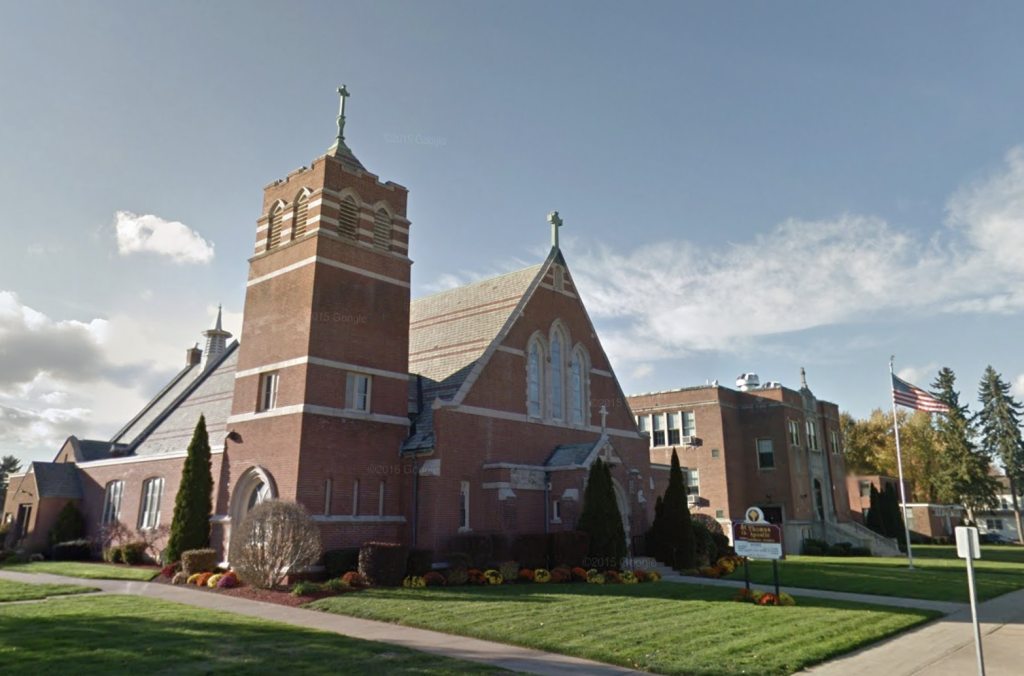
Podcast for St. Thomas of the Apostle Parish.
Episodes
Friday Dec 22, 2023
Friday Dec 22, 2023
In today's Gospel reading, we heard Mary's beautiful response to her cousin Elizabeth's acknowledgment of her as the Mother of our LORD. This prayer, known as the Magnificat, is a daily proclamation in the official Evening Prayer of the Church across the world.
Mary's response is filled with joy and jubilation as she recognizes the lowly, those who may be looked down upon by others, as being favored by God. She speaks of the reversal of human fortunes and the fulfillment of God's promises in the Old Testament.
Mary's response praises God and acknowledges God's presence and providence in the lives of all those who inhabit the earth.
May we also recognize God's presence in our lives and respond with praise for God, sharing that presence with all whom we encounter.
Tuesday Dec 19, 2023
Tuesday Dec 19, 2023
Zechariah received good news from the angel Gabriel that his wife Elizabeth, who had been unable to have children, would soon give birth to a special son. This son would have the calling of preparing the people for the LORD. However, Zechariah had a hard time believing this wonderful news.
Sometimes, we too find it difficult to believe good news because we are surrounded by bad news. We may struggle to believe the Good News that comes from God, or we may believe it in general but not for ourselves specifically.
At this time of year, we celebrate the Good News that God has become Emmanuel, God-with-us, through the birth of Jesus, Mary's son. This is Good News for all of us as a people and as individuals. Christ is with us in every aspect of our lives, surrounding us with His love and guidance. Let us embrace this Good News with joy during this special time of year.
Monday Dec 18, 2023
Monday Dec 18, 2023
The Gospel of Matthew differs from the other Gospels in that it doesn't tell us about the Annunciation to Mary. However, it does contain an account of an angel's message to Joseph.
In Luke's Gospel, the angel tells Mary, "Do not be afraid." In Matthew's Gospel, the angel tells Joseph the same thing: "Do not be afraid."
God was doing something unprecedented and significant in the lives of Mary and Joseph, something crucial for humanity's redemption. The conception of Jesus was a miraculous demonstration of God's grace that understandably stirred doubts in the hearts of Mary and Joseph, who were the most affected. Both of them needed assurance to confront the challenge ahead of them.
In times of change, transition, and challenge, we all require the same reassurance: "Do not be afraid." May we have faith in God's presence, in Emmanuel - God is with us - just as Mary and Joseph did, and in doing so, may we become willing participants in God's plan for us.
Sunday Dec 17, 2023
Sunday Dec 17, 2023
A woman in a Bible Study group told a story about how she had recently gone down into her basement and made an interesting discovery. Some potatoes had sprouted in the darkest corner of the room. At first, she didn’t understand how they could have gotten enough light to sprout. But then she noticed that she had hung large copper kettle from a rafter above the potatoes. She had kept the kettle so well-polished that it reflected the sun’s rays coming through the window onto the potatoes and enabled them to sprout.
As she reflected further upon this incident, she saw it as a metaphor for her role in spreading the message of Jesus to others. She was not a brilliant theologian or scripture scholar but she did pray, she did worship, she did seek to know God. And in the way she lived her life, she could see where she, like the copper kettle, could reflect the light of Christ’s love even to those who seemed to live in darkness.
This story of the copper kettle fits in well with our readings for today’s Mass. Isaiah the prophet says, “The Spirit of the Lord God is upon me, because the Lord has anointed me; He has sent me to bring glad tidings to the poor.”
That same Spirit of the Lord God came upon the woman, and she felt the same call to bring the glad tidings of Jesus to those who did not see God in their lives.
Her story also fits in well with today’s second reading, where St. Paul tells us not to “quench the Spirit.” The woman didn’t seek to quench God’s spirit. Instead, she hoped to share the love of God with all those she met. She wanted her life to be a reflection of the life and love she received from God.
Finally, the story fits in well with today’s Gospel, which recalls for us the preaching of John the Baptist. John went into the desert in his youth to ponder the Word of God. He then came forth from the desert to preach God’s Word to the people, saying, “I am the voice of one crying out in the desert, make straight the way of the Lord!”
The story of John the Baptist and the story of the woman with the copper kettle are both Advent stories. They are stories of individuals who found Christ by pondering the Word of God. They are stories of individuals who shared their discoveries with others so that they, too, could find Christ.
All of us here in this church today are called to do the same thing. The Spirit of the Lord is upon us, too. We, too, have been anointed to bring glad tidings to the poor and the downtrodden and to those who have chosen other paths and to those who live in darkness. Through our baptism and confirmation, we received the same calling they did and so, we too must proclaim God’s Word to others.
There are lots of ways that we can do this. We can do this in our homes to our relatives and our friends by the way we live and by sharing with them in prayer. We can proclaim Christ in the kinds of Christmas cards and greetings that we send to others; greetings that proclaim the birth of Christ. We can proclaim Christ to our friends and relatives who have fallen away from the faith by inviting them to join us at Mass on Christmas Day or even during the Advent season.
We’re invited to do all of these things and more. We have been invited to find Christ in our lives so that we can help others to find Christ as well. We’ve been invited to become a light in the darkness of our world just as the woman in our story and John the Baptist were. This is Christ’s own personal message and invitation to us in today’s readings. Now, it’s up to us to respond.
Friday Dec 15, 2023
Friday Dec 15, 2023
Jesus was a keen observer of people and often used everyday images drawn from people's daily lives to talk about the kingdom of God. In today's Gospel, He observed children at play in the marketplaces. Sometimes, the children played joyfully, pretending to play pipes while others danced to the music. Other times, their games reflected the sorrows of life, perhaps from having witnessed the death of an elderly family member. Some children sang dirges while others lamented and cried in response. However, some children refused to play at all. They wouldn't dance when the music played nor mourn when dirges were sung.
The unresponsive children reminded Jesus of certain grim and unresponsive adults. They showed no signs of mourning in response to John the Baptist's stern message, nor did they dance in response to Jesus' more cheerful message. They disregarded John, labeling him as possessed, and Jesus as a glutton and a drunkard.
Interestingly, Jesus identified His ministry with the piper and the dance. His life and message are good news — the Good News of God’s love for us.
God invites us to align ourselves with the “music” of Jesus, the “music” of His Spirit in our lives. We strive to attune ourselves to the LORD's rhythm and melody and let it influence everything we say and do. This is our Advent calling as we prepare to celebrate the birth of Jesus.
Thursday Dec 14, 2023
Thursday Dec 14, 2023
In today's Gospel, Jesus praises John the Baptist and his prophetic significance in fulfilling the Jewish Scriptures. Jesus speaks highly of John, stating that there has been none greater than him among those born of women.
John is the Elijah figure who was believed to precede the coming of the Messiah. However, Jesus goes on to say that even the least significant person in the kingdom of heaven is greater than John the Baptist. The reason for this is that John never heard and responded to Jesus' preaching of the kingdom of God, whereas we have access to it through the Gospels and the Holy Spirit.
This should make us feel grateful for the gift of the Gospel and our faith response to it. Advent is a time for us to reflect on and grow in our appreciation of this gift and the quality of our response to it.
Wednesday Dec 13, 2023
Wednesday Dec 13, 2023
There are many things that can make us feel overwhelmed and burdened, like being too tired, overworked, having trouble in our relationships, health issues, and other challenges.
Jesus offered hope to those who felt burdened by the demands of the Jewish Law. They often felt excluded for failing to follow the laws correctly. He didn't give them a new law to follow. Instead, He offered Himself as their guide for life and invited them to learn from Him. He called them to come to Him and learn from His example and teachings.
To learn from someone, we need to spend time with them. Jesus invites us to come and stay with Him, to become His friends. When we spend time with Him, we learn how to live life the right way. If we stay with Him, we will find that His yoke is easy, and His burden is light.
Living life according to the Gospel can be challenging, but having a relationship with Jesus makes it less challenging than it would otherwise be. St. Paul reassures us that God's power within us is enough to accomplish more than we could ever imagine. By staying connected to Jesus, our lives will thrive, and we will bear much fruit.
Tuesday Dec 12, 2023
Tuesday Dec 12, 2023
On a December morning in 1531, a man named Juan Diego was on his way to church. As he passed a hill at Tepeyac, which is near present-day Mexico City, he heard a voice calling him by name. Looking up, he was surprised to see what appeared to be a young Aztec woman. She instructed him to go to the bishop and tell him to build a shrine on the hill, which was the site of an ancient Nahuatl shrine. However, the bishop ignored Juan's message.
In her second apparition, the woman introduced herself as the Mother of God and instructed Juan to return to the bishop with her request. However, the bishop denied the request once again.
During her third appearance, the woman instructed Juan to gather a bouquet of roses which were growing out of season at her feet. So, Juan collected the roses in his cloak and presented them to the bishop. When he opened up his cloak to reveal the flowers, both the bishop and Juan Diego were astonished to see a full-color image of the woman Juan Diego had seen, imprinted on the fabric of the cloak.
Today, we celebrate the feast of Our Lady of Guadalupe, whose story is a significant turning point for the Church in the Americas. The apparitions occurred ten years after the Spanish conquest of Mexico in 1521. Although Christianity was the religion of the conquerors, it failed to offer much to the native people.
After the appearance of Our Lady of Guadalupe, everything changed. Mary spoke to Juan in his native language, Nahuatl, instead of Spanish. She seemed to be one of them, and all the symbols that she appeared in spoke to the native people. She expressed her desire that her shrine would radiate her love and compassion to all the inhabitants of that land.
Mary's apparitions caused a significant transformation in the Church and the Aztec people. Within six years of the apparitions, around nine million Aztecs converted to Christianity. This event marked a turning point for the Church, as it shifted its focus towards serving the needs of the poor and oppressed. It was no longer seen as the religious arm of the conqueror, but rather as the voice of God's compassion and justice.
Monday Dec 11, 2023
Monday Dec 11, 2023
At times, we face various obstacles in our lives that we must overcome to achieve our goals. During such times, it is easy to lose sight of our objective and give up.
In today's Gospel passage, a paralyzed man's friends wanted to bring him to Jesus but found that the crowd was blocking their way. Rather than giving up, they climbed onto the roof with their friend and lowered him down through the tiles before Jesus. Jesus was deeply moved by their faith and the unwavering persistence of their efforts.
There was a small community of faith consisting of the paralytic and his friends. They were determined to reach the Lord despite the obstacles and challenges they faced along the way, and remained steadfast in their faith as they journeyed towards him.
In many ways, this small community of faith can inspire us this Advent season when we are called to keep journeying toward the LORD and focus on Him despite whatever obstacles may be at work in our lives that could keep us from Him. Jesus surprised them all by first saying to the man, “As for you, your sins are forgiven.” The paralytic needed spiritual as well as physical healing, and his spiritual healing took priority.
As we focus on the LORD this Advent, let us look to Him for our spiritual healing.
Sunday Dec 10, 2023
Sunday Dec 10, 2023
The novel Quo Vadis takes place in Rome a few years after the Resurrection of Jesus. During this time, Christianity was outlawed, and a brutal persecution was underway. However, despite the danger, Christianity continued to flourish, largely due to the inspiring teachings of the Apostle Peter.
At one point in the story, a young Roman named Vinicius fell in love with a beautiful Christian woman, but she wouldn’t have anything to do with him because his life was so different from hers.
Vinicius became intrigued by the young woman and her strong beliefs. This piqued his curiosity about how Christians worship. One night, he followed her to a secret gathering and hid in the shadows outside the meeting place. He listened intently to their service.
During their worship, Peter stood up to preach. As he spoke about Jesus, Vinicius began to take to heart what Peter was saying and contemplate what he would have to do in his life to become a Christian.
He concluded that he needed to take two significant steps. First, he would have to figuratively throw away his current life and burn it to ashes. Second, he would have to start a completely new life.
That image is an excellent example of what ancient Jews meant by conversion. Conversion in ancient Jewish culture meant returning from the wrong path and starting afresh on the right path.
That is what John the Baptist tells people to do in today’s Gospel reading. He advises people to turn away from the path of sin, which ultimately leads to death, and instead, choose the path of righteousness, which leads to life.
John urges the people to signify their commitment to making a change in their lives by stepping down into the river and being baptized. However, he emphasizes that the act of washing their bodies, which symbolizes cleansing their souls, is only the first step towards transformation. It's merely a prelude to the second step, which involves not only letting go of their old way of life but also embracing a new way of life.
This explains what John meant when he said, “I have baptized you with water; he [Jesus] will baptize you with the Holy Spirit.” John’s baptism is a one of repentance.
The second step is receiving the baptism of rebirth that Jesus will bring; it is receiving the Holy Spirit and beginning a new life.
During the Advent season, we are called to take these two important steps. Despite being baptized, we often fall back into sin due to our human nature. Therefore, Advent is the perfect time to reflect on our lives and recognize the areas where we need to make changes. We must take these areas and symbolically burn them to ashes, so we can start anew and revitalize our spiritual life.
I want to close with an old story that illustrates the kind of Advent conversion the Church invites us to make.
In early British history, punishments were harsh to deter crime. During that time, a man was caught stealing sheep. The authorities punished him by branding the letters "S.T." on his forehead, which stood for "Sheep Thief." Despite the humiliating episode, the man succeeded in living down his past and moved on with his life.
As the man grew old, the letters "S.T." remained visible on his forehead. When children asked their parents what the letters stood for, the parents recognized the good deeds the man had done over the years and replied, "They stand for the word 'saint.'"
God says to all of us today, in the words of the prophet Isaiah: “Wash yourselves clean!… Though your sins be like scarlet, they may become white as snow.”