
16.7K
Downloads
1442
Episodes
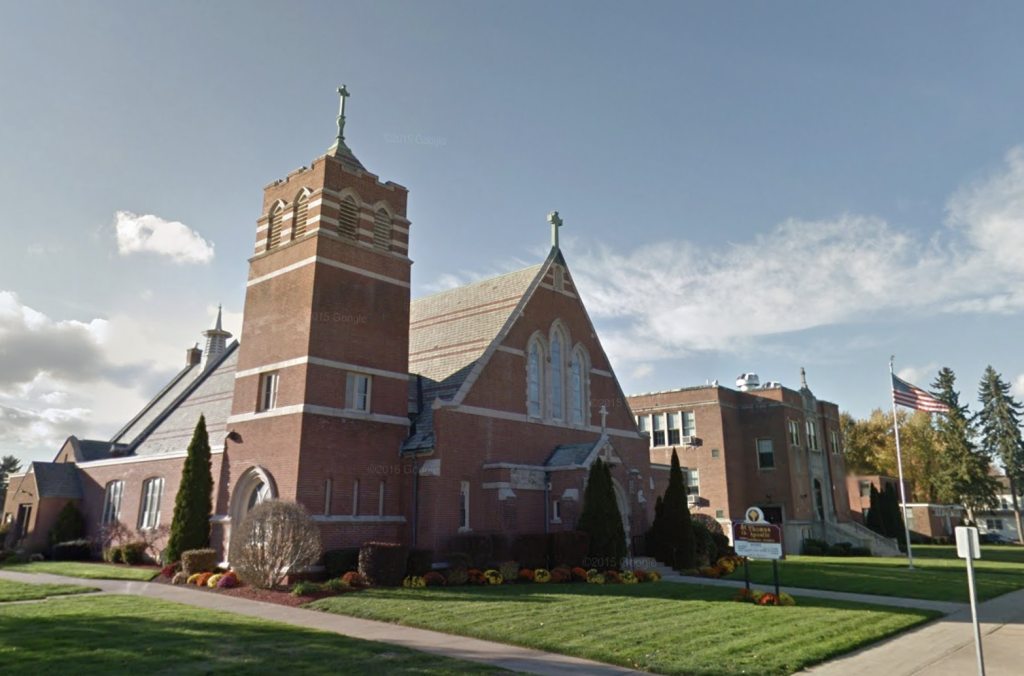
Podcast for St. Thomas of the Apostle Parish.
Episodes

Tuesday Apr 02, 2024
Tuesday Apr 02, 2024
Yesterday, we heard St. Matthew's account of Mary Magdalene's experience at the empty tomb on the first Easter morning. St. Matthew briefly mentioned Mary's fear, but didn't delve into it. St. John's account provides us with more details, revealing that Mary was so distraught that she didn't even recognize Jesus when she first saw Him.
As we listen to the Gospels, we may be tempted to think that some of Jesus' followers were slow to grasp the significance of His teachings and miracles. However, the truth is that they, like us, grew in faith gradually, through moments of revelation and discovery.
Even though we know the story of Jesus' life, death, and Resurrection, we can still struggle to recognize His presence in our lives today. When we face difficulties and feel alone, we may wonder if God is even there.
But our faith teaches us that God is always with us, just as He was with Mary Magdalene at the empty tomb, even though she was initially unaware of His presence.
Let us pray that we remain aware of God's abiding presence in our hearts and lives, so that, like Mary Magdalene, we may hear the voice of Jesus and be filled with the awareness of His love and presence.
Friday Mar 29, 2024
Friday Mar 29, 2024
In St. John's account of the Passion of Jesus, we hear it was the day before the Sabbath. This was a hectic day for the Jewish people because it was the preparation time for Passover. So everyone was incredibly busy with the many, many tasks that had to be completed before these observances began—everyday things but necessary things that couldn't be done during the holy days.
So there was a real sense of busyness, of people focused on a particular mission. These people were far too busy, far too focused on their tasks, to notice what was taking place in Jerusalem's official business.
Unlike the other Gospel accounts of this scene, John's account of the Passion of Jesus does not include jeering crowds demanding Jesus' death. In John's account, Jesus' arrest and trial took place in the middle of the night, when most people were sleeping. Pilate, some soldiers, and some Jewish authorities were there, but not as many others as the other Gospels indicate.
Some scripture scholars say that John's account is the most accurate description of what happened on that first Good Friday. The death of Jesus was not the focus of the day for the people in Jerusalem. The image of vast crowds demanding Jesus' death in the other three Gospels may not have been the case; Pilate and his forces may not have allowed that. To them, the issue of Jesus was a Jewish matter that only concerned them in so far as it could cause chaos in town. So, they dealt with it as they would any other matter: straightforwardly, quickly, and coldly. And so, these scholars conclude, Jesus died practically alone and out of sight of the general public.
So, while the Jewish people of Jerusalem went about the many tasks in preparation for Passover, God was putting into motion a second Passover.
As a brisk trade in the buying and selling of lambs for Passover was taking place all over the city, the Lamb of God was slain just outside the gates.
While the preparations for the Passover Seder continued, the new Passover was completed on a bleak and lonely hill.
During the Jewish community's celebration of their flight from slavery to nationhood, God was calling his people to a new flight from death to life.
In our contemporary world's busyness, the same thing takes place on this Good Friday.
This Good Friday continues to be a day of preparation. The events of this day are not an end in themselves but the means to a much more significant event. God completes the work of His second Genesis, in which He re-creates humankind in the Paschal mystery.
This Good Friday is God's calling us to a second Exodus journey, marked by the slaying of His Son, the Lamb, who becomes for us the new Passover Seder Meal – today is our exodus from the slavery of sin to the freedom of compassion and forgiveness, our Passover from this life to the life of God.
Thursday Mar 28, 2024
Thursday Mar 28, 2024
In today's Gospel reading, we witness Jesus washing his disciples' feet at the Last Supper. Although there is an incident from this scene that we don't see in our reading today, it is provided for us in Luke's Gospel. Most of us are familiar with it. Amid the incredible things happening in the Upper Room, some of the disciples begin to engage in a petty argument about who among them is the greatest. The debate gets rather heated.
One must wonder what Jesus’ inner reaction was to this pointless argument of His disciples. We will never know. But, what He did do was He stood up and picked up a towel and wrapped it around His waist. Then He took a pitcher and basin of water and began to wash His disciples’ feet.
Peter protested much the same way we would when someone of great stature would do something like that. We would shrink away from it. We know that we are supposed to be humble before God but it is hard to see God being humble before us.
He did this for each one of us and also gave us a command to serve and break bread, thereby revealing the presence of Christ. This is a huge responsibility and a great call. Every time we gather to break bread and share the chalice, we must remember this command.
Our Eucharist is all about the presence of God in simple bread and wine and the responsibility to be bread and wine to others. Breaking open the Word of Scripture and consecrating bread and wine to bring Christ among us is both comforting and challenging.
This is what we celebrate on Holy Thursday: The gift of God who gives His Flesh and Blood and, with no apology, gives us the command to do the same.
Wednesday Mar 27, 2024
Wednesday Mar 27, 2024
The early Church was aware that Jesus was betrayed by one of His closest associates. Although it was uncomfortable for them, they didn't try to hide the fact that Judas Iscariot, one of Jesus' disciples, betrayed Him.
The Gospel tells us that when Jesus announced that one of those sharing at the table with Him would betray Him, everyone present was “greatly distressed.” Being betrayed by someone you trust is very distressing for the one betrayed and for all those associated with Him.
Many of us may have experienced betrayal from people close to us. Perhaps we confided in someone, and they used that information against us.
This week reminds us that betrayal does not have to be the end of the story. God the Father had the last word by raising His Son from the dead. He brought good out of the evil of betrayal and other trials that Jesus endured.
Divine Providence can also bring good out of the negative things we sometimes have to endure from others. The Passion of Jesus reminds us that God can work in life-giving ways even after the darkest experiences.
Tuesday Mar 26, 2024
Tuesday Mar 26, 2024
In the final days of Jesus' life, people responded to Him in different ways. While Judas betrayed Him, the beloved disciple sat close to him, even leaning on his chest. In the opening chapter of the Gospel, the Evangelist describes Jesus as being "upon the chest of the Father," which suggests a close relationship. The beloved disciple seems to have had a similar relationship with Jesus and is an example to follow.
The beloved disciple is not given a name in the Gospel, as we are all invited to identify with him. We can look to him as a model for discipleship and strive to imitate him. We are called to have the same kind of relationship with Jesus as the beloved disciple had, which is why Jesus said, "As the Father has loved me, so I have loved you; remain in my love." We can share in Jesus' special relationship with his Father in heaven.
This is something to reflect on during Holy Week.
Monday Mar 25, 2024
Monday Mar 25, 2024
During the final week of His life, most people who saw Jesus were hostile to Him. However, six days before the feast of Passover, a family that He loved invited Jesus to their table, where He experienced great kindness. One member of that family, Mary, went to great expense to render Him a thoughtful service. She anointed His feet with expensive perfume and dried them with her hair. Later in the same Gospel, Jesus will wash the feet of His followers.
Mary, the sister of Lazarus, anticipated Jesus's servant-gesture and offered Him generous, loving service, exactly as Jesus would do for His disciples and us. Jesus interpreted her generous act as preparing Him for His death and burial.
At the beginning of the last week of His life, Jesus welcomed this act of kindness from Mary of Bethany. What she did for Him, we are called to do for each other. During our own life journeys, we may encounter people who make things difficult for us. Yet, we will also come across people like Mary who support us on our journey. Hopefully, we can do for others what Mary did for Jesus - a kind and generous gesture in an often-hostile world.
Saturday Mar 23, 2024
Saturday Mar 23, 2024
In today's Gospel passage, the Sanhedrin have concluded that Jesus' Gospel of justice and compassion has become too much for them. To justify their actions, they rationalize a "prophecy" to eliminate Jesus.
This Gospel is relevant to our lives today as we see men and women who dare to speak the truth to power. Anyone who takes God's call to be His prophets seriously is required to be prepared for ridicule, isolation, rejection, and even death. These are the costs of proclaiming God's compassion, forgiveness, and justice to societies and institutions that are opposed to these fundamental principles.
However, the promise of the Resurrection is for those who dare to take up the cause of justice and reconciliation. These are the people who proclaim that God has redeemed His people.
Let us pray for the courage and strength to speak the truth of the Gospel of Jesus Christ in our words, actions, and in our very lives.
Friday Mar 22, 2024
Friday Mar 22, 2024
Both Jeremiah, from today's first reading, and Jesus faced persecution for challenging those who prioritized rituals and rules over people. These individuals were not inherently bad, but their devotion to laws had become so rigid that they no longer reflected God's mercy.
When religious rules are applied rigidly, they can become like idols and be misused as a means to judge every action. Certain religious followers may find false security in fixed, unchangeable rules.
Jesus teaches us that the two greatest commandments are to love God and to love our neighbors. By following these commandments, we become more Christ-like and are confident that our lives are fulfilling the purpose that God intended.
Thursday Mar 21, 2024
Thursday Mar 21, 2024
Jesus's words have a deep-rooted significance that goes back to Abraham's time and even further back to the beginning of time. When Jesus said, "Before Abraham was, I AM," He was identifying Himself as God, the one who always exists.
The Gospel of John presents Jesus as more than just a fulfillment of Abraham's faith and hope. John sees Jesus as one with God before the creation of the universe. John understands that God led Israel's history forward to the day when the eternal Word became human as Jesus, the Son of Mary
For Christians, Jesus is the Lord of our history. His plans will remain unfulfilled until all nations are united as one faith and family. St. Paul echoes this sentiment when he says that through baptism in Christ, we have all become one. There is no longer division based on origin, wealth, or social status. All those who are one in Christ are descendants of Abraham and inherit all that was promised to him and his offspring.
Wednesday Mar 20, 2024
Wednesday Mar 20, 2024
Jesus said, "The truth will set you free," and later in John's Gospel, He declared, "I am the truth." He is a source of genuine freedom for His followers. Jesus stated, "If the Son frees you, then you will be truly free." By staying close to Him, we can experience what St. Paul calls "the glorious freedom of the children of God."
Our relationship with Jesus and the Holy Spirit that He pours into our hearts enables us to live according to God's will in ways that align with our best selves. True freedom means having the freedom to love and give of ourselves to others, just as Jesus gave of Himself to us. That is the freedom we pray for in these final weeks of Lent.