
23.4K
Downloads
1649
Episodes
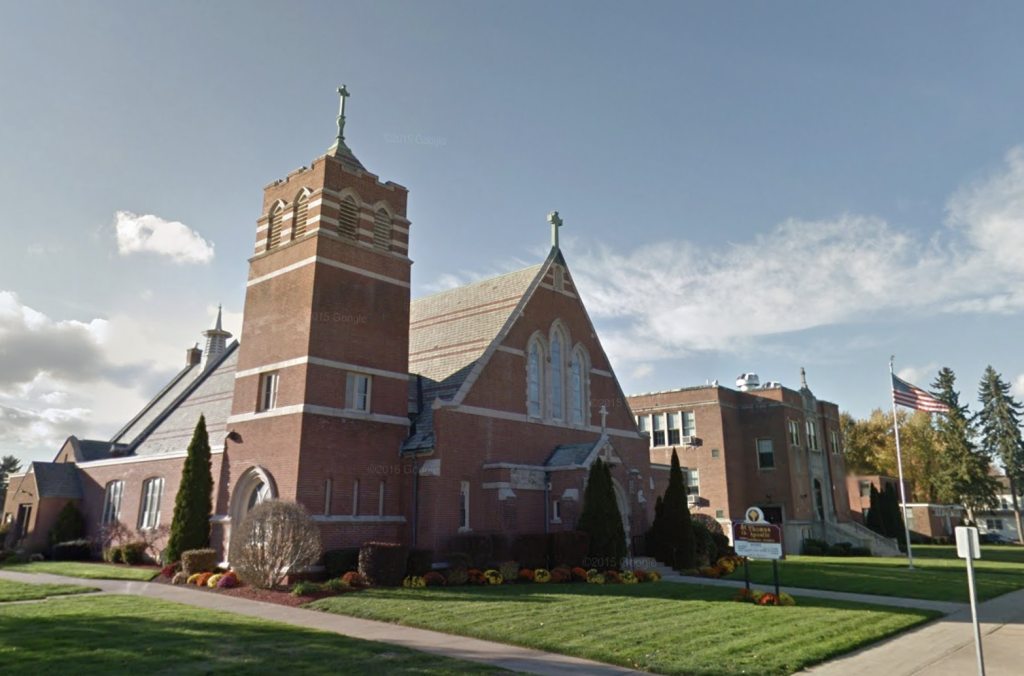
Podcast for St. Thomas of the Apostle Parish.
Episodes
Jul 20, 2026
Jul 20, 2026
2 min
In today’s Gospel passage from St. Matthew, Jesus refers to two significant figures from Jewish history: the wise king Solomon and the reluctant prophet Jonah. He emphasizes that He is greater than both Jonah and Solomon. Jesus not only conveys God’s word but is also the Word of God; He is not just a wise king but embodies the Wisdom of God. Despite His true identity, many of His contemporaries did not recognize or appreciate Him; they demanded miraculous signs before they would take Him seriously.
What Jesus says to them is also directed at us: “There is something greater than Jonah here; something greater than Solomon here,” someone more wonderful than all the prophets and wise men of Israel combined is present among us and within us. Jesus is not only greater than Jonah and Solomon; He surpasses anything that could stand as a barrier between Him and us. As Saint Paul reminds us, “Nothing in all creation will be able to separate us from the love of God in Christ Jesus our Lord.”
Jul 19, 2026
Jul 19, 2026
5 min
Jul 18, 2026
Jul 18, 2026
2 min
There is a sharp contrast between those who sought to destroy Jesus and Jesus Himself, who came not to destroy but to heal. From the very beginning of his ministry, some desired Jesus' death. Despite this, Jesus consistently aimed to bring life to others and to share in God's own life. We hear the words, "A bruised reed he will not break; a smoldering wick he will not quench." His mission inspires hope and instills a sense of purpose within us.
The bruised reed and the smoldering wick symbolize those who are broken in body and spirit. It is very easy to break a bruised reed or extinguish a smoldering wick. Those who are physically or spiritually broken are highly vulnerable. Jesus is sensitive to those in need. He can restore the bruised reed and reignite the smoldering wick into a vibrant flame.
Jul 17, 2026
Jul 17, 2026
2 min
Religious leaders during Jesus' time were more focused on adhering to precise religious practices than on understanding their origins and spiritual significance. This often led to clashes with Jesus, and they frequently distrusted Him.
One Sabbath, Jesus and His hungry disciples walked through a field, and His disciples were picking and eating heads of grain to satisfy their hunger. The Pharisees, who adhered to a strict interpretation of the Sabbath laws, viewed this as a violation of the regulations prohibiting work on the Sabbath.
While Jesus did not disregard the traditions, He emphasized that the Pharisees' rigid interpretation was not aligned with the Scriptures or the spirit of the Law. According to Jesus, the Sabbath should be honored not merely by following detailed rituals; people's well-being takes precedence over temple regulations. Thus, the disciples' actions were justified in the name of preserving life.
In our worship and in following the will and Law of the Lord, let us always remember that practicing our faith is not just about fulfilling requirements, but about celebrating and living out the love of the Lord.
Jul 16, 2026
Jul 16, 2026
1 min
Jesus calls us to take on the "yoke," the "burden" of service, imitating His example of selflessness and compassion towards the hungry, needy, and those facing challenges in our communities. We are encouraged to be like "eagles' wings" for the weary, despairing, and struggling individuals we encounter on our journey.
The "yoke" of the Gospel of Jesus is "easy" in the joy it brings to a generous heart, and it feels "light" because of the love of God reflected in our lives and the lives we touch through our selfless compassion.
Let us pray to learn from Jesus' humility and generosity. By His grace, may we reflect His selflessness in the compassion and love we extend to those experiencing poverty, the lost, and the struggling.
Jul 15, 2026
Jul 15, 2026
2 min
Jul 14, 2026
Jul 14, 2026
3 min
Jul 13, 2026
Jul 13, 2026
3 min
Jul 12, 2026
Jul 12, 2026
4 min
Spirituality and Health Magazine once recounted the story of Anna, whose son was HIV positive. When her church decided to reach out to Samaritan House, an AIDS shelter, Anna joined the effort. The group attempted to hold services at the shelter three times, but the residents voted them out, dismissing them as "Bible Thumpers."
After that, Anna tried to imagine herself being terminally ill, estranged from loved ones, and excluded, envisioning what any two people in America would likely have in common. Her answer was simple: chocolate chip cookies.
So, Anna baked a huge batch of chocolate chip cookies and returned to Samaritan House. As she walked in, she handed a cookie to every person she met. Some were wary, wondering if there was a catch, but most accepted the cookies. The cookies expressed the message she wanted to convey: "If I give you a cookie, it can mean that we have something in common. It says I care if it is homemade and straight from the oven. If I give it to you straightforwardly and softly, with a smile but few words, it conveys that I have no hidden agenda."
For several weeks, Anna continued her cookie ministry. Finally, someone asked, "Why are you doing this?" She answered, "Because God loves you."
Soon, Anna was known and welcomed by every resident of Samaritan House as "The Cookie Lady." For many residents, she became both a friend and a living example of compassionate faith.
The Sower in today's parable and Anna, "The Cookie Lady," are both examples of trusting disciples who confidently plant seeds of faith, even when results are uncertain or the ground seems inhospitable. Anna’s patient, gentle outreach echoes the parable’s message: that faith sometimes begins with small, humble acts whose impact is revealed only over time.
Like Isaiah, who assured the Jewish people exiled from their homeland that God's Word would go forth and be fruitful—even in soil where such growth is unexpected—these faithful sowers persist without knowing exactly when or how their efforts will bear fruit. They embody the kind of steadfast faith reflected in today’s first reading.
Christ invites us to embrace the faith of the Sower, as Anna does—to trust that our simplest acts of kindness, forgiveness, and humble offers of help or affirmation may be the "seeds" that transform those we encounter. The harvest may not come immediately, or in ways we anticipate, but by acting with compassion and hope, we participate in the quiet, transformative work of grace.
Jul 11, 2026
Jul 11, 2026
3 min