
16.6K
Downloads
1440
Episodes
Podcast for St. Thomas of the Apostle Parish.
Episodes
Tuesday Jul 09, 2024
Tuesday Jul 09, 2024
Spite is an unfortunate part of the human experience. It is a harmful trait that most have experienced by being the object of spite or by being spiteful ourselves. In general, spiteful behavior should be embarrassing to the one who exhibits it. Still, often, it is portrayed as a virtue.[1]
The Pharisees in today's Gospel were very spiteful toward Jesus. People concerned with the letter of the law didn't like that Jesus was concerned less with the nuances of the law than with the spirit of what the law should be about: mercy and love. In their opposition to Jesus, they took good things that he did—like healing the demoniac—and attributed them to the work of Satan, acting through Jesus. What a contradiction!
Living by Gospel principles is indeed a challenging journey, one that often requires us to go against our natural inclinations. However, the transformative power of virtues like forgiveness, humility, charity, and mercy is profound. They can be especially challenging to practice when we feel wronged, but embodying these virtues is the hallmark of a good Christian and a good person.
Let us pray, today and always, that the Holy Spirit may guide us to wisdom and understanding of ourselves and others when we feel wronged. May our response bring us closer to the will of God.
[1] Angier, Natalie, The New York Times, March 31, 2014
Monday Jul 08, 2024
Monday Jul 08, 2024
In today's Gospel passage, we saw two people in need of help approaching Jesus. One of them was a synagogue official who implored for help for his daughter. The other was a woman suffering from bleeding who came to Jesus on her own behalf. The way these two people approached Jesus was quite different. The synagogue official approached Jesus in a very public way, bowing low in front of Him and speaking his need and request so all could hear. The woman approached Jesus secretively, touching the tassel on His cloak and speaking quietly to herself, hoping things might change for the better.
Each of us approaches the Lord in our own way. Our way of connecting with Jesus is always personal, just like the way we relate to others. The synagogue official and the woman both had faith, but they expressed it differently. Our faith unites us as a worshipping community without suppressing our individuality.
Despite the different ways in which the two approached Jesus, His response was generous and respectful to both. He did not favor one over the other and responded to their needs and cries for help. This is a powerful reminder that God's response to us is always shaped by and respectful of the unique way that each of us approaches Him with our needs. It is a testament to the value and respect He holds for each of us and our individual approaches to faith.
Sunday Jul 07, 2024
Sunday Jul 07, 2024
When people leave home for the first time to build their own lives, it can be a challenging experience for everyone involved. The person leaving may have mixed feelings, wanting to be independent but also feeling the pain of separation. Parents may also experience mixed emotions, feeling happy that their child is ready to move on but knowing they will deeply miss them.
On the other hand, homecomings are typically happier experiences for everyone, but they can be complex. The person returning home may have changed considerably since leaving, and those at home may have also changed. There may be expectations based on how things used to be, which may not align with the current reality. Adapting to these changes can be difficult.
In today's Gospel, Jesus returns to His hometown of Nazareth after leaving for some time. He had spent about thirty years there, known to all as a carpenter and the son of Mary. However, Jesus had taken a new direction since leaving home, dedicating Himself to the work given to Him by God. He returned not as just a carpenter but as a teacher and a healer. There was much more to Jesus than His townspeople had ever realized while he lived among them.
The Gospel suggests that the people of Nazareth could not accept this new reality and rejected Him. They wanted Him to remain as the person they had always known and were reluctant to accept his growth and change. His homecoming was more painful than His departure. The people of Nazareth saw God's unique Son as a thorn in the flesh, unable to see beyond their preconceived notions of Him.
We often assume we know someone when, in reality, we only know one side of them. Our strong opinions about people can be based on past experiences, making us unwilling to see beyond them, even when there is evidence to challenge our views.
There was more to Jesus than the people of Nazareth were aware of, just as there is more to every human being than we know. We are each made in God's image, and there is a profound mystery to each of us. We must approach everyone with the awareness that there is more to them than meets the eye.
Jesus' ordinariness made it difficult for the people of Nazareth to recognize the mystery within him. God was powerfully present to them through someone as seemingly ordinary as they were.
God continues to come to us today through the ordinary, through those closest to us. While there may be a fascination with the extraordinary and the unusual, the Gospels suggest that the Lord comes to us primarily in the everyday - this is what we mean by the incarnation. The ordinary is filled with God's presence.
The Lord can even come to us through what we initially perceive as negative. According to our second reading today, St. Paul discovered this for himself. He struggled with what he called a 'thorn in the flesh.' While he wanted to be rid of it, he realized in prayer that God was present in and through this struggle.
When we struggle with something, inside or out, we may want to eliminate the struggle entirely. However, like St. Paul, we can discover that this challenging experience can open us up to God's presence. What we consider to be of little or no value can create space for God to work in our lives. There is a dichotomy in what St. Paul hears the Risen Lord say to him, "My grace is sufficient for you, for power is made perfect in weakness." It is often in our most difficult moments that God can touch our lives most powerfully and creatively.
Saturday Jul 06, 2024
Saturday Jul 06, 2024
Matthew indicates the traditional side of Jesus and how He saw His mission as directed to the conversion of His own people. He was sent to "the lost sheep of the house of Israel" and not to foreigners. However, in the Sermon on the Mount, Matthew tells of Jesus' new vision that perfects and supersedes the old law with "You have heard the commandment.. but now I say to you..." The importance of this change from Judaism to the Church's spread is also found in Matthew: "Go... and make disciples of all the nations." This was new and marked a clear distinction between Jesus's disciples and those of John the Baptist.
New wineskins refer to animal skins that are not tanned and processed and have great flexibility. When fermenting wine is stored in new skins, the skins will stretch, while old, hardened skins will burst open, causing the wine and skins to be lost. Like unshrunken cloth sewn onto an old garment, it will cause a greater tear when it shrinks.
These metaphors, from a Jewish experience, indicate that Jesus' preaching and healing convey a significant departure from the past. What started at the periphery has now shifted to the core. He brings a new type of joy, a new garment rather than one patched with old pieces, and new wineskins to contain the new wine of his life-giving Spirit.
Change can provoke a variety of reactions. Above all, we should strive to remain at peace and be willing to adapt to new circumstances, knowing that we are guided by the teachings of Jesus. Divine providence represents a path of continuity towards the ultimate goal of eternal life in heaven. Still, it is deeply intertwined with the human experience in all its forms. We must endeavor to be worthy followers of Jesus, allowing him to bring new ideas into our lives, and demonstrate the same level of acceptance of change as the early Church.
Friday Jul 05, 2024
Friday Jul 05, 2024
Jesus often behaved in ways that surprised people, as is evident in today’s Gospel. In the story, Jesus calls Matthew, a tax collector, to follow Him and shares a table with Matthew and other tax collectors. In the religious community of that time, people like Matthew were considered sinners, and others were supposed to avoid them for fear of being contaminated.
However, Jesus did not follow this practice. He was not afraid of being influenced negatively by others. Instead, He believed that His own goodness could transform others for the better. When Jesus said, “I desire mercy, not sacrifice,” He meant that He wanted His followers to show mercy and kindness in their actions. In the same way, we are also called to bring positive change to others through our own goodness. We are all meant to be agents of the Lord’s transformative love and mercy.
Thursday Jul 04, 2024
Thursday Jul 04, 2024
In today's Gospel, Jesus points out that it is difficult to forgive the sins of others that have been committed against us. It can also be difficult to forgive the sins that people have committed against others, especially against those whom we love the most.
However, this is what we are called to do. A lack of forgiveness is sinful in nature. It may be a natural response to particular offenses, but we are called to free the other person—and ourselves—by our forgiveness.
Jesus came to earth so that God might forgive us for our transgressions. In response, people who felt threatened by His message put Him to death. From the Cross, as He took His final breaths, He showed us how to forgive when He said, "Father, forgive them, for they know not what they do."
St. Paul tells us to "be kind to one another, compassionate, forgiving one another as God has forgiven you in Christ."
Wednesday Jul 03, 2024
Wednesday Jul 03, 2024
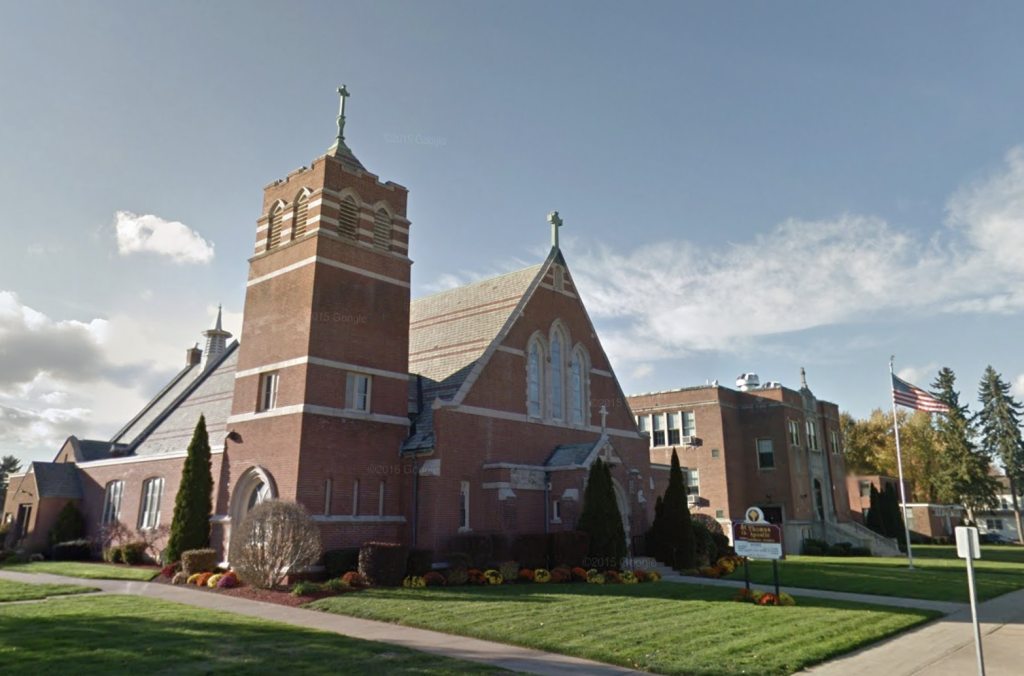
Today, we celebrate the feast day of our parish's beloved patron saint, Thomas the Apostle. His life continues to inspire and guide us in our faith journey.
In John's Gospel, we are introduced to Thomas in a moment of great significance. After the death of Lazarus, when fear gripped some of the Apostles about going with Jesus to Judea, it was Thomas who boldly declared, "Let us also go, that we may die with Him." This act of courage and faith is a testament to his character.
Next, we hear from Thomas after Jesus explained that he was going to His heavenly Father and that, one day, the Apostles would join Him there. Thomas responded, saying, "LORD, we do not know where you are going; how can we know the way?"
We also hear from Thomas in the scene for which he is perhaps best known: He doubted that Jesus had risen from the dead and said he would not believe until he saw and touched Jesus's wounds, which he did during a subsequent appearance by the Risen LORD. He is so well-known for this scene that skeptical people are often called "Doubting Thomases."
Thomas had much more to say during his lifetime. He traveled to India and preached the Gospel, establishing seven churches before being martyred in 72 AD. It is also believed that he traveled to China and, possibly, to Indonesia.
As our patron Saint, let us pray, asking St. Thomas' intercession that our faith may be strong and that we may follow wherever the LORD calls.
Tuesday Jul 02, 2024
Tuesday Jul 02, 2024
In today's Gospel reading, we learn about a sudden and unexpected storm on the Sea of Galilee. Just like the disciples faced a sudden crisis, we may also experience overwhelming challenges without warning. Even if everything seemed fine yesterday, today's Gospel passage reminds us that we could be in crisis at any moment.
St. Matthew's version of the storm story connects it closely to the experiences of his Church. The disciples' desperate plea, "Lord, save us! We are perishing!" reflects the needs of St. Matthew's readers and all of us in times of despair. The message is that the Lord is always near. Our urgent prayers for help will not go unanswered. The Lord is more powerful than any storm we may encounter, and when we call out, "Lord, save us!" we can trust that help will be given.
Monday Jul 01, 2024
Monday Jul 01, 2024
In today's Gospel, the Scribe expresses his willingness to follow Jesus with great enthusiasm. However, Jesus reminds him of the challenges that come with being a disciple, emphasizing that He leads a nomadic life without a permanent home. This interaction highlights the clash between our initial enthusiasm and the harsh realities we face. Although the disciples were eager to follow Jesus at first, they struggled to maintain their commitment when faced with the difficulties of the journey, especially as the prospect of the Cross loomed ahead.
Maintaining our idealism, enthusiasm, and generosity of spirit can be difficult, especially when we encounter challenges. At such times, we realize that our own strength and optimism are not enough. We need the Lord to be our source of strength when we feel disheartened, our inspiration when we are tempted to settle for less, and our refuge amidst life's storms.
To remain faithful to our journey with the Lord, we must rely on Him every step of the way. He does not expect us to walk alone, but rather to lean on Him for support.
Sunday Jun 30, 2024
Sunday Jun 30, 2024
A Benedictine Monk tells of how he looks at the bulletin board every morning before prayer. The items he pays the most attention to are the requests for prayers. They come from all over and are about almost everything. There is a regular "prayer client" who mentions various intentions. One time, in her list, she mentioned the need for prayers for someone seriously ill. The following day, she left a message saying, "No need to pray for so and so; he's already dead."We Catholics pray for both the living and the dead. In the incident of the woman who told the monks not to pray for the person who had died, there is a common thread with today's Gospel. There is Jairus, who didn't hesitate to pray for his daughter's healing. Upon arriving at the house, the people told him not to bother Jesus any longer because the girl had died. But Jesus told the father, "Do not be afraid; just have faith." He continued to express his faith in Jesus, and his daughter was raised to life. Jesus performed a miracle with the faith of the Jairus.
God's word for us today helps us to examine specific aspects of our faith relationship with the Lord.
The first aspect is that the way to healing in Jesus is through faith in Him. We express our faith in our prayers. Jairus was not discouraged and kept hoping against hope, even with the death of his daughter, that his prayers would be answered. To the realistic but discouraging remarks of the people on the girl's condition, Jesus kept inspiring him, telling him to just have faith. In our relationship with God, faith paves the way for healing.
The second aspect would be to look at death, again, from the perspective of the Christian faith. Some of us could relate concrete stories of extraordinary healing even when dying. But most of us know that although our ailing loved one did not recover and now rests in peace, we still believe in the Lord; we still believe that, on a different level, our departed loved ones have indeed been raised to new life.
In our first reading today, we heard that God's strongest desire for us is life. It isn't that God created us to be immortal like Him; we are mortal. But there are two kinds of death: physical death and spiritual death.
We experience the physical death at the end of our lease of life. But we may still be physically alive while having experienced spiritual death.
Through the Resurrection of Jesus, we know and believe that beyond physical death, there is eternal life with God by our faith in Christ. Yet what the devil aims at in this life is our spiritual death, our separation from God while we are still alive. It is the more dangerous death we can experience and must guard ourselves against. It is in this death of our spirit that the devil wants to possess us. With bodily ailments, both kinds of death are possible. We may die if the illness turns deadly serious. But we could also be spiritually dead as we begin to despair, distrust the Lord, and refuse His offer of a more excellent life. Illness can turn us away from God but can also lead to greater faith in the Lord. Jairus's faith led to a new life for his child. He serves as a model of living in faith.
May our prayer today, and always, be for spiritual life and the hope that that life can be renewed – even resurrected – by our faith in Jesus and our hope against hope that Jesus can always fill us with His powerful love – in this life and the next.