
16.6K
Downloads
1439
Episodes
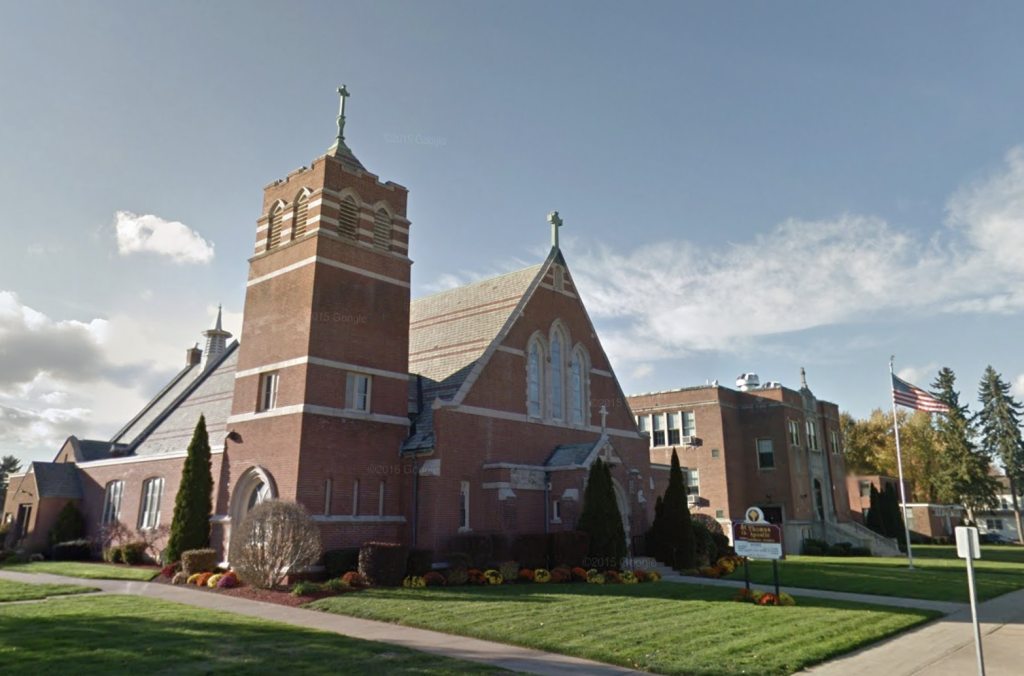
Podcast for St. Thomas of the Apostle Parish.
Episodes
Wednesday Aug 07, 2024
Wednesday Aug 07, 2024
When the pagan woman desperately cried out for help, Jesus initially responded with silence. Despite this, she persisted in her request, and Jesus seemed to dismiss it roughly. However, she was undeterred and cleverly turned His words about feeding the children rather than dogs, meant to represent the people of Israel rather than pagans, to her advantage.
Ultimately, her persistent faith was rewarded, and her request was granted. It appears that Jesus believed it was not yet time to bring the Gospel to pagans. Still, her unwavering faith seemingly influenced His timetable.
At one point, Jesus spoke about a faith that can move mountains. This woman's faith certainly moved Jesus. Her story encourages us to remain faithful, even when it's challenging, and inspires us to keep seeking the Lord, even when He seems silent and distant.
Tuesday Aug 06, 2024
Tuesday Aug 06, 2024
Peter, James, and John were privileged to accompany Jesus to the top of the mountain where He was transfigured before them. It must have been an incredible sight: Jesus speaking with Moses and Elijah right before their eyes. They were overwhelmed and in awe of what was happening.
So Jesus is with each of us. When we least expect it, He gives us a wonderful experience of His grace to strengthen us in our journey with Him. This is a privilege, but it's not just for us to admire; it's a call to respond to His invitation to love. Jesus called these three Apostles to a deeper level of love and trust in Him, and He does the same with us.
The Apostles were so awestruck that they were speechless. However, Peter felt the urge to say something even though he didn't know what to say.
In our spiritual lives, we often struggle with the temptation to speak too much. In our Gospel passage, we hear the Father's words: "This is my son with whom I am well pleased. Listen to him" God calls us to listen carefully to Jesus' words and not feel the need to speak. He is often looking for a response in action rather than in words.
Monday Aug 05, 2024
Monday Aug 05, 2024
Different people react in various ways to the same situation. In today's Gospel, we see a noticeable difference between Jesus's and the disciples' reactions when confronted with a large, hungry crowd in the wilderness. The disciples wanted Jesus to send the crowd away, but Jesus urged His disciples to try to feed the crowd. He said, "Give them some food yourselves."
At first, the disciples objected that they couldn't find enough food to feed the crowd. However, Jesus prevailed and urged them to bring the little food they could find to Him. Despite their doubts, the disciples obeyed Jesus' command and brought the food to Him. With those meager resources, the Lord fed the crowd with the help of His obedient disciples.
The Gospel message suggests that the Lord will always motivate us to help others, even when we feel that we don't have enough resources. These resources are not just material possessions, but also our time, talents, and spiritual gifts. If we are generous with all our resources, the Lord will use them in incredible ways.
The Lord can accomplish wonders through the very ordinary and sometimes unpromising resources and gifts that we possess. Like the disciples in the Gospel, we must do our part, but the Lord always does much more. However, if we are unwilling to do what we can with what we have, the Lord's capacity for ministry to others is limited. The Lord needs our resources, however small and seemingly inadequate they may be, to continue His good work among us and the world.
Sunday Aug 04, 2024
Sunday Aug 04, 2024
Throughout our lives, we seek things of lasting value that can enrich us and help us grow. When we find something truly valuable, such as a book, poem, movie, music, painting, or building, we often return to it.
Hopefully, though, we come to realize that what we truly value are not objects or things, but people. A good friend means so much more to us than a good book or piece of music. Parents value nothing more than their children. For those in love, the most cherished treasure is the one who is loved. The value of all else pales in comparison. We want the people we love to live forever, which is why the death or loss of a loved one is such a heart-wrenching experience.
In today's Gospel, the crowds that Jesus fed in the wilderness come back looking for Him and wanting more of the bread He had provided. Jesus seizes the opportunity to guide them toward something more enduring. He counsels them, saying, "Do not work for food that perishes, but for the food that endures for eternal life."
Jesus' perspective is not focused on this world, but on eternity. When He speaks of what truly lasts, He means what will last into eternity. For Jesus, what is of lasting value is what will continue to have value in heaven. It is hard to keep that perspective of eternity before us because we are not just meant for eternity but we are also meant to live our lives on earth. It can be difficult to keep both in our sights.
While Jesus' ultimate focus is on eternity, He also values our earthly experiences. He came to show us how to live this earthly life through His teachings and example. He devoted Himself to meeting the primary needs of those He met: the sick, the grieving, the hungry, the poor, the lonely, and the stranger. He instructed us to do the same, stressing that what we do for others, we do for Him. By living in this way, we are preparing ourselves to live forever. Those who live by the values of the kingdom of God will inherit it.
May we know that Jesus is the Way, the Truth, and the Life, and may our dedication to Him lead us into the eternal life He came to offer.
Saturday Aug 03, 2024
Saturday Aug 03, 2024
The execution of John the Baptist serves as a dramatic example of the abuse of power that is prevalent throughout human history. During the time of Jesus, Herod Antipas was the ruler in Galilee. Although ultimately subject to the emperor in Rome, he had a free hand to exercise his local power as he saw fit, as long as he followed the laws of Rome. In this particular incident, Herod misused his power by ordering the execution of an innocent man.
People who abuse power in this way lose their authority. In this passage, John the Baptist had no power; he was Herod’s prisoner. But he had higher moral authority rooted in his relationship with God. That gave John the freedom to speak the truth to powerful people and to confront King Herod for breaking the Jewish law. For speaking out, John was imprisoned and eventually executed.
John’s martyrdom foreshadowed that of Jesus. As Jesus hung from the Cross, He, too, had no power. As St. Paul says, “He was crucified in weakness.”[1] Yet, at that moment, He had great authority: the authority of a life of integrity and goodness, the authority of God’s faithful Son. A fact that, remarkably, was recognized by the centurion in charge of the Crucifixion.[2]
Even if we have little or no power, we can have authority in the gospel sense. Like John the Baptist, we are called to be people of the Word who let God shape our values, attitudes, and our whole lives.
[1] 2 Corinthians 13:4
[2] Matthew 27:54
Friday Aug 02, 2024
Friday Aug 02, 2024
When Jesus returned to His home in Nazareth, the people recognized Him as the son of Joseph, the carpenter, whose mother, Mary, and whose brothers and sisters were known to them. He was one of them, a working man just like them. Yet, in many ways, He is not like them at all. The people of Nazareth were astonished at His wisdom and His miraculous powers. They needed help understanding where He would get all that. They were perplexed by Him.
Jesus was both ordinary and extraordinary. As we have been taught, He was like us in every way, but sin. He was fully human and fully divine, and the wisdom and power of God were at work within Him. St. John expressed it clearly when he said at the beginning of his Gospel that the Word became flesh.[1] He was “flesh” like all of us, fully human, the son of a carpenter from a particular place in Galilee who lived at a specific time in history. This emphasis on His humanity makes us feel understood, as He experienced the same struggles and joys as we do. Yet, this man uniquely revealed God. That is the “scandal” of the Incarnation that troubled the Nazareth people.
The son of the carpenter, the son of Mary, is with us today as Risen Lord in and through the familiar and the ordinary. He said to His disciples, “Whoever receives you, receives me;”[2] “Whoever receives one child such as this in my name receives me;”[3] and, “Whatever you did for one of these least brothers of mine, you did for me.”[4]
The sacred and the temporal are not so far apart; we meet the holy in the temporal and the divine in the human. This realization should inspire us, as it shows that we are always on holy ground and that the divine is present in every human interaction and experience.
[1] John 1:14
[2] Matthew 10:40
[3] Matthew 18:5
[4] Matthew 25:40
Thursday Aug 01, 2024
Thursday Aug 01, 2024
The message in today's Gospel is similar to that of Tuesday's Gospel: Throughout life on earth, there will be both good and bad people, virtue and vice. Sometimes, this can be hard to take, and we may wonder why God allows it.
Jesus connects a shared experience of the people when He compares the process of hauling a full net of fish ashore and separating the bad from the good to the angels doing so at the end of time.
Let us pray for patience and hope that God will indeed separate the good from the bad at the end of time. In the face of life's challenges, let us do all that we can and must do to enter the kingdom of God.
Wednesday Jul 31, 2024
Wednesday Jul 31, 2024
Sometimes, we unexpectedly come across something valuable, even when not actively searching for it. Sometimes, a precious gift or a significant person can enter our lives without us trying to make it happen. It could be a sudden realization or insight that comes to us when we are relaxing and not thinking about anything specific.
In the first parable from today's Gospel, a day laborer discovers a treasure while working in someone else's field. He decides to sell all he has to purchase that field and obtain the unexpected treasure.
In the second parable, a wealthy merchant searches for the finest pearl and eventually finds it. He is willing to sell everything he has to acquire it.
Jesus compares the kingdom of God to these two human experiences. Sometimes, God blesses us when we least expect it. Other times, we have to actively seek God and put effort into finding Him. Jesus encourages us to persist in our search, to keep seeking, asking, and knocking, like the wealthy merchant. When God graces us, we must be ready to give up whatever is necessary to receive and hold onto that gift of the kingdom.
Tuesday Jul 30, 2024
Tuesday Jul 30, 2024
At the request of His disciples, Jesus explained to them the Parable of the Weeds in the Field. The main idea of the parable is the division between the good and the wicked at the end of time. Jesus indicates that until that final separation, good and evil will coexist in the world, in the Church, and even within our hearts, minds, and souls. The weeds and the wheat will grow together, and God will make the final separation during the final judgment at the end of time. It is not anyone's place to judge another person's moral quality at present, as judgment about people's motives belongs to God alone.
One of Pope Francis's favorite themes is the importance of not being quick to judge. Often, we see ourselves as superior and label others as inferior. It's important to remember the words of Saint Paul, who cautioned against premature judgments. He said, "Do not make any judgment before the appointed time, until the Lord comes, for he will bring to light what is hidden in darkness and will manifest the motives of our hearts, and then everyone will receive praise from God" [1]It's crucial to keep in mind that "the Lord is gracious and merciful, slow to anger and abounding in mercy."[2]
[1] 1 Corinthians 4:5
[2] Psalm 145:8
Monday Jul 29, 2024
Monday Jul 29, 2024
Today's Gospel passage evokes empathy for Martha. She works hard to prepare a meal for Jesus and His friends. But when she complains that her sister Mary isn't helping, Jesus says Mary has chosen the best part, and it will not be taken from her. This may seem unfair to Martha.
We can see from other stories in Scripture that Jesus did not oppose hard work in the service of others. In the Parable of the Good Samaritan, He praises the man's mercy and love when he cares for the victim of robbers. The Book of Ecclesiastes says, "There is a time for everything, and a time for every activity under the heavens." So, we might say, "There is a time to be active and a time to refrain from activity."
When Jesus visited Mary and Martha, He felt it was important for them to take a break from their work and listen to what He had to say. Mary understood that Jesus valued the hospitality of listening over the hospitality of being busy. She was more attuned to what the Lord wanted compared to Martha. While the Lord wants us to work for Him, He also wants us to take breaks to listen to Him. True wisdom involves knowing when it's time to be active in the Lord's service and when it's time to sit and listen to His Word.