
21.2K
Downloads
1579
Episodes
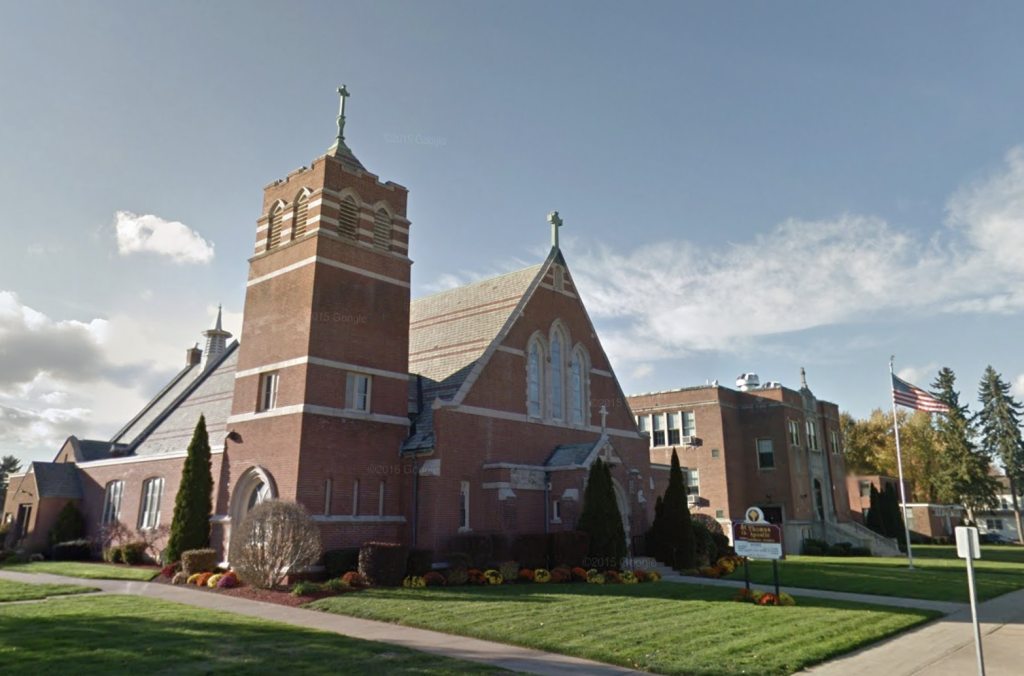
Podcast for St. Thomas of the Apostle Parish.
Episodes
Tuesday Jul 08, 2025
Tuesday Jul 08, 2025
Spite is a harmful human trait that most people have encountered, either as the target of spite or as the perpetrator of it. Spiteful behavior should be a source of embarrassment for the one who exhibits it. Yet, it is often portrayed as a virtue.[1]
In today's Gospel, the Pharisees displayed great spite toward Jesus. Those who focused on the letter of the law were disturbed by Jesus's emphasis on the spirit of the law, which prioritizes mercy and love. In their opposition to Him, they took the good works that Jesus performed—such as healing the demoniac—and attributed them to the work of Satan, acting through Him. What a contradiction!
Living by Gospel principles can be a challenging journey that often requires us to go against our natural inclinations. However, the transformative power of virtues like forgiveness, humility, charity, and mercy is profound. These virtues can be particularly difficult to practice when we feel wronged, but embodying them is the hallmark of a good Christian and a good person.
Let us pray, today and always, that the Holy Spirit may guide us to wisdom and understanding of ourselves and others when we feel wronged. May our responses bring us closer to God's will.
[1] Angier, Natalie, The New York Times, March 31, 2014
Monday Jul 07, 2025
Monday Jul 07, 2025
In today's Gospel passage, we see two individuals in need of help who approached Jesus. One was a synagogue official imploring assistance for his daughter, while the other was a woman suffering from bleeding who came to Jesus on her own behalf. Their approaches to Jesus were quite different. The synagogue official approached Him publicly, bowing low and speaking his request aloud so that everyone could hear. In contrast, the woman approached Jesus more discreetly, touching the tassel of His cloak and quietly expressing her hopes for healing.
Each of us connects with the Lord in our own unique way. Our personal approach to Jesus mirrors how we relate to others. Both the synagogue official and the woman demonstrated faith, but they expressed it in different ways. Our faith unites us as a worshiping community while still allowing for our individuality to shine through.
Despite the different ways in which they approached Him, Jesus responded generously and respectfully to both individuals. He did not show favoritism but rather addressed their needs with compassion and understanding. This reminds us that God's response to us is always considerate of the unique ways we come to Him with our requests. It serves as a powerful testament to the value and respect He has for each person and their individual approach to faith.
Sunday Jul 06, 2025
Sunday Jul 06, 2025
The scene in our Gospel passage today clearly depicts Jesus delegating His mission and authority to His disciples. They go out and then return to Jesus, reporting the work they have done in His name. This is the ongoing commissioning of the Church by Jesus, a delegation that He continues to share with us today.
It's truly amazing that God the Father entrusts us with the mission of His Son. His work and mission are to be expressed in our actions and lives. The Church's preaching, liturgy, and service are not simply about God; they are God Himself acting in and through us.
However, we can become so focused on the problems, abuses, scandals, and incompetence of some Church members and leaders that we overlook the deeper reality that God is working through us despite our flaws.
Taking on this incredible responsibility, it's natural for us to wonder if we are up to the task. We are told that "the harvest is plentiful, but the laborers are few." This expresses a strong sense that the job we have been given may be overwhelming, and there might be too much to do given our current capacity and capabilities.
We are also reminded that "the kingdom is at hand," which creates a sense of urgency. When a harvest is ready, it must be reaped before it spoils, adding pressure due to time constraints.
Moreover, we are described as "lambs among wolves," indicating that not everyone will support our efforts. Some may be indifferent, while others may actively work to thwart our mission. This situation may seem like a no-win scenario.
We are called "laborers," not supervisors, managers, or executives. This signifies active engagement, often requiring us to handle tasks that may feel menial or tedious. Labor can sometimes seem endless and unrewarding.
We are expected to be entirely devoted to this work. Inherent in this portrayal is the image of Christ Himself, the laborer completely consumed by His mission, the one among us who is "He who serves." We, who are delegated, are called to identify with the One who is sending us.
We are called to service and self-forgetfulness. Jesus sends His disciples out with only the essentials, instructing them to "carry no money bag, no sack, and no sandals." We aren't provided with abundant equipment or tools: no credit card, mobile phone, or tablet—none of the possessions that offer security and comfort. The Roman soldiers referred to their baggage as "impedimenta" because it made travel difficult; it was an impediment to mobility.
Jesus understands that possessions and security can be impediments to our freedom and focus, preventing us from dedicating ourselves fully to what is truly important in our lives.
Too often, we labor and stress over what is ultimately unimportant, exhausting ourselves by focusing our energies on minor issues. Embracing poverty of spirit and simplicity helps us recognize what is most important. A disciple of Christ will be marked by simplicity and single-mindedness.
St. Paul alludes to a Christian principle of self-sufficiency in his letter to the Philippians: "I know how to be full and how to be empty, how to have plenty and how to have nothing." This principle embodies the freeing capacity to live authentically, based on our true selves rather than our external circumstances. We can allow our inner nature to shine through.
At the beginning of His delegation to His disciples, Jesus says, "Go on your way." The origins of our mission lie in this divine command, which pierces through our hesitation, fear, and doubt. We need to heed this Word beyond the distractions that can fill our minds and lives. By doing so, we can live lives formed by the Word of God. When Jesus tells us to rejoice because our names are written in heaven, He gives us joy in knowing that we are personally known by God and that the stories of our lives hold significance in eternal life.
Saturday Jul 05, 2025
Saturday Jul 05, 2025
Matthew's Gospel highlights the traditional view of Jesus, showing that He focused on converting His people. He came to save "the lost sheep of the house of Israel" rather than those outside His community. However, in the Sermon on the Mount, Matthew shares Jesus' new vision, which refines and goes beyond the old law. Jesus often said, "You have heard the commandment... but now I say to you..." This shift, from focusing on Judaism to spreading the Church, is evident when Matthew writes, "Go... and make disciples of all nations." This sets Jesus' disciples apart from those of John the Baptist.
The term "new wineskins" refers to animal skins that are still flexible. When wine ferments, storing it in new skins allows the skins to stretch. Old, stiff skins, however, can break and lose both the wine and the skins. Similarly, sewing unshrunken cloth onto an old garment causes a bigger tear when the new cloth shrinks.
These images, rooted in a Jewish background, demonstrate that Jesus' preaching and healing mark a significant departure from the past. What started on the edges has moved to the center. He offers a new kind of joy, a new garment instead of one patched with old pieces, and new wineskins to contain the new wine of His life-giving Spirit.
Change often brings different reactions. We should focus on keeping our peace and being open to new circumstances, guided by Jesus' teachings. Divine providence provides a steady path toward the ultimate goal of eternal life in heaven, complemented by human experiences. We must strive to be worthy followers of Jesus, letting Him bring new ideas into our lives and embracing change, just as the early Church did.
Friday Jul 04, 2025
Friday Jul 04, 2025
Jesus often surprised people with His behavior, as illustrated in today's Gospel. In this story, Jesus calls Matthew, a tax collector, to follow Him and shares a meal with him and other tax collectors. In that time's religious community, individuals like Matthew were considered sinners, and others were expected to avoid them to prevent contamination.
However, Jesus did not adhere to this practice. He was not afraid of being negatively influenced by others. Instead, He believed that His own goodness could positively transform those around Him. When Jesus declared, "I desire mercy, not sacrifice," He meant that He wanted His followers to demonstrate mercy and kindness in their actions. Similarly, we are called to bring about positive change in others through our own goodness. We are all meant to be agents of the Lord's transformative love and mercy.
Thursday Jul 03, 2025
Thursday Jul 03, 2025
Today is the feast day of our parish's beloved patron saint, Thomas the Apostle. His life continues to inspire and guide us on our faith journey.
In John's Gospel, we first encounter Thomas during a moment of great significance. After the death of Lazarus, when fear gripped the Apostles about going with Jesus to Judea, it was Thomas who boldly declared, "Let us also go, that we may die with Him." This act of courage and faith is a testament to his character.
Next, we hear from Thomas when Jesus explained that He was going to His heavenly Father and that the Apostles would join Him one day. Thomas responded, "Lord, we do not know where you are going; how can we know the way?"
Thomas is best known for his doubt regarding Jesus's Resurrection. He said he would not believe until he saw and touched Jesus's wounds, which he did during a subsequent appearance by the Risen Lord. This moment has led to people who are skeptical being referred to as "Doubting Thomases."
Thomas had a much larger impact beyond these moments. He traveled to India to preach the Gospel, establishing seven churches before being martyred in 72 AD. It is also believed that he journeyed to China and possibly to Indonesia.
As our patron saint, let us pray for St. Thomas's intercession, asking that our faith be strong and that we may follow wherever the Lord calls us.
Wednesday Jul 02, 2025
Wednesday Jul 02, 2025
Today's Gospel reading presents an unsettling story about two people possessed by demons. They were entirely out of control and prevented others from entering their area. Living among the tombs, they seemed more dead than alive, embodying the essence of outsiders. However, Jesus engaged with them, and as a result, they were healed, restoring their relationship with their community. Having just calmed a storm at sea, Jesus also calmed the turmoil in the minds and spirits of these two possessed people.
Although we may never experience the same level of turmoil as the two individuals in the story, we all find ourselves feeling out of sorts from time to time—disconnected from ourselves and others, feeling only half alive, and tossed about by our circumstances. In those moments, we need to come before the Lord, just as the people in the Gospel did.
Initially, their approach to the Lord was aggressive and angry, asking, "What have you to do with us, Son of God?" When we are distressed, our first reaction in prayer can mirror this aggressive approach. However, Jesus is never put off by our inner turmoil. If we allow Him, He will pour His peace into our hearts and calm us, just as He calmed the storm on the Sea of Galilee.
Tuesday Jul 01, 2025
Tuesday Jul 01, 2025
In today's Gospel reading, we learn about a sudden and unexpected storm on the Sea of Galilee. Just as the disciples faced a sudden crisis, we, too, may encounter overwhelming challenges without warning. Even if everything seemed fine yesterday, this Gospel passage reminds us that we could find ourselves in a crisis at any moment.
St. Matthew's account of the storm closely connects to the experiences of his Church. The disciples' desperate plea, "Lord, save us! We are perishing!" reflects the needs of St. Matthew's readers, as well as our own, during times of despair. The message is clear: the Lord is always near, and our urgent prayers for help will not go unanswered. The Lord is more powerful than any storm we may face, and when we call out, "Lord, save us!" we can trust that we will receive help.
Monday Jun 30, 2025
Monday Jun 30, 2025
In today's Gospel, the Scribe expresses a strong desire to follow Jesus. However, Jesus reminds him of the challenges that accompany discipleship, emphasizing that He lives a nomadic life without a permanent home. This interaction highlights the contrast between our initial enthusiasm and the harsh realities we often face. Although the disciples were initially eager to follow Jesus, they struggled to maintain their commitment when confronted with the journey's difficulties, especially as the prospect of the Cross loomed ahead.
Maintaining our idealism, enthusiasm, and generosity can be challenging, especially when encountering obstacles. We may realize that our strength and optimism are insufficient during such times. We need the Lord to be our source of strength when we feel disheartened, our inspiration when we are tempted to settle for less, and our refuge amidst life's storms.
To remain faithful on our journey with the Lord, we must rely on Him every step of the way. He does not expect us to walk alone; instead, He asks us to lean on Him for support.
Sunday Jun 29, 2025
Sunday Jun 29, 2025
St. Peter distinguished himself from the other disciples due to his divinely inspired recognition of Jesus as the Messiah. This insight led Jesus to grant Peter a unique role among His followers, designating him as the "rock" upon which He would build His Church. This was a significant responsibility, as Jesus entrusted Peter with "the keys to the Kingdom of heaven," which implied authority to interpret matters and make decisions. However, despite his essential position, Peter had flaws; he once tried to dissuade Jesus from following the path of the Cross and later denied Him. Jesus chose to entrust a crucial role to someone not without faults.
While teaching is associated with St. Peter, preaching is linked with St. Paul in scripture. St. Paul spread the Gospel to the pagans throughout the Roman Empire and delivered his final sermon in Rome, where, like St. Peter, he was martyred for his faith in Christ. In a moving passage, likely written from his prison cell, St. Paul stated, "I have competed well; I have finished the race; I have kept the faith." This imagery of competition and racing highlights that "keeping the faith" was a struggle for St. Paul, just like for St. Peter.
Maintaining faith is not always easy for any of us. St. Paul's words reveal his understanding that his ability to keep the faith was not solely due to his efforts; the Lord empowered him. He stated, "The Lord stood by me and gave me strength." The Lord strengthens and empowers all of us to maintain our faith. His faithfulness enables us to remain faithful, and His love encourages us to return to Him, even after we stumble. The faithful witness of Saints Peter and Paul ultimately serves as a testament to the Lord's faithfulness towards us all.