
16.5K
Downloads
1430
Episodes
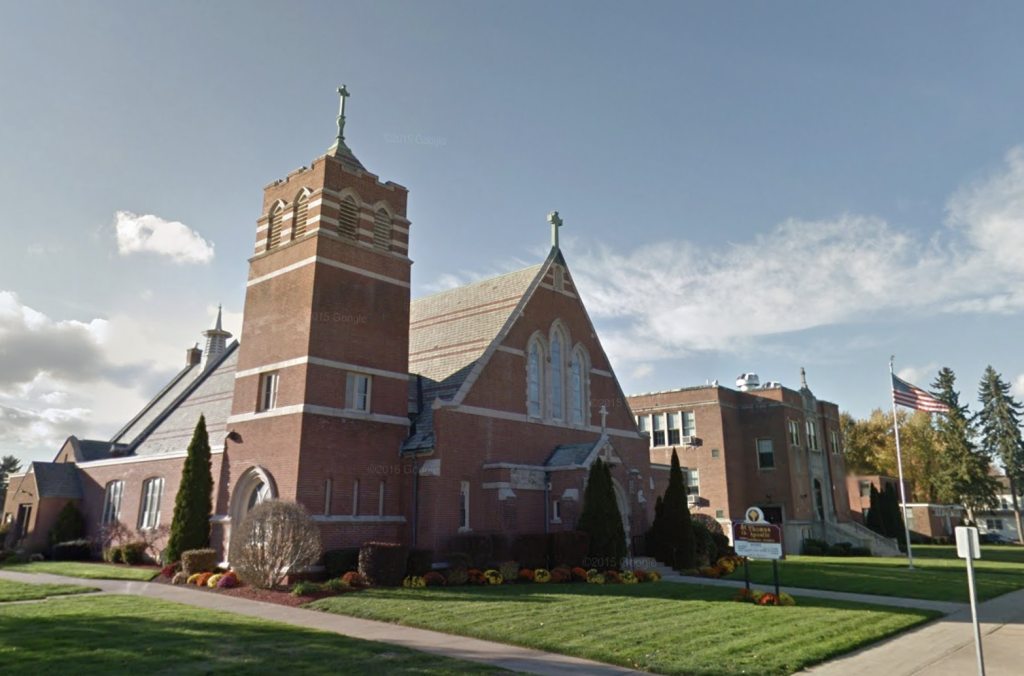
Podcast for St. Thomas of the Apostle Parish.
Episodes
Tuesday Apr 29, 2025
Tuesday Apr 29, 2025
In today's Gospel passage, Nicodemus—a well-educated individual with strong beliefs—appears surprised and confused during his conversation with Jesus. The discussion is challenging because Jesus' words do not align with Nicodemus' understanding of truth. In response, Jesus encourages him to let the Holy Spirit dwell within him, so he may be born again.
Often, we are told to surrender ourselves to the Spirit. However, in today's passage, Jesus does not ask for surrender; instead, he invites us to open our minds and hearts to the Spirit. He is not asking us to give up anything, but rather to listen to the Spirit.
Our relationship with God is interactive, which means we actively participate through speaking and listening. In this relationship with the Spirit, we can come to understand who God is in our lives and souls, as well as who we are to God.
Let us pray that we truly open ourselves to the Holy Spirit, so that we may come to know God and remain aware of Him as the ever-present and essential reality of our lives.
Monday Apr 28, 2025
Monday Apr 28, 2025
Many different kinds of people encounter Jesus throughout the progression of John’s Gospel. In today’s passage, Nicodemus, a Pharisee, part of a group often hostile to Jesus, stands apart from his peers; he is captivated by Jesus and chooses to approach Him, even though this decision puts him at odds with those around him. His initial approach is cautious, coming to Jesus under the cover of darkness. Yet, by the end of John’s Gospel, he is much less timid; alongside Joseph of Arimathea, he ensures that Jesus receives a dignified burial.
Nicodemus’ journey towards Jesus throughout the Gospel encourages us to seek growth in our relationships with Him, even when doing so means going against societal norms. Even if our relationship with the Lord sometimes feels tentative, Nicodemus’ experience reminds us that it can evolve into something bolder. Jesus’s words to Nicodemus in today’s Gospel underscore that our progress toward the Lord is not solely our own effort but also the work of the Holy Spirit in our lives. Jesus teaches that to enter the Kingdom of God, we must be born of the Spirit.
Just as a sailboat relies on the wind, we, too, need the Holy Spirit guiding us as we journey towards the Lord. This Spirit is available to everyone. The Easter season is a perfect time to invite the Holy Spirit into our lives once again.
Sunday Apr 27, 2025
Sunday Apr 27, 2025
In his book titled Miracle on the River Kwai, Ernest Gordon recounts the story of British soldiers who were prisoners of war, forced by their captors to work on a jungle railroad. The suffering they endured led the prisoners to develop a deep hatred for their captors, and their relationships with one another deteriorated into division and bitterness.
One day, a shovel went missing. Enraged, the officer in charge demanded its return. However, none of the prisoners moved or spoke up. In response, the officer raised his gun and threatened to start killing them on the spot if the person responsible did not come forward. It was clear he was serious. At that moment, one of the prisoners stepped forward, trembling, and bowed his head. Without hesitation, the officer shot him.
Afterward, the officer ordered a recount of all the tools to ensure nothing else was missing. To everyone's shock, the second count revealed that no shovels had been missing; it had simply been a miscount the first time.
Word spread rapidly throughout the camp that an innocent man had laid down his life to save the others. His sacrifice had a profound impact. The prisoners began to treat each other like brothers. When the victorious Allies eventually arrived, the surviving soldiers—barely recognizable as human beings—stood between their captors and the Allies. Instead of seeking revenge, they protected the soldiers, proclaiming, "No more hatred, no more killing. Now we want forgiveness!" One man's sacrificial love transformed them all.
The image of God's love for us is vividly portrayed in Jesus's death on the Cross, and this image transforms us. While Jesus has risen from the dead, there is a profound reason why He remains on the Cross: whenever any member of His body suffers, He suffers as well. Just as our heads experience pain when our bodies are injured, Jesus, as the head of the Church, shares in our suffering.
Eight days after His Resurrection, Jesus appeared to the Apostles. He stretched out His hands and said to Thomas, "Put your finger here and see my hands; and bring your hand and put it into my side."
Instead of saying, "Look at my hands; look at my side. See the wounds," Jesus invites Thomas to enter into His wounds: "Put your hand into my side." This invitation is a call to unite our flesh with His flesh and our sufferings with His. Jesus remains on the Cross because we, His body, face many trials and sufferings.
The sacrifice of one soldier inspired his comrades with a powerful example of love. However, the inspiration that Jesus provides is infinitely greater. He breathes His Spirit into us, providing true inspiration. He enters into our experience and takes our wounds upon Himself to bear our sufferings alongside us. Jesus will remain on the Cross with us until the last member of His body shares in His resurrection and ascends with Him into the kingdom of heaven.
Saturday Apr 26, 2025
Saturday Apr 26, 2025
The Sanhedrin, having rejected the idea that Jesus was the Messiah, also disputed His Resurrection from the dead. Accepting this fact would require them to reinterpret their long-held traditions.
However, Peter and John, two humble fishermen, boldly stood before the Council and affirmed that Jesus, who had been crucified, was now alive and present on Earth, bringing healing and renewal. Despite the Council's formal ban on such statements, they risked their lives to deliver this crucial message, as it was too important to be suppressed by human authority.
The Resurrection of Christ did more than remove the stone blocking the entrance to His tomb; it opened the doors to a vast future and offered a glimpse of what lies beyond.
Like the disciples, we are called to accept Jesus as our Savior. This acceptance compels us to re-examine everything we believe as He illuminates our lives with new perspectives. If we trust that He has risen from the dead, our faith will energize our lives and bring light to our hearts, minds, and souls.
Friday Apr 25, 2025
Friday Apr 25, 2025
After a night of fishing, the disciples returned empty-handed and feeling discouraged. Early in the morning, Jesus appeared on the shore and met with them. He invited them to have breakfast with Him, presenting an abundant table filled with fish and bread. In their disappointment, Jesus was there to provide for them, feeding them physically, spiritually, and emotionally.
Similarly, Jesus meets us at the water's edge to offer comfort and sustenance for our journey. Like the disciples, we must recognize Him in our lives—wherever and in whomever He may appear—and make ourselves present to Him to hear His invitation.
As a result, when we are nourished by the food of His Word and the sacrament of His Body and Blood, we become His presence to others, nurturing, healing, and loving everyone we encounter.
Thursday Apr 24, 2025
Thursday Apr 24, 2025
As we just heard, Jesus’ followers had difficulty believing that the man standing before them was the same Jesus they had come to know and love. They thought they were seeing a ghost.
They had been so traumatized by the Crucifixion just a few days earlier that they struggled to accept that Jesus was truly alive. It was too much for them to comprehend.
Even today, we may find it challenging to embrace and honestly believe the good news of Easter. It is often easier to relate to the death of Jesus than to His Resurrection; we can easily connect with His suffering.
Perhaps that is why we have seven weeks of Easter: to fully take in this incredible truth and recognize that the Risen Lord is among us, saying what He said to His disciples: “Peace be with you.”
He offers us peace of mind and heart, the fruit of His love poured into us by the Holy Spirit.
When we open ourselves to receive this gift, He sends us out as ambassadors of reconciliation, love, and peace, just as He sent out His disciples nearly 2,000 years ago.
May our hearts be open to the reality of His love so that we can go forth and share it fully with others.
Wednesday Apr 23, 2025
Wednesday Apr 23, 2025
In today's Gospel passage, two of Jesus' disciples are walking away from Jerusalem on the first Easter night because they are haunted by negative memories of the city. It was there that Jesus, to whom they had dedicated their lives, was crucified. The city took away not only Jesus but also the hopes they had invested in Him. They wanted to leave, but Jesus had wanted them to stay.
What they didn't realize at the time was that Jerusalem was also the place where Jesus would be raised from the dead, where He would pour out His Holy Spirit upon His disciples, and where His message would begin to spread to the entire world.
As they walked, Jesus accompanied the two disciples and helped them understand that there was more to Jerusalem than they had initially considered. Similarly, in our lives, the places we avoid—physical locations or deeper emotional spaces—may seem dark and gloomy. However, these are often the very places where the seeds of new life can grow and where God is mysteriously yet powerfully at work in the darkness.
Tuesday Apr 22, 2025
Tuesday Apr 22, 2025
Yesterday, we listened to St. Matthew's account of Mary Magdalene's experience at the empty tomb on the first Easter morning. While St. Matthew briefly mentioned Mary's fear, he did not elaborate. In contrast, St. John's account provides more details, revealing that Mary was so distraught that she didn't even recognize Jesus when she first saw Him.
Reflecting on the Gospels, we might think that some of Jesus' followers were slow to understand the significance of His teachings and miracles. However, like us, they grew in faith gradually through moments of revelation and discovery.
Even though we are familiar with the story of Jesus' life, death, and Resurrection, we can still struggle to recognize His presence in our lives today. We might wonder if God is truly there in times of difficulty or loneliness.
Yet, our faith teaches us that God is always with us, just as He was with Mary Magdalene at the empty tomb, even when she was initially unaware of His presence.
Let us pray that we remain aware of God's abiding presence in our hearts and lives so that, like Mary Magdalene, we may hear Jesus' voice and be filled with His love and presence.
Monday Apr 21, 2025
Monday Apr 21, 2025
It has been said that the truth has a way of bringing out the stuff that people are really made of. Such is the case in our gospel passage this morning as we see two groups of people, each with a different reaction, as they discover the empty tomb. Mary Magdalene and “the other Mary” saw that the tomb was empty; they saw the Truth of the Resurrection (Jesus Himself) and, although fearful, they went off to proclaim the Truth with joy in their hearts.
The soldiers saw the empty tomb, went to report it to the chief priests and the elders, conjured up a lie with them, and then went on to live their lives in fear that the truth would be exposed: both the Truth of the Resurrection and the truth of their deceit.
As long as we have something to lose, whether it is our social standing, our reputation, our security, our investments, our pride, then we will have difficulty with the Truth. But the Easter greeting of the Risen Christ always assures us that He knows how we feel and He knows what we truly need.
The Risen LORD wants to calm our hearts with these four words: "Do not be afraid," so that we, too, can proclaim the Truth. The Truth, who is the Risen LORD, will set us free. So, let us not be afraid, Jesus will be with us to conquer all of our fears.+
Sunday Apr 20, 2025
Sunday Apr 20, 2025
“Exult, let them exult! Let this holy building shake with joy, filled with the mighty voices of the peoples!”
With these words, the Church comes forth from its Lenten sacrifice to the joyous and exultant celebration of the Resurrection of our Savior, Jesus Christ. This is a day of rejoicing. This is a day of glory for God. This is a day when the promise of redemption is shown to us in all its glory and splendor.
We have spent the past several weeks looking deep into our hearts and souls, searching out those areas we have closed off from the transforming power of God. We have sought to open up our hearts and our souls to the grace of God and to cleanse ourselves of our sin. Through this annual observance we have, we pray, witnessed and experienced some transformation within ourselves. We have shared in the meal that Jesus gave us. We have walked the way of the Cross and laid our Messiah in His tomb. Today we witness the power of God, when the light of Christ re-entered the darkness of our world and brought light to all people living in that darkness. Indeed, we have reason to rejoice!
For the past several months, the catechumens and candidates of the Church have been dismissed from Mass in many parishes with the sung antiphon, Perhaps, “Glory, we glory, in the Cross of Christ.” It is a common expression among people today to speak of different crosses or burdens that we have to carry. Jesus tells us that if we truly want to be His disciples, then we must deny our very selves, take up His Cross, and follow Him. Taking up the Cross can be a very difficult thing for us to do. For taking up the Cross means facing disagreement, ridicule, sacrifice, and tremendous, tremendous risk.
But what we celebrate today is that the Cross is not the end. It is not the defeat of Jesus. It is not the squelching of the Good News that Jesus came to bring. It is not the end of the marvels of the wisdom and power of God. Instead, it is the instrument that showed the world the true glory of God. For through the degradation of the Cross, Jesus died just as we will die and Jesus rose just as we will rise on the last day. And so, we do glory in the Cross of Christ. We glory in that our Savior humbled Himself to suffer as we suffer, that He died as we die, and that He rose from the dead as we will rise.
On August 30, 1996, in Chicago, Cardinal Joseph Bernardin announced during a press conference that he had just been diagnosed with terminal cancer. In the course of his announcement, the cardinal spoke the following words, paraphrasing Fr. Henri Nouwen: “We can look at death in two ways, as an enemy or a friend. If it’s an enemy, we try to avoid it, we go into a state of denial, we become very fearful. But if we see death as a friend, our attitude toward it is different. As a person of faith,” he said, “I see death as a friend, as the transition from an earthly life to life eternal.”
From this perspective, we can, indeed, glory in the Cross of Christ. That Cross has gained for us so much. And so, to paraphrase St. Paul in his letter to the Galatians, “May [we] never boast [of anything] except in the cross of our LORD Jesus Christ, through which the world has been crucified to [us], and [us] to the world.”
As we move forward from this celebration, as we go forth to face the world, may we carry the Cross of Christ confidently, knowing the glory that follows the Cross and trusting that we will share in that glory at the end of time. This is, indeed, the day when "Jesus Christ broke the chains of death and rose triumphant from the grave." May our rejoicing echo forth to all those we meet and be a call to all people to open their hearts to the saving power of God.+