
21.2K
Downloads
1577
Episodes
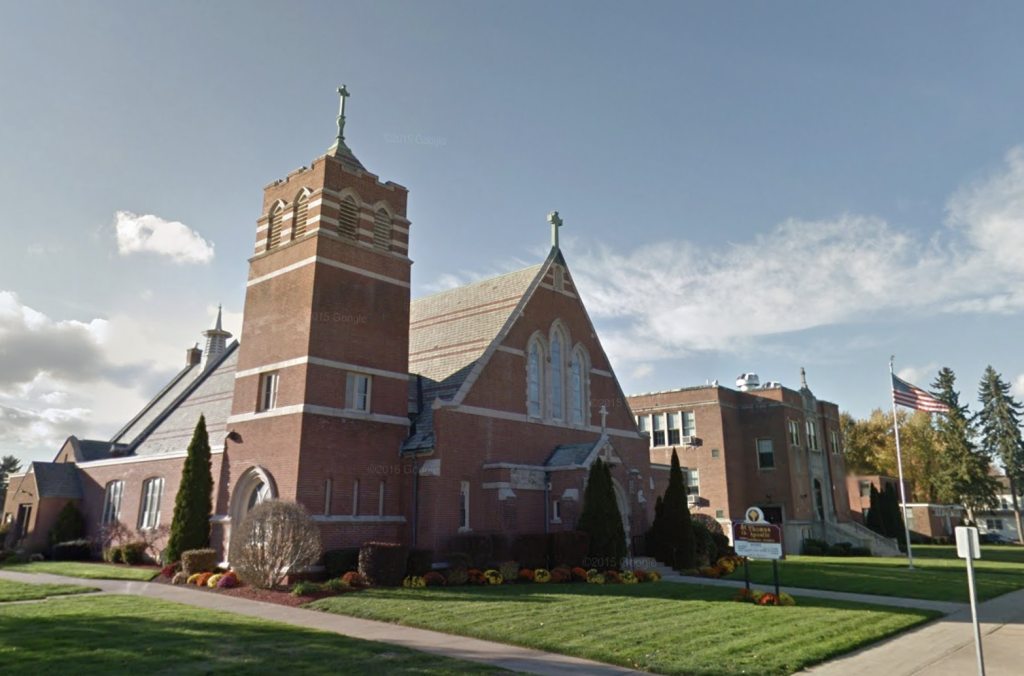
Podcast for St. Thomas of the Apostle Parish.
Episodes
Tuesday Nov 04, 2025
Tuesday Nov 04, 2025
In today's Gospel passage, a man hosts a lavish dinner and invites many people to attend. However, they are too preoccupied with their own concerns to accept the invitation. As a result, the man sends his servants into the streets and alleys to invite the poor, the crippled, the blind, and the lame, even reaching out to those on the outskirts of town to invite anyone they can find.
This reflects how God interacts with us. He invites us to embrace His love and grace and to experience the joy of His kingdom, even while we are still living on earth.
For many of us, the immediate demands of life can hinder us from accepting that invitation. We often think we will find time for God once we have addressed all our earthly and material concerns. However, we risk waiting too long.
God's invitation to experience His love and grace is extended to everyone. Let us pray that we remain attentive to that invitation at every moment in our lives, so we can grow in God's love and actively share in the Banquet of Life.
Monday Nov 03, 2025
Monday Nov 03, 2025
In today's Gospel, a wealthy Pharisee invites Jesus to dinner. This is unusual because Pharisees typically dined only with those who shared their views. During the meal, Jesus suggests that His host should often invite people he wouldn't ordinarily welcome—those who are outsiders or who are experiencing illness, hunger, and poverty.
Unlike the Pharisees, who limited their social circles, Jesus regularly shared meals with a diverse array of people, including the rich and the poor, the educated and the uneducated, the devout and the outsiders, as well as men and women. His choice of dining companions reflects His inclusive nature; no one was excluded from His presence or from His mission of preaching the kingdom of God. Jesus aimed to reveal God's generous welcome for everyone, especially those who were marginalized.
Through His authentic lifestyle and the company He kept, Jesus demonstrated the wide hospitality of His Father. In contrast, the Pharisees viewed God as exclusive rather than inclusive.
Let us pray that we will follow Jesus' example and welcome those who may be considered outsiders and those in need, so that we may share our knowledge of and faith in God with others.
Sunday Nov 02, 2025
Sunday Nov 02, 2025
My favorite season of the year is Autumn, and for many years, I have traveled the Green River Road from Greenfield, through Colrain, and up into Guilford, Vermont. I always end my trip in Brattleboro with lunch. It's a beautiful ride any time of year, but especially in the Fall.
Several years ago, I traveled this road with a friend during the peak foliage season. It was a bright sunny day; there wasn't a cloud in the sky. The brightness of the sun seemed to illuminate the yellows, oranges, and reds of the leaves, which stood in sharp contrast to the crisp blue sky and scattered themselves on the ground, floating over the rocky bed of the Green River. The day couldn't have been more perfect. Then we came to one of my favorite spots on the road. Just into Vermont, the road takes a sharp right and goes over a single-lane wooden covered bridge.
Just as we went over the bridge — and I was feeling euphoric — my friend turned to me and said, “Isn't is amazing that the most beautiful season in the year is the season of dying?"
Suddenly, the day seemed to lose its brilliance. The sky didn't look quite as blue, and the leaves seemed a little dull. I felt like someone had thrown a wet blanket over me. I couldn't quite believe what my friend had said.
I did think about his words, however, and quickly realized that he was correct and that there was nothing dismal about it. It is true, as life begins to ebb from the leaves, instead of just drying up, they reveal a tremendous beauty in color that was there all throughout their short lifetime but only visible at the end. I also thought about how the leaves, after they put on their fiery show and fall to the ground, undergo the natural processes that make them part of the soil and thus provide food and nourishment for future generations of leaves.
It seems to me that there can be a great deal of similarity between the season of Autumn and the human experience of death and dying. How often I have known someone who, in their final months or years, has mellowed out a bit, opened up, and been able to share the beauty within after struggling to do so their entire life. It is true, too, that those who "nourish" us in this life continue to do so after they are gone. Their influence can sometimes be felt for generations, just like the leaves.
Back in 1998, I gathered with my family as we bade farewell to our Dad. He died at the age of 56 after a relatively short battle with cancer. As we gathered with extended family and friends to mourn and to celebrate, in faith, our Dad's new life, the words of my friend came back to me: "The most beautiful season of the year is the Season of Dying."
While my Dad did not know he was in danger of dying until a couple weeks before he did die, there was some power deep within him that seemed to know it was time and took care of all the deeper things that needed attention before he left this earth. This was his season of dying and it was, indeed, the most beautiful season of his life.
My Dad was always a good man and always well-liked by people. However, the last couple of years of his life were really good ones. It was a season of reconciliation in many ways. It was a time when my Dad really learned how to open the window of his heart, to reach out to others in love and compassion to those who were sick. As his life slowly and secretly ebbed away, we saw the wonderfully brilliant colors that illuminated his soul and enabled those around him to see and be touched by it. It was a wondrous sight to behold.
Just like the leaves that have fallen to the ground and continue to nourish the leaves of succeeding generations, our beloved deceased continue to nourish us. They are irrevocable parts of our lives in so many ways. Their spirits are a part of who we are.
It is not pessimistic to say that the most beautiful season is the season of dying. To miss that beauty, now that would be a dismal and tragic thing.
Saturday Nov 01, 2025
Saturday Nov 01, 2025
All Saints Day is not just a day to honor those who have attained sainthood; it is also a day to reflect on our call to follow Jesus and strive to live as His disciples, emulating the lives of the saints.
The late Trappist monk, Thomas Merton, was once asked, "How does one become a saint?" There are many answers to that question: most notably, proof of a miracle and living a holy life. Technically, one is not made a saint by the Church; instead, the Church recognizes the sanctity of that person's life and the belief that they are in heaven.
However, sainthood is the byproduct of sorts of a larger goal: to know and love God with all our hearts, minds, and souls. This strong and pure desire is something each of us is called to possess, and those who live out that passion in every aspect of their lives attain the byproduct of sainthood.
Sanctity is something we should all strive for in our lives. The lives of the saints, whom we celebrate today and throughout the year, serve as models of inspiration in our pursuit of unity with God.
Let us pray that the saints will be examples of holiness for us and that their lives will inspire us to truly live as God's holy people.
Friday Oct 31, 2025
Friday Oct 31, 2025
In our Gospel passage, Jesus is dining with some Pharisees and other devout individuals. There is a theory that the man with the open wound was intentionally brought to the dinner to trap Jesus, testing whether He would heal him on the Sabbath. Typically, a person who is sick would not have been invited as a guest. However, Jesus was willing to take the challenge.
Without hesitation, He healed the man and sent him on his way.
Even today, we often see people who appear very religious and pious yet fail to show respect and compassion for others in times of need.
Our Lord's approach is always to treat others with love and respect, no matter the circumstances. He calls us to follow His example. The way Jesus interacts with others should also guide our actions. All religious and devout practices mean little if we do not embody love, mercy, and compassion and actively help those in need.
Thursday Oct 30, 2025
Thursday Oct 30, 2025
In today's Gospel passage, Jesus uses the metaphor of a hen who longs to gather her chicks under her wings, just as He desires to unite the people of Jerusalem and lead them to salvation. However, His longing to gather and save them went unfulfilled because they chose not to listen.
Jesus does not force anyone to accept His message or invitation. God gives us the precious gift of human freedom, which means He seeks a genuine desire for salvation from us; He does not impose it upon us. We must make an effort and cooperate with God's grace.
Let us pray that the Holy Spirit fills our hearts with a genuine desire for closeness to God and the salvation offered by our Lord.
Wednesday Oct 29, 2025
Wednesday Oct 29, 2025
“Will only a few people be saved?” Jesus does not provide a direct answer to this question, but He encourages us to enter through the narrow gate. Achieving salvation and a fulfilling life requires effort on our part, much like the focus needed to slim down and fit through a narrow opening.
The idea of a narrow gate does not necessarily mean that only a few will succeed in entering. In fact, Jesus says that people from the east, west, north, and south will be welcomed into the kingdom of God.
Additionally, the Book of Revelation describes a vast multitude gathered around the throne. However, this understanding should not lead to complacency. We must still strive to enter through the narrow gate by following Jesus and seeking to do God’s will.
Tuesday Oct 28, 2025
Tuesday Oct 28, 2025
All four Gospels tell the story of Jesus choosing His Apostles, but only Luke tells us that Jesus spent the entire night in prayer to His Father before making this critical decision. His choices were a direct result of His time in prayer. Luke highlights that Jesus prayed during significant moments in His life—right after His baptism, before He set out for Jerusalem, while in the Garden of Gethsemane as He faced His passion and death, and even on the Cross just moments before He died.
We, too, should turn to our Father in prayer during crucial moments in our lives. It's essential to recognize our need for God's guidance, strength, and courage. However, our prayers do not guarantee that everything will work out perfectly for us. Although Jesus spent the whole night in prayer before selecting the Twelve, one of them ultimately betrayed Him. Nevertheless, we can be confident that our humble surrender to the Lord during these times will always create space for Him to act, even when the outcomes do not align with our hopes.
Monday Oct 27, 2025
Monday Oct 27, 2025
In today's Gospel, we hear about a synagogue official, indignant that Jesus healed a woman on the Sabbath, who insists that work should not take place on the Sabbath. However, Jesus declares that God's work can happen on any day of the week. He was doing God's work by healing the woman from her afflictions; He unraveled her bonds and set her free.
For Jesus, this life-giving work is always appropriate; there is never a time when it should not be done. He invites all of us to participate in His mission of freeing people from whatever holds them back. We are called to be friends to others, to show kindness, to forgive as God has forgiven us, and to love as Christ has loved us. By doing so, we engage in the Lord's life-giving and redemptive work—not for our own glory, but so that through our actions, others may glorify God.
Sunday Oct 26, 2025
Sunday Oct 26, 2025
A very stern, humorless, and rather self-righteous woman was not feeling well and made an appointment to see her doctor.
The woman went into the reception area and reported to the receptionist, who had a couple of pierced earrings in each ear. The woman looked at her in disgust and said, “That’s horrible that you would pierce your ears like that.” She said, “I would never do anything like that to my body; it’s sinful.” She then went and sat down to wait for her appointment.
A couple of minutes later, a woman came into the office with her teenage son. The boy was wearing ripped jeans and a ripped t-shirt, and his hair had some blue highlights. The woman looked at him and began shaking her head. She said to the mother of the boy, “What kind of mother are you? My son would never go out in public looking like that!”
The people in the waiting room must have breathed a sigh of relief when the woman’s name was called to go in to see the doctor.
The doctor began by asking his patient some basic questions.
“Do you drink at all?”
“I never touch alcohol!” she said with great disdain.
“Do you smoke?”
“I never go near tobacco!” She was insulted by the question.
“What about your sleeping habits?”
“I go to bed early every night,” she arrogantly replied. “I have no time for late-night partying and carousing. I am a busy woman. I am in bed by ten and up by six every morning.”
“I see,” said the doctor, making notes on the chart. “Now exactly what’s been wrong?”
“I have been having terrible headaches,” she said.
“I think I see your problem,” the doctor said.
“What is it?” she snapped.
The doctor said, “I believe your halo is too tight.”
While we readily laugh at the arrogance of the Pharisee and the self-righteousness of the woman in the story, it’s easier than we realize to get caught up in that same attitude.
We all know some people are quick to criticize those whose standards don’t measure up to theirs, who immediately dismiss those they fear will intrude on their safe, protected little world.
We, too, may be caught in the trap of comparing ourselves to others, maybe even thinking we are better than others because of their looks, their personalities, or even by what they own or don’t own.
Jesus calls us to take off our “halos” and to recognize our humility before God and the humanity we share with every man, woman, and child. The only praise we can offer worthy of our loving God is prayer that manifests itself in returning that same unconditional, limitless love to others. We are called to recognize that no one is beneath us. Dignity doesn’t come from popularity or appearance, but from the fact that we are children of God and each one of us is made in the image of God. May we not be so taken with our own “halos” that we fail to recognize the presence of God in the lives and hearts of our fellow sinners.