
23.8K
Downloads
1658
Episodes
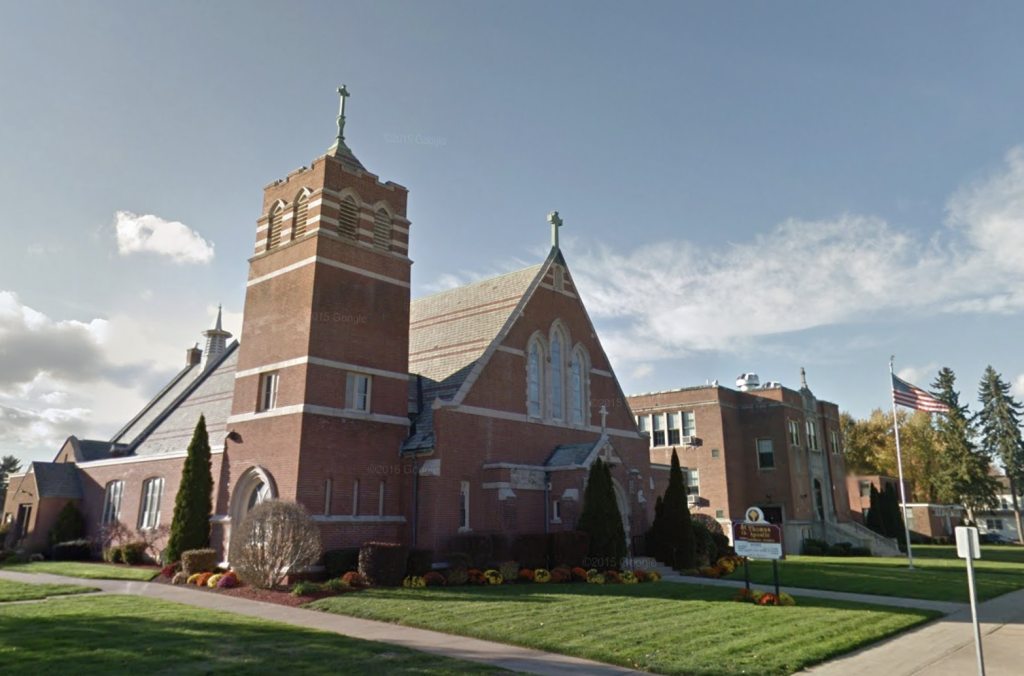
Podcast for St. Thomas of the Apostle Parish.
Episodes
Apr 11, 2026
Apr 11, 2026
2 min
Apr 10, 2026
Apr 10, 2026
3 min
After a night of fishing, the disciples returned empty-handed and feeling discouraged. Early in the morning, Jesus appeared on the shore and met with them. He invited them to have breakfast with Him, presenting an abundant table filled with fish and bread. In their disappointment, Jesus was there to provide for them, feeding them physically, spiritually, and emotionally.
Similarly, Jesus meets us at the water's edge to offer comfort and sustenance for our journey. Like the disciples, we must recognize Him in our lives—wherever and in whomever He may appear—and make ourselves present to Him to hear His invitation.
As a result, when we are nourished by the food of His Word and the sacrament of His Body and Blood, we become His presence to others, nurturing, healing, and loving everyone we encounter.
Apr 9, 2026
Apr 9, 2026
3 min
As we just heard, Jesus’ followers had difficulty believing that the man standing before them was the same Jesus they had come to know and love. They thought they were seeing a ghost.
They had been so traumatized by the Crucifixion just a few days earlier that they struggled to accept that Jesus was truly alive. It was too much for them to comprehend.
Even today, we may find it challenging to embrace and honestly believe the good news of Easter. It is often easier to relate to the death of Jesus than to His Resurrection; we can easily connect with His suffering.
Perhaps that is why we have seven weeks of Easter: to fully take in this incredible truth and recognize that the Risen Lord is among us, saying what He said to His disciples: “Peace be with you.”
He offers us peace of mind and heart, the fruit of His love poured into us by the Holy Spirit.
When we open ourselves to receive this gift, He sends us out as ambassadors of reconciliation, love, and peace, just as He sent out His disciples nearly 2,000 years ago.
May our hearts be open to the reality of His love so that we can go forth and share it fully with others.
Apr 8, 2026
Apr 8, 2026
4 min
In today's Gospel passage, two of Jesus' disciples are walking away from Jerusalem on the first Easter night, haunted by negative memories of the city. It was there that Jesus, to whom they had dedicated their lives, was crucified. The city took away not only Jesus but also the hopes they had invested in Him. They wanted to leave, but Jesus had wanted them to stay.
What they didn't realize at the time was that Jerusalem was also the place where Jesus would be raised from the dead, where He would pour out His Holy Spirit upon His disciples, and where His message would begin to spread to the entire world.
As they walked, Jesus accompanied the two disciples and helped them understand that there was more to Jerusalem than they had initially considered. Similarly, in our lives, the places we avoid—physical locations or deeper emotional spaces—may seem dark and gloomy. However, these are often the very places where the seeds of new life can grow and where God is mysteriously yet powerfully at work in the darkness.
Apr 7, 2026
Apr 7, 2026
3 min
Yesterday, we heard St. Matthew's account of Mary Magdalene's experience at the empty tomb on the first Easter morning. While St. Matthew briefly mentioned Mary's fear, he did not elaborate. In contrast, St. John's account provides more details, revealing that Mary was so distraught that she didn't even recognize Jesus when she first saw Him.
Reflecting on the Gospels, we might think that some of Jesus' followers were slow to understand the significance of His teachings and miracles. However, like us, they grew in faith gradually through moments of revelation and discovery.
Even though we are familiar with the story of Jesus' life, death, and Resurrection, we can still struggle to recognize His presence in our lives today. We might wonder if God is truly there in times of difficulty or loneliness.
Yet, our faith teaches us that God is always with us, just as He was with Mary Magdalene at the empty tomb, even when she was initially unaware of His presence.
Let us pray that we remain aware of God's abiding presence in our hearts and lives so that, like Mary Magdalene, we may hear Jesus' voice and be filled with His love and presence.
Apr 6, 2026
Apr 6, 2026
3 min
Apr 5, 2026
Apr 5, 2026
5 min
“Exult, let them exult! Let this holy building shake with joy, filled with the mighty voices of the peoples!”
With these words, the Church comes forth from its Lenten sacrifice to the joyous and exultant celebration of the Resurrection of our Savior, Jesus Christ. This is a day of rejoicing. This is a day of glory for God. This is a day when the promise of redemption is shown to us in all its glory and splendor.
We have spent the past several weeks looking deep into our hearts and souls, searching out those areas we have closed off from the transforming power of God. We have sought to open up our hearts and our souls to the grace of God and to cleanse ourselves of our sin. Through this annual observance we have, we pray, witnessed and experienced some transformation within ourselves. We have shared in the meal that Jesus gave us. We have walked the way of the Cross and laid our Messiah in His tomb. Today we witness the power of God, when the light of Christ re-entered the darkness of our world and brought light to all people living in that darkness. Indeed, we have reason to rejoice!
For the past several months, the catechumens and candidates of the Church have been dismissed from Mass in many parishes with the sung antiphon, Perhaps, “Glory, we glory, in the Cross of Christ.” It is a common expression among people today to speak of different crosses or burdens that we have to carry. Jesus tells us that if we truly want to be His disciples, then we must deny our very selves, take up His Cross, and follow Him. Taking up the Cross can be a very difficult thing for us to do. For taking up the Cross means facing disagreement, ridicule, sacrifice, and tremendous, tremendous risk.
But what we celebrate today is that the Cross is not the end. It is not the defeat of Jesus. It is not the squelching of the Good News that Jesus came to bring. It is not the end of the marvels of the wisdom and power of God. Instead, it is the instrument that showed the world the true glory of God. For through the degradation of the Cross, Jesus died just as we will die and Jesus rose just as we will rise on the last day. And so, we do glory in the Cross of Christ. We glory in that our Savior humbled Himself to suffer as we suffer, that He died as we die, and that He rose from the dead as we will rise.
On August 30, 1996, in Chicago, Cardinal Joseph Bernardin announced during a press conference that he had just been diagnosed with terminal cancer. In the course of his announcement, the cardinal spoke the following words, paraphrasing Fr. Henri Nouwen: “We can look at death in two ways, as an enemy or a friend. If it’s an enemy, we try to avoid it, we go into a state of denial, we become very fearful. But if we see death as a friend, our attitude toward it is different. As a person of faith,” he said, “I see death as a friend, as the transition from an earthly life to life eternal.”
From this perspective, we can, indeed, glory in the Cross of Christ. That Cross has gained for us so much. And so, to paraphrase St. Paul in his letter to the Galatians, “May [we] never boast [of anything] except in the cross of our LORD Jesus Christ, through which the world has been crucified to [us], and [us] to the world.”
As we move forward from this celebration, as we go forth to face the world, may we carry the Cross of Christ confidently, knowing the glory that follows the Cross and trusting that we will share in that glory at the end of time. This is, indeed, the day when "Jesus Christ broke the chains of death and rose triumphant from the grave." May our rejoicing echo forth to all those we meet and be a call to all people to open their hearts to the saving power of God.
Apr 3, 2026
Apr 3, 2026
3 min
In St. John's account of the Passion of Jesus, we hear it was the day before the Sabbath. This was a hectic day for the Jewish people because it was the preparation time for Passover. So everyone was incredibly busy with the many, many tasks that had to be completed before these observances began—everyday things but necessary things that couldn't be done during the holy days.
So there was a real sense of busyness, of people focused on a particular mission. These people were far too busy, far too focused on their tasks, to notice what was taking place in Jerusalem's official business.
Unlike the other Gospel accounts of this scene, John's account of the Passion of Jesus does not include jeering crowds demanding Jesus' death. In John's account, Jesus' arrest and trial took place in the middle of the night, when most people were sleeping. Pilate, some soldiers, and some Jewish authorities were there, but not as many others as the other Gospels indicate.
Some scripture scholars say that John's account is the most accurate description of what happened on that first Good Friday. The death of Jesus was not the focus of the day for the people in Jerusalem. The image of vast crowds demanding Jesus' death in the other three Gospels may not have been the case; Pilate and his forces may not have allowed that. To them, the issue of Jesus was a Jewish matter that only concerned them in so far as it could cause chaos in town. So, they dealt with it as they would any other matter: straightforwardly, quickly, and coldly. And so, these scholars conclude, Jesus died practically alone and out of sight of the general public.
So, while the Jewish people of Jerusalem went about the many tasks in preparation for Passover, God was putting into motion a second Passover.
As a brisk trade in the buying and selling of lambs for Passover was taking place all over the city, the Lamb of God was slain just outside the gates.
While the preparations for the Passover Seder continued, the new Passover was completed on a bleak and lonely hill.
During the Jewish community's celebration of their flight from slavery to nationhood, God was calling his people to a new flight from death to life.
In our contemporary world's busyness, the same thing takes place on this Good Friday.
This Good Friday continues to be a day of preparation. The events of this day are not an end in themselves but the means to a much more significant event. God completes the work of His second Genesis, in which He re-creates humankind in the Paschal mystery.
This Good Friday is God's calling us to a second Exodus journey, marked by the slaying of His Son, the Lamb, who becomes for us the new Passover Seder Meal – today is our exodus from the slavery of sin to the freedom of compassion and forgiveness, our Passover from this life to the life of God.
Apr 2, 2026
Apr 2, 2026
4 min
The main sign or trait of a Christian should be selfless love. This is because Christ works through every Christian person, and His most important trait is love.
For Christ, love isn’t just about feeling good or having good intentions; it’s about giving yourself to others. Love involves action and sacrifice and can sometimes be difficult or painful. He shows this through His suffering and death. If this is what love means for Christ, it is also what love means for us as Christians. If we want to follow Him and be part of God’s family, we must try to follow His example. He said, "I have given you a model to follow so that as I have done for you, you should also do."
We come together today because we believe in Jesus and want to follow Him. We want to improve our own lives and the lives of those around us. Sometimes, we forget how simple this can be. Christ’s way to change the world and improve our lives is through selfless love; it’s like washing each other’s feet, in a way. If we follow that idea, everything else will come together for us and our community.
As we take Holy Communion today, our Lord will renew His promise to us. He will cleanse our hearts and fill us with His strength. How should we respond? What does He want us to do? He wants us to be like Him in our thoughts and actions.
Many of us can think of someone suffering or losing hope, someone who needs to feel that God knows and loves them.
So, imitating Jesus could be as simple as visiting a sick relative. It might mean inviting someone who has stopped coming to church to join us for Mass, or it might be about starting to forgive someone we have been upset with.
If we ask the Holy Spirit for help, He will show us many ideas and opportunities. Is there a better way to celebrate this Holy Triduum? Is there anything that would please our Lord more? Let us ask Jesus for the strength to be His true disciples and to love more like Him. Let’s also promise that from now until Easter Sunday and beyond, we will try to do for someone else what He has done for us.
Apr 1, 2026
Apr 1, 2026
3 min