
16.9K
Downloads
1458
Episodes
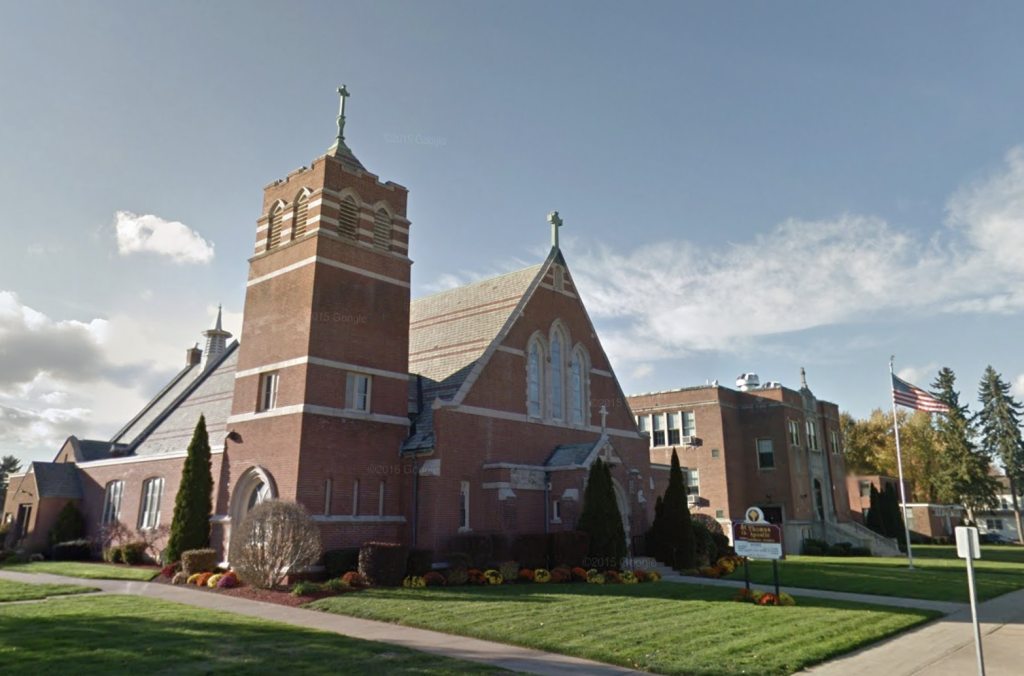
Podcast for St. Thomas of the Apostle Parish.
Episodes
Saturday Oct 05, 2019
Saturday Oct 05, 2019
It is natural for us to take pride in our work, especially if we believe that we have done a good job. That is exactly what we find the disciples doing in today’s Gospel; they return to Jesus from a successful mission. In their excitement, they tell Him, “even the demons are subject to us because of your name.” He recognizes their success, yet He challenges them to celebrate, not so much in the success of their work, but in the fact that their names are written in heaven.
Our relationship with God should be the deepest source of our joy. It is that relationship which makes our work fruitful, our lives meaningful. That is why Jesus goes on to tell them, “Blessed are the eyes that see what you see.” The disciples had come to see and hear God’s presence in the person of Jesus; they had received the revelation of His own relationship with God His Father and had let themselves be drawn into that relationship. That is why they can rejoice.
This Gospel passage reminds us that our own sharing in Jesus’ relationship with God is our real treasure and not our accomplishments. It is that gift of sharing in Jesus’ relationship with His Father that allows us to see and hear what many prophets and kings yearned to see and hear, and it is the genuine source of our joy and thanksgiving. Even when our work is done, whether it is due age, poor health or lack of opportunity, that gift of sharing in Jesus’ own relationship with His Father endures. +
Friday Oct 04, 2019
Friday Oct 04, 2019
Our LORD grieves the fact that the people of the towns of Chorazin and Bethsaida did not appreciate all that He had done among them. They were unmoved by God’s works in their midst, and were not in any way moved by them to turn to a better life.
We, too, can sometimes miss the signs of God’s grace among us. Grace might take the form of an unexpected kindness shown to us, an invitation we receive that we had not expected, a word of appreciation or support at a time when it was needed, a positive and willing response to a request that we’ve made, or someone’s simple presence and work among us.
The LORD comes to us especially in and through His followers, in and through each other in the Church. As He says in today’s Gospel, “Whoever listens to you listens to me.” We don’t always recognize the ways in which the LORD touches our lives; we don’t always notice the LORD passing by and gracing us in different ways. At the end of our day, it can be good to look back over that day and to notice where and how the LORD has been gracing us with His presence, and then to quietly give thanks for that. +
Thursday Oct 03, 2019
Thursday Oct 03, 2019
In this morning’s Gospel passage, St. Luke describes Jesus sending out a large group of His disciples — seventy-two, to be exact — and telling them to “ask the master of the harvest to send out more laborers for his harvest.”
The LORD'S work, in its many and varied forms, cannot be carried out by one person or even a small group of people; it requires a large number of laborers. Since the harvest is abundant and wide-ranging, the more workers, the better. This is an important message for bishops, priests, deacons, religious, and the lay-faithful of the Church in our own day. More and more people are needed to take responsibility for the life of the Church, for the work of the LORD.
In sending out His disciples ahead of Him, Jesus draws attention to the many difficulties, challenges, and rejections that they will face. He anticipates that some towns will not welcome them but, whether people welcome them or not, the disciples are to proclaim: “The kingdom of God is at hand for you.”
Indeed, the LORD is very near whether He is welcomed or not. The Lord is present to all people whether He is received by them or not. Jesus continues to work in and through those who are ready to be His laborers, whether or not that labor is valued by those to whom they preach. We are constantly in the presence of God’s kingdom, God’s rule, among us; there is no getting away from it. The issue is how we respond to that presence as well as to the call to share that presence with others. +
Wednesday Oct 02, 2019
Wednesday Oct 02, 2019
The questions people ask often uncover their values, their priorities, and what they think is most important in life. When His disciples asked Jesus the question, “Who is the greatest in the kingdom of heaven?” [Matthew 18:1] it shows their interest in personal status and reputation. In His reply, Jesus both did something and said something. First, He placed the child in front of them and said they needed to become like children just to enter the kingdom of heaven, never mind become the greatest in the kingdom.
Jesus’ disciples are to become child-like not childish. There’s an important difference. They will be child-like in the sense of totally trusting in a loving Father, and demanding nothing else, including status and standing. Greatness comes to those who make themselves as dependent on God as children are dependent on adults for their care and well-being. Jesus’ answer to His disciples’ question is like a commentary on the first beatitude: “Blessed are the poor in spirit, for theirs is the kingdom of heaven.” +
Tuesday Oct 01, 2019
Tuesday Oct 01, 2019
Rejection is one of the most painful human experiences, especially if it comes from someone who really matters to us; one in whom we have invested a lot of trust. An experience of rejection can leave us very angry and bitter, or even tempted to strike out in some way, to retaliate in kind.
Jesus knew this fact from personal experience, when He was rejected by the people of a Samaritan village. He was a Jew heading for Jerusalem and that was enough to make them refuse Him hospitality. If rejection like this was a regular response of Samaritans to Jews, the angry reaction of the disciples was a standard Jewish response to Samaritans. They responded to this experience of rejection by suggesting that Jesus allow them to call on God to destroy the Samaritan village. Clearly they wanted to strike out in anger and make them pay!
How different was Jesus’ response to that of His disciples. He quietly shook His head and simply went on to another village, to proclaim the Gospel elsewhere. Jesus remained generous in the face of rejection. That is His way and it is meant to be our way too. Who we are and how we relate to others is not determined by how others may treat us. Rather who we are, even in the face of rejection, is determined by something much deeper, by our relationship with the LORD and our efforts to keep living by His mind and Spirit. +
Monday Sep 30, 2019
Monday Sep 30, 2019
In our Gospel passage today, Jesus, responding to the squabble of His disciples about which of them was the greatest, identifies Himself with the least of society, that is, like a child. In that ancient world and culture, children had no rights, or power, or influence. They were far from what the disciples wanted in their dispute about rank and status.
As always, the LORD sides with those who are marginalized by society. He is present in the ordinary citizen as well as the poor and downtrodden, in those who seem to have least to offer society. Since He can be encountered in such every day and mundane ways, it is easy to miss Him, but He is very much present in those encounters. Of course, we encounter Him in a special way in the Eucharist, but He is no less present in the people we encounter every day of our lives. +
Sunday Sep 29, 2019
Sunday Sep 29, 2019
One thing that makes me feel uncomfortable is when a poor person I meet on the street or at an intersection asks me for money. I think most of us struggle with the issue of whether we are really helping the person or supporting an addiction. I’ve heard all the reasons why we either should or shouldn’t help them, and so I often waffle in what to do.
Some time ago, a friend of mine, Fr. Jim, was in downtown St. Louis, Missouri for dinner. He was dressed in casual clothes, and a homeless person, who was lying on a park bench, sat up and asked him for some change. Fr. Jim had a little extra time and a few singles in his pocket, so he stopped and asked him what his name was. The man was silent and just stared at him. Fr. Jim wondered if he had offended him. Then the man asked, “Who are you?! I’ve been living in this park for over a week; a few people have given me some money, but no one has asked me who I am; I didn’t think I mattered.” Then he said with a smile, “My name is Tom.”
Usually, the poor of the world go nameless to those who have the comforts of food and shelter. We pray for the poor… in general, we read about poverty statistics…in general, and we see photos of ‘them’ in the news. But when we actually learn the name of a poor person and a little about them, we think of them differently; we have a certain kind of ‘relationship’ with the person. Fr. Jim says that, while that short conversation with Tom didn’t convert him enough to now give his money away to every homeless person he encounters, Tom’s face and name have given him much more to reflect on each time he hears another message from Jesus about helping the poor.
It’s no coincidence that in the parable Jesus gives us the name of the poor person, but not the name of the rich man. Jesus gives importance and dignity to the poor person in the story by telling us that his name is Lazarus.
Before we ‘write off’ the parable as one more story about God’s love for the poor and a warning about the risks of material wealth, note that the parable is not a condemnation of wealth per se. Rather, the parable is asking those who have what they need (and more) whether or not they are sharing what they have. Have we helped in any way to lessen the gap between we who have, and those who have little?
We learn that while possessions are not evil in themselves, they must not turn our minds and hearts away from those people in the world who have so little. In the parable, the rich man uses his wealth only for himself, and so it is his complacency that is condemned. We may not think of ourselves as wealthy, but we can still become indifferent toward the poor. The whole story begs the question of whether or not we are even aware of the poor around us and among us.
The parable is left without an ending in that we never find out if the five brothers ever got the message about the consequences of ignoring the poor. And so, we get to write our own ending of what we will do with our lives in light of what just learned about the differences between the short-term riches of this world and the eternal riches of God’s world.
As we prepare to receive Jesus’ Body and Blood, we are challenged by this Gospel to keep asking ourselves what else we might be doing to care for all members of Christ’s Body. +
Saturday Sep 28, 2019
Saturday Sep 28, 2019
Praise and admiration from others can be fleeting; it can be there one day and gone the next, and Jesus certainly knew this. There were many times that the crowd was cheering for Him. Yet, at the highpoint of His popularity among the people, He gave the warning: “The Son of Man is to be handed over to men.” Jesus was not seeking fame or popularity; He was seeking to do God’s will, to complete the mission for which He was sent to earth. So, He knew that He had to go to Jerusalem, despite the danger, because its people, too, needed to hear the Good News of God’s mercy and grace.
The way that Jesus lived out His life and ministry invites us to ask ourselves: What really drives us? Is it the need for recognition or is it something deeper? We need to make Jesus’ desires and priorities our own, to be about our Father’s business, to keep sharing in God’s work, in keeping with our place in life. Then we will know, not just the satisfaction of human approval, but the deeper joy that comes from adapting ourselves to God’s purpose for our lives. +
Friday Sep 27, 2019
Friday Sep 27, 2019
One of the things that makes the Gospel of Luke stand out from those of the other Evangelists is that he regularly portrays Jesus at prayer. It was after one such period of prayer that Jesus asked His disciples the two questions that we hear in today’s passage: “Who do the crowds say that I am?” and “Who do you say I am?”
Both of these were important questions. The first was wide-ranging and easy enough to answer; the second was much more personal and more challenging. When that question is posed to us, it asks each of us to say who Jesus is for each one of us, personally. It is simpler to guess what He means to people in general; it takes a lot more reflection and introspection to say what he means to me personally. But it is the answer to that second question that matters most. Jesus wants us to express our own personal faith in Him. He asks us, “What do you believe?” and then He sends us forth to share our belief with others. +
Thursday Sep 26, 2019
Thursday Sep 26, 2019
King Herod Antipas ruled the province of Galilee on behalf of Rome. Saint Luke portrayed his attitude toward Jesus as rather trivial. When he heard about Jesus’ activities and about the great interest that people had in Him, Herod became perplexed and made attempts to see Him. They finally met during the course of Jesus’ Passion, when Pilate sent Jesus to Herod for his opinion about His guilt. Herod questioned Jesus at length but, in the end, treated Him with contempt. Herod did have a curiosity about Jesus, but it was not was serious nor did it lead to faith.
There were others who showed interest in Jesus and their curiosity did lead them to faith. But, even for people of faith, there is much to wonder about in the life of Jesus. The question asked by Herod Antipas, “Who then is this?” is one for us all to consider. We must always be searchers in regard to Jesus, since we can never know Him fully. As Saint Paul said, “At present we see indistinctly, as in a mirror, but then face to face.” We seek to know Him more clearly, love Him more dearly, and follow Him more nearly. +