
16.9K
Downloads
1458
Episodes
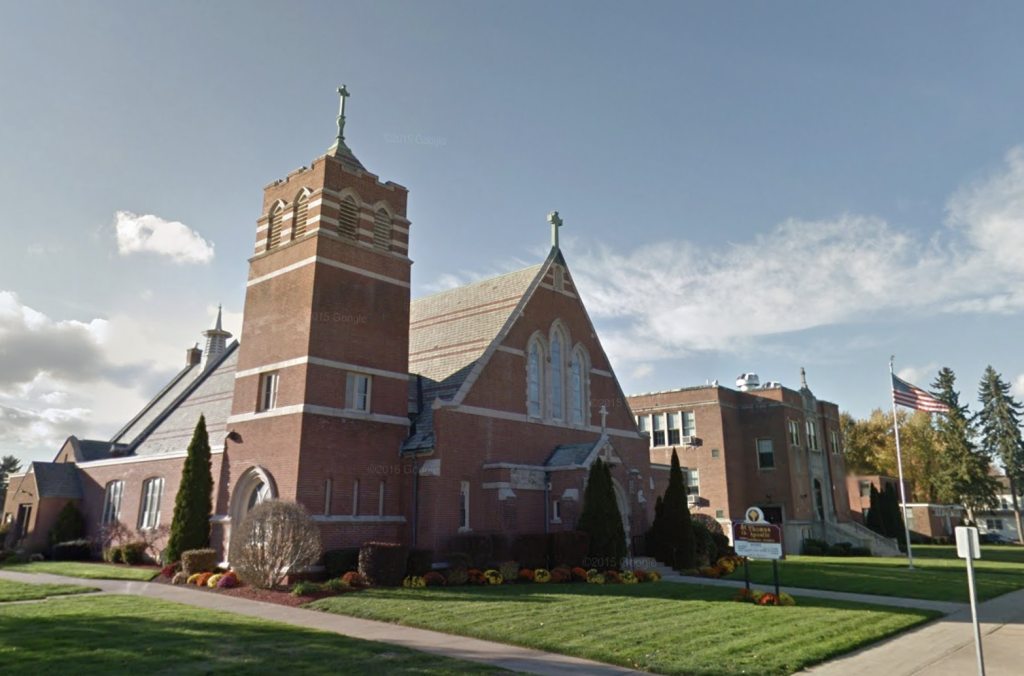
Podcast for St. Thomas of the Apostle Parish.
Episodes
Tuesday Oct 15, 2019
Tuesday Oct 15, 2019
Throughout the Gospels there are many instances such as the one that we witness in today’s passage from Luke. Here, Jesus is, once again, in the presence of the Pharisees – he has actually been invited to dine in the home of a Pharisee – and He is confronted with their judgment based on the letter of the Law (as they interpret it).
Jesus sees that the Pharisee had taken note that He did not perform the customary ritual washings before reclining at table to dine. In response, Jesus points out the error of the Pharisees in their focus on the letter of the Law rather than the spirit of the Law.
This really is at the heart of Jesus’ ongoing disagreement with the Pharisees. They focus on minute details of particular practices and rituals all while ignoring God’s call for mercy and compassion for the sick, the suffering, and the oppressed.
In the story of the Good Samaritan, the people who refused to help the injured man were doing so not because they didn’t care, but because they were observing the letter of the law regarding purity; they couldn’t touch a bleeding person. The Samaritan, who was not beholden to these laws, actually fulfilled God’s Law by helping someone who was in need.
There is a part of human nature that can tend to focus on tiny details all while missing the big picture. Let us pray, today and always, that all the things that we do in life, whether they be mundane or great, may focus on the two most important laws – love of God and love of neighbor – and may our doing so bring a spirit of purity to our lives and our souls, helping us to become the good people that God made each of us to be. +
Monday Oct 14, 2019
Monday Oct 14, 2019
Jesus often seemed frustrated with people who sought signs and were unwilling to put their faith in the power given to Him by His Father in heaven. He knew that, in reality, there was no sign that would give them faith; that they would simply find themselves entertained by the “magic” of the sign and then move onto something else. They would completely miss the power and the authority behind such a sign.
Jesus points to the sign and the preaching of Jonah (a “mere” prophet) and how he was able to lead the Ninevites to repentance, and yet, they had one among them who was far greater than Jonah and they couldn’t see Him for who He was, or understand what He was about. He was just too ordinary for them.
Let us pray that the Holy Spirit will help us to recognize when the power and presence of Jesus is active in the ordinary moments of our everyday lives; may that recognition lead us to a greater faith in the love, mercy, and active presence of God in our midst. +
Sunday Oct 13, 2019
Sunday Oct 13, 2019
All of us have been given great graces and gifts in our lives. Sometimes though, we fail to recognize that God is the ultimate source of all the graces and gifts that we possess and have received. It is that recognition that distinguished the Samaritan leper from the other nine who were cured in today’s Gospel passage.
All ten of the lepers were equally healed of a disease that had, probably for years, left them horribly disfigured and physically and socially challenged. However, only one of them, finding himself cured, turned back to praise God. He threw himself at the feet of Jesus and thanked Him for this cure. He thanked Jesus, but he praised God. The Samaritan leper, one who was looked down upon by the people because of his origin and because of his affliction, was the one who recognized that God’s grace was at work in his healing. It was not the Scribes or the Pharisees or the self-righteous.
Jesus praised this man’s special insight. But it is important to note that Jesus didn’t want thanks for Himself; He didn’t complain that no one thanked Him. Instead, He asked, “Has none but this foreigner returned to give thanks to God?”
That is why He said, “Your faith has saved you.” This leper had the true vision of faith; he recognized God at work in what had happened to him, in the amazing way that he had been graced and gifted and healed by God.
All of us are called to that same vision of faith; to recognize and to acknowledge God at work in all the experiences of grace that bless us in the course of our everyday lives. We are also called to recognize that others experience that same grace, even those with whom we disagree, those whom we don’t particularly like, even those whom we may deem to be ungodly.
In an age where there seems to be nothing but intolerance between people who think differently from one another or approach life with different ideologies, it is imperative that we call to mind the reality that all of us are created by God and made in the image of God. All people experience the grace of God and all people are vessels and instruments of that same grace, regardless of their origin, their health, their political or religious ideologies, or their faith.
Throughout Scripture, Jesus used the stories and lives of foreigners, the ill, and others that His people looked down upon, to show that all people are made in God’s image and that God works through the lives and actions of all people, especially those who struggle to get through life.
Jesus’ message to the leaders and people of His time was clear: all people are creatures of God, made in the image of God, and need to be respected and loved as such. Jesus gives us that same message today. This doesn’t mean we always agree with everyone; it doesn’t mean that we simply accept or look away from bad behavior. But recognition of and respect for the presence of God in every person is a necessary and basic element in our relationship with all people, in our answering the call to evangelize, in our efforts to journey together, in faith, toward the kingdom of heaven. +
Saturday Oct 12, 2019
Saturday Oct 12, 2019
Our Gospel passage today must be one of the shortest Gospel readings in our Lectionary; it is just two verses long. This brief story of the exchange between Jesus and a nameless woman is told only by St. Luke.
Women have a more prominent place in Luke’s Gospel than they do in the other Gospels. Of the four Evangelists, Luke offers the best balance between the male and female disciples of Jesus.
On this particular occasion, a woman was so impressed by Jesus that she suddenly spoke out with praise for His mother, whom she proclaimed to be blessed for carrying Jesus in her womb.
While we know that Jesus loved and cherished His mother, He used the woman’s words as an opportunity to give praise to a much wider group. Even happier and more blessed than His own mother, are those who hear the Word of God and keep it. Jesus’ mother belonged to that wider group and she, more than anyone else, heard the Word of God and kept it.
Mary’s blessedness is due to giving herself over to hearing and doing God’s Word. To that Word her lifelong answer was, “May it be to me according to your word.” [Luke 1:38] May we devote ourselves to hearing and doing God’s word, that we, too, may be blessed. +
Friday Oct 11, 2019
Friday Oct 11, 2019
As we hear in today’s Gospel passage, some people, in an effort to test Him, asked Jesus for a sign, some miracle from heaven. They did so because they failed to recognize the presence of God in the person of Jesus. So, they believed that if He performed some sign, on demand, that it would prove that God was with Him.
In reality, God was powerfully at work in Jesus’ ministry, if only people had the eyes of faith to see it. There really was no need for miracles in order for the people to accept His message. As Jesus would later say to Thomas after the Resurrection, “Blessed are they who have not seen and have believed.” [John 20:29]
Sometimes even people of faith can be drawn to “signs and wonders”, obsessed with shrines and miracles. We can fail to see that the Lord is present among us in and through the goodness, kindness, mercy, love, and hospitality of others; in all kinds of ordinary expressions of love; even in people’s quiet prayerfulness.
We can miss the divine presence in the everyday and the familiar. In a wonderful poem, the great Irish patriot and poet Joseph Mary Plunkett wrote, “I see His blood upon the rose and in the stars the glory of His eyes.” Nature spoke to him of Christ. The best of human nature and our relationships with one another can also speak to us of God. +
Thursday Oct 10, 2019
Thursday Oct 10, 2019
Today's Gospel passage comes just after Jesus teaches His disciples how to pray; what we now call the “Our Father” or “The LORD’s Prayer.” In that prayer, the intentions are simple and clear: We praise God and ask that His kingdom come upon the earth; we pray for that which we need each day, for forgiveness of our sins in the same measure with which we forgive, and, finally, that we not be put to the final test; that God will protect us from evil.
Jesus tells us that we need to turn to our Father in heaven, in prayer, and ask for that which we truly need in this life. He does not tell us to pray for miracles, for selfish things, for things as we would have them. Rather, He tells us to trust that the Father will give us good things; He tells us to trust that the Father will give us the Holy Spirit.
It is the Holy Spirit that will give us the courage, the trust, and the faith we need to truly ask that God’s will be done in our lives; to trust that, despite what we may believe to be the best for ourselves and our world, God’s ways are ultimately better; to trust that even when things don’t work out as we had hoped, our prayers are still answered in having God’s Holy Spirit alive in our hearts, minds and souls, giving us strength and wisdom as well as trust in the promise of Redemption and eternal life. +
Wednesday Oct 09, 2019
Wednesday Oct 09, 2019
Our first reading this morning illustrates the balance between principles and their practical application, just as yesterday’s Gospel connected the seemingly conflicting examples of contemplation (as we saw on the part of Mary) and activism (as we saw on the part of her sister, Martha).
There is a stark contradiction in Jonah’s attitude: This prophet, who claimed to “worship the LORD, the God of heaven, who made the sea and the dry land," (Jonah 1:9) seeks to flee from God by taking a long voyage on the sea.
The irony in today’s passage is quite sad: Jonah knows that God is filled with mercy and grace, that He is slow to anger and rich in kindness. Yet, this made him unwilling to preach repentance in the name of such a God, who would show mercy to Jonah’s people’s enemies: the people of Nineveh.
The incensed prophet cannot bear the idea of Israel’s enemies becoming the beneficiaries of God’s mercy. Jonah is willing to circumvent Nineveh and leave it to destruction, but he becomes angry when God fails to save the gourd plant. The prophet selfishly thinks God should have spared this little tree that shaded Jonah from the fierce sun and wind. God’s reply shows how silly was Jonah’s attitude:
"You are concerned over the plant which cost you no labor
and which you did not raise;
it came up in one night and in one night it perished.
And should I not be concerned over Nineveh, the great city,
in which there are more than a hundred and twenty thousand persons
who cannot distinguish their right hand from their left,
not to mention the many cattle?" (Jonah 4:10-11)
Here we have proof, once again, that God’s thoughts are not our thoughts and God’s ways are not our ways. And thank God for that! +
Tuesday Oct 08, 2019
Tuesday Oct 08, 2019
On hearing today’s gospel passage, many people feel empathy for Martha. We see her working hard to prepare a meal for Jesus and His friends, and, when she complains that her sister Mary is not helping her, Jesus proclaims that Mary has chosen the better part. That seems rather unfair to Martha.
We know from other stories in Scripture that Jesus was not opposed to people working hard in the service of others: In the parable of the Good Samaritan, He praised the man’s mercy and love when he worked so hard to care for the man who was the victim of robbers. But, as the book of Ecclesiastes says, “There is an appointed time for everything, and a time for every affair under the heavens.” (Ecclesiastes 3:1) With this in mind, we might say, “There is a time to be active and a time to refrain from activity.”
When visiting the home of Mary and Martha, Jesus saw it as a time for them to refrain from activity so that they could listen to what He had to say. Mary recognized that this was the kind of hospitality Jesus wanted on this occasion: the hospitality of listening rather than the hospitality of activity. Mary was more attuned to what the LORD really wanted than was Martha. While the Lord wants us to work on His behalf, He also wants us to stop working at different times so that we may truly listen to Him. Wisdom consists in knowing when it’s time to be active and busy in the LORD’s service and when it is time simply to sit and listen to His word. +
Monday Oct 07, 2019
Monday Oct 07, 2019
Today the Church celebrates the Memorial of Our Lady of the Rosary. The Rosary calls us to reflect on the great mysteries of the life, death, and Resurrection of Jesus.
Scripture depicts Mary as a deeply reflective person. In the second chapter of Luke’s Gospel, in response to the words of the shepherds, it is said that “Mary kept all these things, reflecting on them in her heart.” (Luke 2:19) Again, in response to the words of the child Jesus to her in the temple, Luke says that Mary “kept all these things in her heart.” (Luke 2:51)
Luke depicts Mary as a meditative person, reflecting deeply on all that was happening in the life of her Son. So, Mary exemplifies the manner of mind and heart that we are invited to bring to the praying of the Rosary.
In praying the Rosary, we treasure and contemplate the key moments in the life of Jesus in this world and His going from this world to God the Father. Mary not only contemplated on what God was doing in the words and deeds of Jesus, but she surrendered herself to what God was doing, as shown by her response to the visit of the angel Gabriel when she says, “May it be done to me according to your word.” (Luke 1:38)
Like Mary, may we, too, reflect upon all that God is doing in the words and actions of Jesus; and also like Mary, may we, too, surrender ourselves more fully to God’s will in our lives, thus becoming more fully the people God made us to be. +
Sunday Oct 06, 2019
Sunday Oct 06, 2019
The news media brings news to our attention in a way it was never able to do in the past. With cable TV, the internet, and news alerts on our mobile phones and tablets, we hear about news, literally, as it is happening. Unfortunately, so much of that news is “bad news.” There are times when it seems like we never hear any good news and our knowledge of all the turmoil in our world can cause us to start to feel despair.
It seems, too, that the primary response to all of the bad news is to politicize our concerns and simply look to governing authorities to take responsibility for everything that needs to be done. Sometimes the response to all the bad news is to look only for a rational response, instead of a prayerful one.
People of faith come in many different varieties: there are people who simply pray for miracles and then there are those who “go into the trenches,” so to speak, to get things done but who do so with a sense of prayer: they pray to God for the strength and wisdom to deal with the problems they are trying to tackle and they also make their work a prayer.
Our Scripture readings today all point to the unity of prayer and service. People like St. Vincent de Paul, St. Teresa of Calcutta, and Dorothy Day, who began the Catholic Worker Movement, were people who believed in the power of God but also believed that God gave them certain gifts, talents, and abilities to bring the grace of God into some very serious problems in our world; people who used these gifts to make better the lives of the poor, the suffering, and the oppressed. Their prayers and their actions were tightly interwoven.
It is true that we cannot go through the world as individuals who right every wrong. But we can go through life praying for every suffering person and we can do something about it in the part of the world in which we live.
In the coming weeks, some of the young people of our parish will begin their final preparation for the Sacrament of Confirmation. In a few months, when they celebrate their Confirmation, it will be the culmination of their catechetical training for the past several years and the beginning of a new commitment to practicing their faith in worship, word, and action.
Part of the final preparation for Confirmation always involves service to those in need and a reflection on how this service to the needy is an integral part of the faith life of every Christian. It’s important for every Christian to make this connection and to live it out as much as possible but, especially for the teens of our Church.
The young people of our Church are not just the future of the Church, they are also the Church of the present time. At every stage of our lives, we are not only called but we are given the gifts to bring our lives to prayer and then to go back and make a positive impact on the lives of those with whom we have contact, especially those most in need. We’re never too young and never too old to answer that call. And God is with us, every step of the way, to guide us, to be with us, and to work through us.
This week, let us take at least one opportunity to pray for someone we know who is struggling or suffering and then to reach out, even in a small way, to let them know that we care. +