
16.9K
Downloads
1458
Episodes
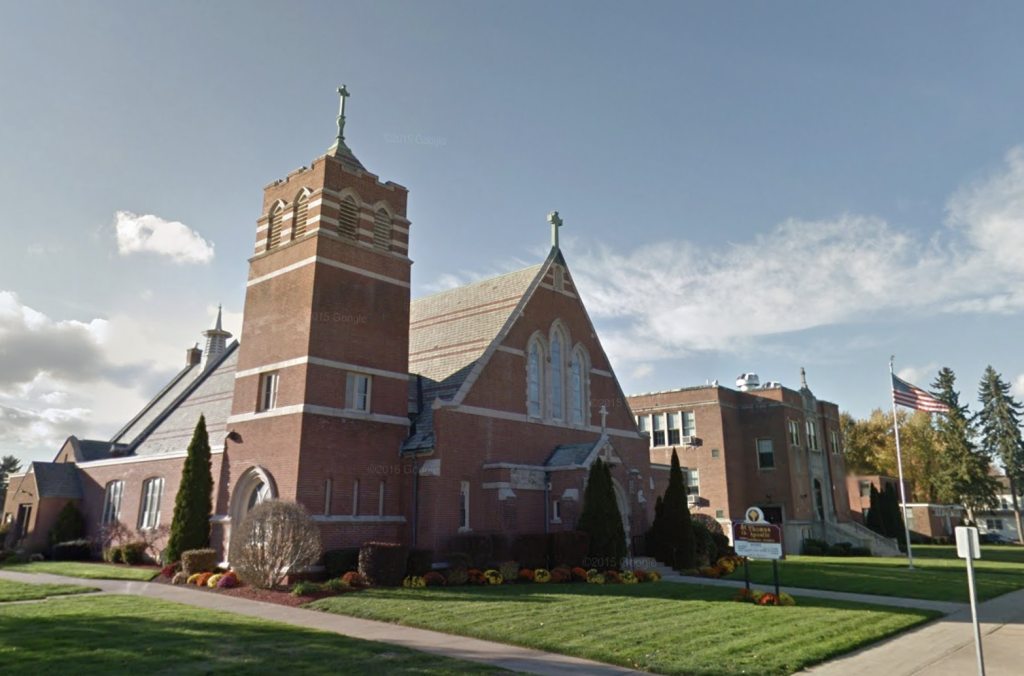
Podcast for St. Thomas of the Apostle Parish.
Episodes
Friday Oct 25, 2019
Friday Oct 25, 2019
Here in New England, we talk a lot about the weather because it can change so quickly and can often be on the unpredictable side. In the midst of the rapid changes, we also have long periods of rain and some long periods of dry weather, too. Either way, it often seems to be the topic of conversation.
The Galileans of Jesus’ time were also very much aware of the weather. They knew what weather they could expect from the direction of the wind and could read the signs in the earth and sky.
Yet, as Jesus told them in today’s Gospel passage, they were unable to read signs of the times in which they were living; they failed to recognize that God was moving among them in a special way in the words and actions of Jesus.
Perhaps we, too, can be good at forecasting the weather but not so good at recognizing the presence of the LORD in our daily lives. Jesus promised to be with us always, and the signs of His presence can be rather subtle, but it is very real.
Let us pray that we may have a better spiritual insight and a better sense of the presence of the LORD in our daily lives. +
Thursday Oct 24, 2019
Thursday Oct 24, 2019
The true disciple is the one who mirrors the vision of Christ in today’s Gospel reading. The true disciple, in the best sense of the term, is one who stands apart from the whims and demands of society and stands by the truth of the Gospel. To live by the Gospel has always been a contradiction to society and that’s why it has always been very demanding. The person with great integrity of faith is the one who can stand by that Gospel regardless of what society says and regardless of outside pressures.
The Gospel has never been easy to follow. It has always been difficult, and God knows this. But this is the life that we are called to live. It is the Gospel to which we are called to give witness, by our words and actions. It is the Gospel that leads us to everlasting life.
As we pray to God this day, let us pray for the courage and the stamina it takes to truly lead a Gospel life, that by our lives, we may lead others to the message and the kingdom and the glory of God.
Wednesday Oct 23, 2019
Wednesday Oct 23, 2019
Many people do not like to be taken by surprise. We like to know what is coming down the road and when it is coming. However, we know from experience that the unexpected does happen, and it happens all the time.
It is that experience of the unexpected from which Jesus draws today’s parables. The burglar breaks into a house at an hour nobody expects; the master arrives home at a time when his careless servant is not expecting him. Jesus suggests that there can be the element of the surprise in His relationship with us.
The Son of Man comes at an hour we do not expect. This warning may be about a sudden and unexpected death, but it is just as likely to be about the unexpected coming of the Son of Man to us in the course of our everyday lives. The LORD may call us to do something we had never given any thought about; He may take us down a path we might never have gone down on our own. The LORD can come to us through unexpected people, through people we would never associate as the LORD’s messengers. The Gospel suggests that when it comes to the LORD, we can always expect the unexpected. +
Tuesday Oct 22, 2019
Tuesday Oct 22, 2019
Jesus shocks His listeners with the image of the master of a household putting on an apron, inviting his servants to sit down at table, and then proceeding to wait on them. The scene would be very strange, completely in opposition to the normal social practice of His times, although it does call to mind Jesus washing the feet of His Apostles. Jesus blends the roles of master and servant in a most unconventional manner; normally, they are quite separate and distinct.
The master performs this gesture of honor to his servants in response to their faithful watchfulness. The LORD who supports us expects us to be faithful and alert, so that we are ready to open the door to Him, at whatever moment in time He arrives.
In the Book of Revelation, the Risen LORD says, “Behold, I stand at the door and knock.” Jesus is always knocking at our door. If we welcome His daily coming, He will serve and support us in endless ways. +
Monday Oct 21, 2019
Monday Oct 21, 2019
Our Gospel today may seem to be speaking against wealth, but it can be argued that God does not have a problem with our being successful. The psalmist of old often prayed that God would “prosper the work of our hands.” We know from the words of Jesus that we should use our wealth, the gifts that we have, the prosperous work of our hands, and to do something positive with them for the good of others.
We live in a society where many people are overflowing with possessions and schedules, and an empty busyness; where many are overwhelmed both with pursuing more and building new “barns” in their lives to store more in. To be people of faith, to be real disciples of the Gospel Jesus, begins with emptying ourselves of our stuff and our busyness to create the place and a time for God to dwell and fill.
The most tragic kind of poverty is the emptiness of a life filled with things but possessing nothing of God. Christ calls us to “think of what is above” — love, forgiveness, compassion, mercy, gratitude. God has given us this priceless, wonderful life in order to embrace and be embraced by His selfless and affirming love, to discover how to love one another as God loves us. +
Sunday Oct 20, 2019
Sunday Oct 20, 2019
Several years ago, a Florida fisherman found a three-month-old Atlantic bottlenose dolphin tangled in a crab trap buoy line. As the dolphin tried to swim away, the line tightened around her tail, cutting off its blood supply. The fisherman brought the dolphin to an aquarium, where veterinarians were able to save the dolphin, but not her tail.
Scientists wondered if an artificial tail could be designed for the dolphin, whom they named “Winter.” Kevin Carroll, one of the world’s leading prosthetic designers, was moved by Winter’s plight and volunteered his services. But designing a prosthetic for a dolphin turned out to be a trickier process than Carroll anticipated. Dolphins possess one of the most powerful swimming mechanisms in nature, so an artificial tail would have to be light enough to adhere to a dolphin’s sensitive skin and strong enough to withstand the enormous force of the animal’s propulsion.
Nevertheless, Carroll’s team of designers and veterinarians were convinced that the technology existed to meet the challenge. For months, they experimented with different designs and materials. Finally, Carroll and his team invented a gel sleeve that clings to Winter’s tail without irritating her sensitive skin — the sleeve sticks to Winter’s back and tail bone with suction the same way a surgical glove grips a human hand. Winter took immediately to the first fitting of the new tail.
But the gel sleeve also gives new hope to human amputees. Soon after the success with Winter, Carroll used the gel to make new artificial legs for an Air Force airman who lost both limbs and a hand in a mortar attack in Iraq. Sharp bone spurs from his injury made walking with previous prosthetic devices extremely painful.
The design team’s persistence and Winter’s patience promise new possibilities in prosthetics for all mammals — mammals of every shape and tail and limb structure.
In the course of coming up with a new tail for Winter, the team’s lead veterinarian said: “We put together a team who doesn’t know what ‘no’ means. As long as you’re willing to try, you can make a big difference.”
Winter and her human friends mirror the persistence of the widow in today’s Gospel passage from St. Luke. Jesus praises her perseverance in fighting for what is right and just and assures us that when we act out of love, compassion and justice, the Spirit of God will be with us in our struggle to find the words and courage to confront evil and hurt, to challenge those who threaten to harm us and those we love.
Such persistence and perseverance are not easy to maintain; it demands loving the unlovable; it compels us to work things out when walking away from the relationship makes more sense; it calls us to overcome our own fears to confront an even greater harm.
Jesus doesn’t pretend that such perseverance won’t be frustrating and disappointing. What Jesus does promise, however, is that when we are persistent for what is right and just, for what is good and healing, our determination will one day be rewarded. +
Saturday Oct 19, 2019
Saturday Oct 19, 2019
As followers of Jesus, we must be fearless in our witness to Him, in our sharing with others His message of love, mercy, compassion, and redemption. Jesus promised us that in our efforts to follow His call, we will not be left to our own devices, that the Holy Spirit will help us and give us the words we need when we are faced with challenges and difficulties in this mission.
Sharing our faith in today’s world is very difficult; our culture can be very hostile to religion in general and, in particularly, to the Catholic faith, because of the many scandals in which our leaders have been involved, and which the media has so strongly publicized.
With so much negative commentary and feelings against our faith, we can be intimidated into silence and invisibility. But we need to be strong and share our faith with others. We have Jesus’ promise that the Holy Spirit will be with us and we have the hope that the same Spirit will bring healing to our Church and its members. As Paul says, the Holy Spirit helps us in our weakness. We need to keep on praying for the courage to be true to the LORD who gave Himself for us, giving us life through His death on a cross. +
Friday Oct 18, 2019
Friday Oct 18, 2019
In this part of Paul’s second letter to Timothy, we encounter the loneliness that Paul was feeling after Demas took off to explore Thessalonica, Crescens to Galatia, and Titus went off to Dalmatia. Paul sent Tychicus to Ephesus. He was hoping that Timothy and Mark would go to join him and Luke as they continued their mission.
I am intrigued by the very mundane elements of this part of Paul’s letter. He asks Timothy to pick up a cloak that he left behind as well as to bring some papyrus rolls and parchments. He also complains about the way he was treated by a coppersmith named Alexander.
These few lines remind us that, in reality, the Apostles and early Christians were very much human, just as we are; that they could be lonely, forgetful, and even a bit sensitive at times. They weren’t perfect and they weren’t other-worldly. If they were, we couldn’t hope to be like them.
But we are called to be like them; we are called to be like the seventy-two that Jesus sends out on mission in today’s Gospel passage; we are called to be people who have to navigate our own world with all of its enticements and still find a way to experience our faith, to live it out, and to bring it to others. We may not be called to do it in such a dramatic fashion as those seventy-two disciples, but there are elements of their mission that we are called to both emulate and imitate.
Let us pray for the ability to discern the ways that God is calling on us to be His voice in our world today and may the example of those fully human early disciples give us the inspiration that we need to follow God’s call for us to go forth and to preach in His name. +
Thursday Oct 17, 2019
Thursday Oct 17, 2019
In today’s Gospel passage, Jesus criticized the experts of the Jewish Law for taking “away the key of knowledge.” They had rejected the teaching of Jesus and tried to keep others from coming to know God through that teaching. They had not been true to their calling as teachers of the ways of God. Jesus revealed God more fully than any other human being could. In rejecting His teaching, they were failing to recognize that God was at work in Jesus.
God has given us the key to knowing Him by giving us Jesus. He is the key to this special knowledge, and we will always be learning from Him. The mistake is to think that we are fully informed about the things of God. We are more like infants, always having so much to learn. That is why Jesus had prayed to the LORD of heaven and earth, saying, “You have hidden these things from the learned and the clever and have revealed them to infants.” Only when we recognize this, will we come to know God more fully. +
Wednesday Oct 16, 2019
Wednesday Oct 16, 2019
Once again, in today’s Gospel, Jesus is expressing His displeasure with the Pharisees and goes after them for their efforts at attaining status within their society. Public honor and status were highly prized in the culture of the time. Most of the generous giving for public parks, baths and temples was not so much to provide for the people but with gaining honor among the people. The donor’s name would be clearly inscribed for all to see. In a sense, things haven’t really changed very much since that time. People still seek status.
Jesus never sought honor or prestige for Himself, nor did He want His followers to look for it, even though they were prone to doing so, each one competing to appear important.
The mother of James and John wanted her sons to have the most prominent seats in the kingdom of God. But according to Jesus we should direct all honor to God and not seek it for ourselves or our families. All the good things we do should be for the honor of God and not to for our own glory. At the beginning of the Sermon on the Mount Jesus invites us to, “let your light shine before others, so that they may see your good works and give glory to your Father in heaven.” +