
16.9K
Downloads
1458
Episodes
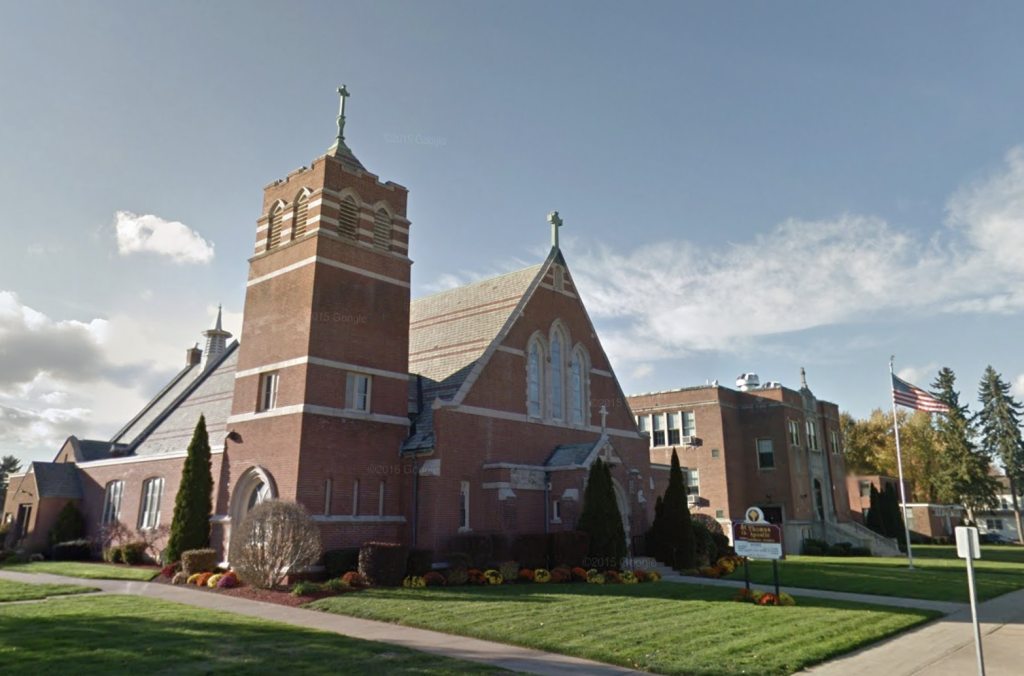
Podcast for St. Thomas of the Apostle Parish.
Episodes
Monday Nov 04, 2019
Monday Nov 04, 2019
Jesus’ words in our Gospel passage have just as much relevance today as they did nearly two thousand years ago. Human nature, it seems, is human nature, and continues to be a challenge to us in our quest to live the kind of lives God wants us to live.
In today’s passage, Jesus gives some unexpected advice to His dinner host, a Pharisee. He tells him that, instead of inviting his family and friends to the table, he should invite the poor, the crippled, the lame, the blind; people who could not repay him, for he would be repaid at the resurrection of the righteous.
We know that Jesus ate with all sorts of people: the poor and the wealthy, the powerful and the powerless, the educated and the uneducated, with saints and sinners. Jesus’ circle was a wide one because He recognized everyone as a child of God and as made in the image of God.
Our human nature may cause us to relate to only those people we consider family or friends, with only those people who share our outlook on life or our religious or political views. But Jesus encourages us to stand apart from the cultural and political tendency to distance ourselves from those who are not just like us and to recognize and experience the reality that all people are children of God, are loved by God, and are instruments of God’s love, presence, and action in our world.+
Sunday Nov 03, 2019
Sunday Nov 03, 2019
There is a column in a popular magazine for women that explores case studies of marriages in trouble. It asks the question: “Can this marriage be saved?” In today’s Gospel passage, St. Luke tells us about a man who seems to have been a crook and asks, “Can this man be saved?”
Zacchaeus, the person in question, was a small man who became wealthy and powerful by extorting money from his fellow Israelites and cozying up to the enemy, the Romans, who were occupying the land. Not only was he a tax collector, a despised occupation at the time, but he was very good at it and earned a tremendous amount of money in the process.
And yet, when Jesus came to town, Zacchaeus paid attention. He even climbed a tree to get a better look. There must have been something about Jesus and His message that gave Zacchaeus something all his money and power couldn’t supply. Despite all he had, deep in his heart, Zacchaeus wanted what Jesus was offering. This meant that he could, of course, be saved.
Redemption is a matter of the heart; Zacchaeus’ heart was in the right place. The Pharisees who objected to Jesus spending time with Zacchaeus, never knew what was going on in his heart, let alone in their own hearts. They worried about appearances, how they looked to others and how others weren’t making the grade.
Many religious zealots of our time, many self-righteous people, will make statements about the sinfulness and salvation of others, all while ignoring their own sinfulness. It would seem that the spirit of hypocrisy that existed in the hearts of the Pharisees of Jesus’ time, is still alive and thriving in our own time.
I was on a website a few years ago that, for whatever reason, had recordings of phone messages left by a self-appointed prophet for one of his former followers. In the course of the different phone messages, the so-called prophet insulted, criticized, cursed at and threatened to bear false witness against the former follower, all while proclaiming the certainty of his own salvation and the impending damnation of the former follower. Jesus had a phrase for people like that, for people like the Pharisees that Jesus encountered: he called them “Blind guides, blind fools.”
They didn’t have a clue about the salvation of others nor their own salvation. They didn’t know what was in the hearts of others and, because they were so busy pointing the finger and ignoring their own failures, they didn’t even know what was in their own hearts.
Only God knows what is really in the very depths of our hearts. Up to the point that Zacchaeus met Jesus, he lived a life that earned him the scorn of his neighbors but, it seems, his heart was searching for more and he recognized that for which he was searching for in the person of Jesus.
In our first reading today, from the Book of Wisdom, we hear the about God’s love for each one of us, how God does not loathe us despite our sinfulness, and how God encourages us to abandon that sinfulness, that we may accept and be transformed by His love.
Zacchaeus did exactly that. His search for fulfillment brought him down the wrong path; he was filling his life with money, possessions, and power, but his heart was looking for something more. He found it when he met Jesus and he amended his life and opened up space in his heart and soul, a space that can only be filled by God.
Let us pray this week, and always, that we will be constantly searching for the things of God, that we may recognize them, and that we will open space in our lives and our very selves, that God may have room to dwell in us. +
Saturday Nov 02, 2019
Saturday Nov 02, 2019
Today we celebrate the Commemoration of All the Faithful Departed (or the Feast of All Souls), a day when we remember those we have known in life, who have died. The whole month of November is especially dedicated to remembering our departed loved ones. This is a prayerful remembering, keeping their memory in our hearts, while we continue on our earthly journey.
We commend all who, by their passing, have entered eternity are gone ahead of us to God, and we acknowledge our hope that they, in some way, continue with us on our journey of life
Today, we entrust them all to God and pray that we will see them again, when we, too, cross over to eternity. +
Friday Nov 01, 2019
Friday Nov 01, 2019
There are a lot of people who have some unusual perceptions of what a saint must have been like when they were lived on earth. Back in early September of 1997, at the funeral of the former Princess Diana, her brother said: “to sanctify your memory would be to miss out on the very core of your being, your wonderfully mischievous sense of humor with the laugh that bent you double, your joy for life transmitted wherever you took your smile.”
Inherent in his comment was the idea that there must be some kind of a contradiction between the saints’ lives and our lives today. Saints were fully human. So, we must believe that some of them had a sense of humor. St. Augustine’s life is proof that some saints broke rules. St. Therese’s life showed that saints could experience a “dark night of the soul,” and find humor in things as well. The saints were fully human beings, who struggled with adversities and treasured life’s joys.
On All Saint’s Day we call to mind, not just those people who have been canonized by the Church, but all of the good people who have been a part of our lives and have made our lives better and who helped us to be better people. They were not perfect, but they were, in their own way, wonderful people. Even now, we know many living saints who are truly inspired and led by the Holy Spirit and are on their way to eternal union with Him.
Sanctity, holiness, is a gift from God of which we all have a share, just as we share in the experience of sin and death. Every person is already a temple of the Holy Spirit and the grace of God. What can prevent us from living by the power of God’s grace is not being aware that we already possess it. We are called children of God, not just in the afterlife, but now, at this very moment and all throughout our lives. May God help us to recognize this fact about ourselves and may we, as instruments of God’s grace, help others to recognize this as well. +
Thursday Oct 31, 2019
Thursday Oct 31, 2019
In our Gospel passage today, Jesus compares Himself to a mother hen who would gather her brood under her wings. He wanted to gather together the people of Jerusalem and show them the way to salvation. But His yearning to gather and save the people went unfulfilled because they refused to listen to Him.
Jesus could not force the people to accept His message or invitation. God gave us the great gift of human freedom and so, God needs to find in us some wish for salvation; He doesn’t impose it on us. While St. Paul said that nothing can “separate us from the love of God in Christ Jesus our LORD,” he also taught that we must put in some effort and cooperate with the grace of God.
Let us pray that the Holy Spirit will fill our hearts with a real desire to be with our God and the salvation offered by our LORD. +
Wednesday Oct 30, 2019
Wednesday Oct 30, 2019
On our journey toward heaven, Jesus tells us to strive to enter through the narrow gate. Obviously, a narrow gate is difficult to navigate, especially if we are carrying a lot of things with us. So, the deeper message of Jesus’ words is that we should rid ourselves of those things that can burden us down on our journey. Perhaps these may be physical things, but they may just as well be emotional baggage or spiritual baggage, it could also be the baggage of a schedule that doesn’t allow us time to build a relationship with the LORD.
Let us pray for the wisdom and courage to divest ourselves of the things that make our journey toward heaven more difficult and open our hearts and souls to the things of God already present in our lives. +
Tuesday Oct 29, 2019
Tuesday Oct 29, 2019
Both of the scenarios in today’s gospel passage — one about a man gardening, and the other about a woman baking — have the same focus: They both compare the initial smallness of an object to the enormous impact it goes on to have. A tiny mustard seed grows into a massive tree, which provides a home for the birds of the air. A tiny bit of yeast transforms a small amount of flour into a large amount of bread. As images of the kingdom of God, Jesus seems to be saying that in God’s sight, what is very small can become extremely significant.
Even our smallest acts of kindness can result in good beyond anything we might imagine. Small acts of kindness, mercy, and acceptance, performed in the service of the LORD, can create an opportunity for the LORD’s grace to work quite powerfully in our lives.
We might be tempted to think that unless some event within the Church is great and extraordinary, it does not matter very much. However, today’s gospel passage suggests that it is often the small actions, the little initiatives, that which often goes overlooked by most people, that can become the harbingers of the kingdom of heaven. +
Monday Oct 28, 2019
Monday Oct 28, 2019
While all of the Gospels tell the story of Jesus choosing His Apostles, only Luke tells us that, before choosing them, Jesus spent the whole night in prayer to His Father. This was something He prayed about; His choice of those twelve people came as a result of His prayer. Actually, Luke stresses that Jesus prayed before all the crucial moments of His life — just after His baptism, just before He set out to go to Jerusalem, while in the Garden of Gethsemane as He neared His passion and death; on the Cross only moments before He died.
We, too, should turn to our Father in prayer at significant moments in our own lives. During those moments, we need to appreciate our need for guidance, strength and courage from God. Our prayer does not necessarily mean that all will work out perfectly for us. We know that, although Jesus spent the whole night in prayer before He chose the Twelve, one of them would go on to betray him. Yet, we can be sure that our prayerful surrender to the LORD at such times will always create space for Him to work, even when things do not work out as we had hoped. +
Sunday Oct 27, 2019
Sunday Oct 27, 2019
A very stern, humorless and rather self-righteous woman was not feeling well and made an appointment to see her doctor.
The woman went into the reception area and reported to the receptionist. The receptionist had a couple of pierced earrings in each ear. The woman looked at her in disgust and said, “That’s horrible that you would pierce your ears like that.” She said, “I would never do anything like that to my body; it’ sinful.” She then went and sat down to wait for her appointment.
A couple of minutes later a woman came into the office with her teenage son. The boy was wearing ripped jeans and a ripped t-shirt and his hair had some blue highlights dyed into it. The woman looked at him and started to shake her head. She said to the mother of the boy, “What kind of mother are you? My son would never go out in public looking like that!”
The people in the waiting room must have breathed a sigh of relief when the woman’s name was called to go in to see the doctor.
The doctor began by asking his patient some basic questions.
“Do you drink at all?”
“I never touch alcohol!” she said with great disdain.
“Do you smoke?”
“I never go near tobacco!” She was insulted by the question.
“What about your sleeping habits?”
“I go to bed early every night,” she arrogantly replied. “I have no time for late-night partying and carousing. I am a busy woman. I am in bed by ten and up by six every morning.”
“I see,” said the doctor, making notes on the chart. “Now exactly what’s been wrong?”
“I have been having terrible headaches,” she said.
“I think I see your problem,” the doctor said.
“What is it?” she snapped.
The doctor said, “I believe your halo is too tight.”
While we readily laugh at the arrogance of the Pharisee and the self-righteousness of the woman in the story, it’s easier than we realize to get caught up in that same attitude.
We all know there are people who are quick to criticize those whose standards don’t measure up to their high standards, who immediately dismiss those they fear will intrude on their safe, protected, little world.
We, too, may be caught in the trap of comparing ourselves to others, maybe even thinking we are better than others because of their looks, their personalities, or even by what they own or don’t own.
Jesus calls us to take off our “halos” and realize our humility before God and the humanity we share with every man, woman and child. The only praise we can offer worthy of our loving God is prayer that manifests itself in returning that same unconditional, limitless love to others. We are called to recognize that no one is beneath us, that Christ lives in every person we meet. Dignity doesn’t come from popularity or appearance, but from the fact that we are children of God and each one of us is made in the image of God. May we not be so taken with our own “halos” that we fail to realize the presence of God in the lives and hearts of our fellow sinners. +
Saturday Oct 26, 2019
Saturday Oct 26, 2019
Jesus used His parables as a way to get His followers and others thinking and reflecting, to see what they might mean for their lives. Some two thousand years later, His parables continue to do the same thing for us in our contemporary world.
In today’s parable, we hear about a fig tree in a vineyard that has failed to bear fruit for three straight years. The owner of the vineyard seems quite reasonable when he asks to have the fig tree cut down because it is only using resources and space that can be used for a tree that bears fruit. The owner’s worker, however, sees it differently. He looked at the fruitless fig tree and believed that, with some work and cultivation, it still had a chance to bear fruit. He had a more promising vision about the fruitfulness of the tree.
In fact, all was not as hopeless as the owner of the vineyard believed; there was still time, still opportunity, for the fig tree to become good and fruitful. The parable may be saying that this is how the LORD sees us; He sees not just what we have failed to do in the past, but what we are capable of doing in the future. He looks on us with generous and hopeful eyes.
That is the way that we are called to see each other and every experience and situation in our lives. Like the worker in the vineyard, we need to be patient and look beneath the surface for the signs of new life and possibilities that may be there. +