
16.8K
Downloads
1458
Episodes
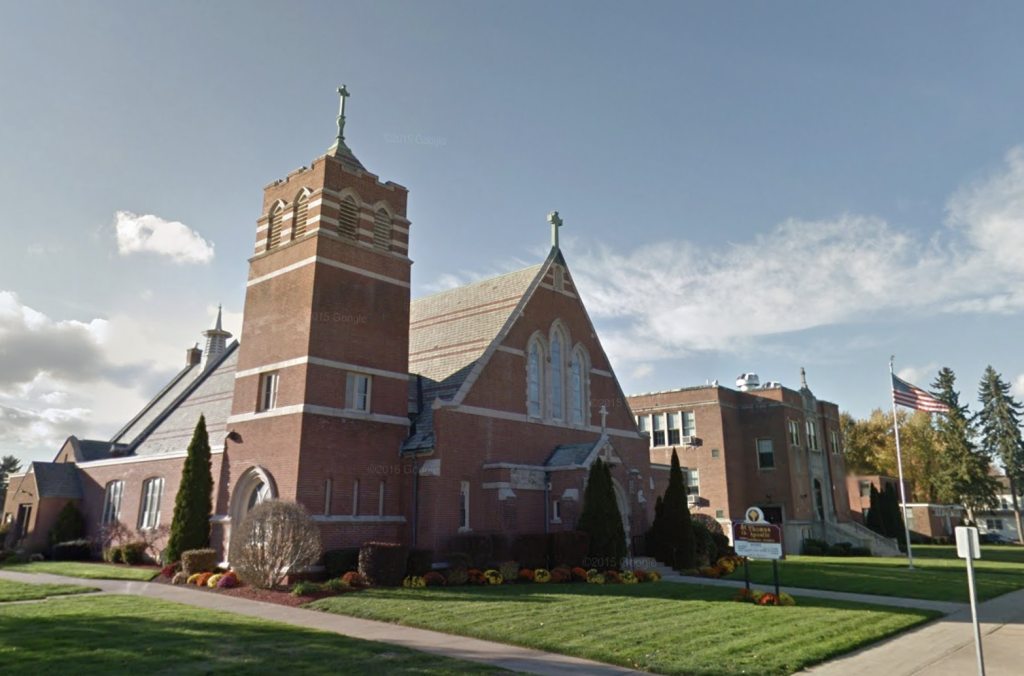
Podcast for St. Thomas of the Apostle Parish.
Episodes
Sunday Nov 24, 2019
Sunday Nov 24, 2019
There is a story – a religious fairy tale of sorts – about a monastery of nuns that Satan wanted to drag down to hell. But he couldn't get the better of them. So, Satan disguised himself as the Risen Christ and his fellow demons as angels of light.
They came in the night, while the nuns were keeping vigil for the return of Christ. Suddenly, the darkness outside was overwhelmed by a great light. Satan and his company approached the monastery chanting the psalm, "O gates, lift high your heads; grow higher ancient doors. Let him enter, the King of Glory!" Filled with joy, the nuns opened the church door and responded in song, "Who is the King of Glory?" Satan spread his arms wide and bellowed, "I am the King of Glory!" And the whole host of demons disguised as angels of light chorused, "He is the King of Glory!" But the nuns recoiled when they saw Lucifer and slammed the door in his face. They refused to let the imposter enter because there were no nail marks in the palms of his hands. He had no wounds of love.
Kings and queens are recognized by their crowns and the grandeur of their clothing and their surroundings. Jesus, in His passion, did not look like a king. His earthly palace was Golgotha; His throne was a wooden cross; His crown was a wreath of bloodied thorns; His royal court was a thief on His right and left, with soldiers gambling for His clothes at His feet, and elders sneering and mocking Him. He did not look anything like a king.
Scripture tells us that both thieves at first insulted Jesus. These men were pathetic. They had committed crime after crime descending lower and lower until they hit rock-bottom and were hung on their own crosses. They were failures crying out in agony. But Jesus was not dying like one of them; He was not crying out and cursing the day of His birth. In fact, Jesus wasn't saying much at all. But what He did say will never be forgotten. On behalf of those who tortured and reviled Him, He said: "Father, forgive them, for they know not what they do."
It will always be a mystery how two people can hear the same words and yet react so differently. One robber continued to insult Jesus; the other made an amazing act of faith, saying, "We are getting what we deserve, but this man has done nothing wrong. Jesus, remember me when you come into your kingdom." Only minutes before he had mocked Jesus. Now he asked for a place in His kingdom. He could not be thinking of an earthly kingdom because Jesus would soon be dead. He had to be thinking of a kingdom beyond death, a kingdom that endures forever, a kingdom that belongs only to the King of kings.
What a wonderful witness! He was the first to recognize that the wounds of Jesus were wounds of love. He looked at Jesus and saw the King of Glory. Jesus must have rejoiced when this lost sheep stumbled into the fold mere moments before his final breath.
Of this particular moment, Max Lucado writes, "At this point Jesus performs the greatest miracle of the Cross. Greater than the earthquake. Greater than the tearing of the temple curtain. Greater than the darkness covering the earth. He performs the miracle of forgiveness. A sin-soaked criminal is received by a blood stained Savior," and washed clean by wounds of love.
When the King of Glory comes with love radiating through all His wounds, will He find His image reflected in us? Will He find our wounds transformed by His love like the good thief?
We pray that we, like the good thief, may turn to Jesus Christ, recognize His glory, and be transformed by our acceptance of His healing love. +
Saturday Nov 23, 2019
Saturday Nov 23, 2019
Our Gospel passage today comes at a time when the Saducees, as well as the Pharisees and chief priests, were at a point when they had had enough of Jesus and His message. They wanted to kill Him, but He had the ear and the support of the people. So, the leaders believed they couldn’t kill Him. The questions they began posing were an attempt to get Him to blaspheme, giving them reason to put Him to death. They were trying to get Him to mess things up for Himself. They had an agenda hidden within their questioning.
We, too, often have an agenda when we go to Jesus. Usually, it’s something that we want, something that we want to change, or it’s about something about our life or our faith that we don’t like. Sometimes, without really meaning to, that agenda can go against Jesus’ message or even the nature of God.
In our prayer, we should ask God for help with things, for change, for answers, but that prayer needs to be offered with a truly open heart, mind, and soul, that our agenda may take a back seat or disappear completely, so that God’s agenda may be our agenda. +
Friday Nov 22, 2019
Friday Nov 22, 2019
We have only a few stories about Jesus’ life before He began His ministry. We really have nothing from the time He was about twelve until the time He was about thirty. And those last three years had a real whirlwind quality about them.
We see this in today’s Gospel, as we do in so many stories about Jesus whenever He visited Jerusalem. Even early secular works like that of Flavius Josephus, a first century Jewish historian, refer to the fire with which Jesus was filled in His visits to Jerusalem.
In today’s passage, Jesus goes after those who are looked upon as “pillars of society” and expresses His righteous anger over the disrespectful way that they use the Temple for their own gain. At the same time, He has been speaking well of those on whom these “pillars” look down.
In His short time in ministry, Jesus has really upset the apple cart, which has led to a desire among the leaders, whom He has challenged, to eliminate Him from life.
Indeed, the task of evangelization can often times put us at odds with others, even with those whom we love most. May we never turn away from our Baptismal call to spread the Good News of the Gospel, and may we live the message and spirit of that Good News in our everyday lives, that our actions and attitudes may give greater power to our words. +
Thursday Nov 21, 2019
Thursday Nov 21, 2019
Today the Church celebrates that from the time she was a young child, and for the rest of her life, Mary was totally committed to letting God’s plan be realized through her life. As a result of her devoutness throughout her life, she was called by God to become a living temple, a place where God was present in a unique way. God dwelled within her, in a real physical sense, through Jesus, because she was fully open to divine inspiration from the earliest years of her life.
Our Blessed Mother is the first and most perfect example of those to whom Jesus refers in today’s gospel passage as “doing the will of my Father in heaven.” Again, today’s memorial celebrates how, from childhood Mary was devoted to the will of God and was, therefore, fit to become the temple of God’s Son as He prepared to enter this world.
We, too, are called by God the Father to do His will so that we, too, may be temples of the LORD, carrying the LORD’s presence to others. This memorial echoes St. Paul’s words, “Do you not know that you are the temple of God, and that the Spirit of God dwells in you?”
And so, we ask our Blessed Mother to pray for us so that we may always do the will of the Father and so become temples of the living God, that God’s Spirit may truly dwell in us. +
Wednesday Nov 20, 2019
Wednesday Nov 20, 2019
The parable we just heard from Luke’s Gospel, tries to counter the expectation that the full coming of God’s kingdom was imminent. The people following Jesus were engrossed with thoughts about the future. So, in telling this parable, Jesus tries to turn their attention to the present.
The parable is about a man of noble birth who went far away to a foreign country and who eventually returned to his own land as king. However, his servants’ attention should not have been focused on the day of his return. Instead, they should have been focused on their present needs, using the resources he left them for what they truly needed in the present.
Too much concern about the future can distract us from the present. What matters is the generous and courageous use of the gifts and resources the LORD has given us for the service of others who are here right now. This is the approach to life that the LORD is encouraging us to take. The servant who put his gold coin away for safety, because of his fear, goes against this approach to life. In our use of our gifts and resources we may fail and make mistakes, but the truth is that failure is preferable to fearful inactivity. +
Tuesday Nov 19, 2019
Tuesday Nov 19, 2019
Saint Teresa of Calcutta often said that God doesn’t call us to be successful but to be faithful. Every one of us can respond to the great love of God in some positive, meaningful way.
The greatness of our efforts is not in the scale or the scope of what we do but in the sincerity of our commitment to bring that love into the lives of others.
In today’s Gospel, Jesus affirms and upholds the compassion and integrity of the shunned tax collector Zacchaeus, transforming the life of the man in the sycamore tree. We are called by Christ in the same way: He calls us to respond to the love of God in whatever way we can and to enable and encourage others to do the same, thus transforming the darkness that engulfs us into the light of God’s peace, love, and justice. +
Monday Nov 18, 2019
Monday Nov 18, 2019
In the story of healing that we just heard in our Gospel passage, there is something appealing about the blind man, especially in his perseverance in prayer. When he prayed aloud, “Jesus, Son of David, have pity on me,” the people around Jesus admonished him and told him to be still, but he shouted even louder, “Son of David, have pity on me!” He was not discouraged by other people’s intolerance; he showed us how to be persevering in our prayer.
The blind man’s prayer was rooted in his need to see with his physical eyes once again. Our most genuine prayers to the LORD are motivated by needs found in the depths of our hearts and souls. In voicing those needs to God, we beg Him to respond to our requests, just as Jesus responded to the request of the blind man.
The blind man did not stop praying after his sight was restored but his prayer did change. After his healing, he followed Jesus, giving praise to God. His prayer was transformed from a prayer of petition to a prayer of praise.
We should note that the prayer of praise may not come to us as naturally or as readily as the prayer of petition but all of us have something for which we should be thankful to God. The blind man teaches us to be mindful this kind of prayer, too, in response to how the LORD has blessed and continues to bless us in our lives. +
Sunday Nov 17, 2019
Sunday Nov 17, 2019
Our first reading from the Book of Malachi and our Gospel passage from St. Luke today both speak a lot about the end times and how the people should expect there to be different disasters as well as judgment.
Many people use these passages and others to try to predict when the end of the world will take place and they also use them to put forward the idea of a vengeful God who will come back with anger to do away with everyone who didn’t follow God’s will.
In truth, these Scripture passages point to the reality that this world is imperfect and incomplete and that real happiness, real joy, come from our expectation and hope for the Kingdom of God that is to come.
The great disasters that Jesus predicted in St. Luke’s Gospel all happened in the years following Jesus’ death and they continue to happen and will always happen as long as this world exists.
These passages are not some kind of secret key that will answer the curiosity that most of us have about the end times and our ultimate destiny as human beings and as children of God.
So, it doesn’t make a lot of sense for us to waste our time worrying about these things or trying to predict when they will happen
What we should be spending our time on is following the great commandments that Jesus gave us: to love God above all things and to love our neighbor as ourselves.
We should spend our lives modeling ourselves after the Apostles and the early followers of Jesus as well as saints and even ordinary people of our time who have truly given themselves to the Gospel call to love, mercy and compassion, to service to those in our world who are most in need.
Some people miss out on the message – even in today’s Scripture passages – that God wants us to live with Him in Paradise, that God is a loving God, who wants His children to truly experience His justice and His healing in this life and in the next, that God desires to reward us for persevering in faith, for acting with love and compassion in His name, despite the difficulties and tragedies that we experience in our world.
Our faithfulness to God and to the call to stewardship enriches not only our own lives but also the lives of others; it brings the love, power, and richness of the life of God to ourselves and to all those we meet. Let us pray, this week, for the courage, strength, and dedication, to always be an active participant in God’s plan for His people. +
Saturday Nov 16, 2019
Saturday Nov 16, 2019
The experience of prayer can be a confusing and frustrating thing for us. So much of our prayer is intercessory prayer, asking God for certain things, for certain outcomes to situations, and yet, we know that God doesn’t direct every thought and action in our world; we know that we don’t always get that for which we pray.
Still, we are called to be persistent in our prayer, to trust that God hears our prayers, and that God answers our prayers. However, we do need to pray for things that are possible and we need to pray as Jesus taught us: in praise of and thanks to God, that God’s will take precedence over our will, that we be nourished each day in body, mind, and soul, that we may have the grace to be forgiving people and that we may be forgiven for our transgressions, and that we may have strength in temptation, that we may always choose the good.
If our prayer is that God be with us at all moments of our lives; if our prayer is that God will give us wisdom, courage and strength in our difficulties; if our prayer is that the Holy Spirit will open our minds and hearts to the presence of God in all things, then we can be sure that our prayers are, indeed, answered and that the grace of God will truly help us in our lives. +
Friday Nov 15, 2019
Friday Nov 15, 2019
There is a true story about a man who was away on a business trip and was using a rental car on a highway that was a toll road. In the process of driving, he kept driving through tollbooths without paying because he was used to doing that at home as his tolls were tracked through his transponder and paid through his credit card. After he went through a couple of tollbooths without paying, he realized that there was no transponder in the car and that he probably should stop. But he kept going through the tollbooths anyway, figuring that either the rental company would pay the tolls or that the state wouldn’t bother billing him for what was most likely a small amount.
A few months passed and the man received a toll violation notice. When he opened it up and read the bill, he found that he was right about the small amount of the tolls; they came to a total of $3.90. However, he blew through five toll booths and that cost him $20 each, for a total bill of $103.90! Indeed, the state did catch up with him and, in the end, he paid a high price.
In a sense, that is what Jesus is warning us about in today’s Gospel passage. While it may seem like we have a lot of time and that, perhaps, our failures will not catch up with us, Jesus lets us know that our time may be short and that we can be sure that all that we have done in this life – both the good and the bad – will be dealt with at the end of time.
Some may look at this message as “fire and brimstone,” but it really comes out of Jesus’ love for us and out of His sincere desire that we join Him in Paradise one day.
Let us pray that we may see this message as one of hope and not one that is meant to scare us, and may each day be for us a day of preparation for the Day of the LORD. +