
16.8K
Downloads
1458
Episodes
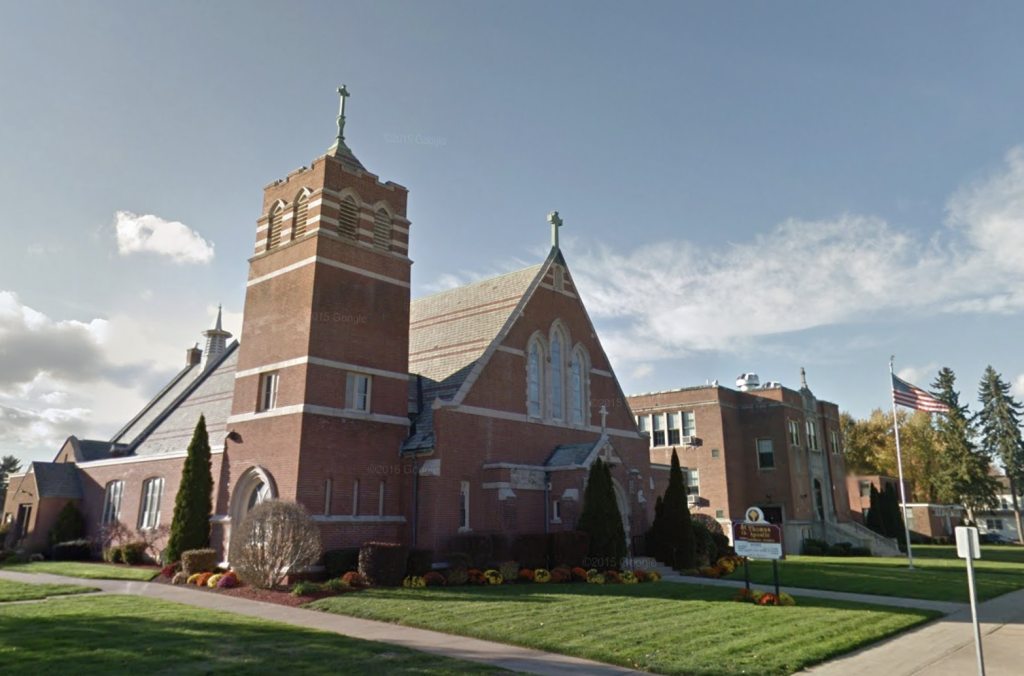
Podcast for St. Thomas of the Apostle Parish.
Episodes
Wednesday Dec 04, 2019
Wednesday Dec 04, 2019
Both of today’s readings refer to the high ground. In the first reading, the prophet speaks of a mountain where the LORD invites all people to an abundant banquet, where there will rich food and fine wines. All mourning, sadness, and shame will be taken away; even death will be destroyed. Here is a vision that lifts us up beyond the world as we know it towards another world where everything is exactly as God wants it to be.
In today’s Gospel passage, Jesus goes up a mountainside and a large crowd follows Him. There, in the heights above the Sea of Galilee, Jesus restores speech to the mute, mobility to the lame, and sight to the blind. He goes on to feed the hungry with very limited resources. He feeds them so well that all ate as much as they wanted and, even then, there were seven baskets full of leftovers.
The vision of Isaiah in the first reading becomes something of a reality in the Gospel. Both readings speak to us of God, who wants us to have life and to have it to the full. It was Saint Irenaeus who said that the glory of God is the human person fully alive. In the Gospel, the LORD needed others to bring the sick to Him; He needed the disciples to help Him feed the crowd. He continues to need us if His life-giving work is to get done. Advent calls on all of us to be instruments of the LORD’S life-giving and healing presence in the world. In Advent, we pray, “Come, LORD Jesus.” We also offer ourselves as channels for the LORD’s coming. +
Tuesday Dec 03, 2019
Tuesday Dec 03, 2019
All people receive gifts from the Holy Spirit; gifts that help us to live as the children of God; gifts that help us to be instruments of God’s love and grace to people in our world.
We are a sacramental Church, opening ourselves up to the creative grace of God, our loving Father, to the compassionate and loving grace of Jesus Christ, to the transforming grace of the Holy Spirit. In the Sacrament of Confirmation, we receive the gifts of the Holy Spirit, described in our first reading from the prophet Isaiah: wisdom and understanding, counsel and strength, holiness, and knowledge and fear of the LORD.
If we are truly open to the Spirit, to God’s love and grace, then we will be transformed by these gifts and, of course, true transformation means that we must use these gifts for our good and for the good of all people.
This season of Advent affords us an opportunity to slow down and to consider how it is that we have been gifted by the Holy Spirit and how we are called to use these gifts. But we can’t stop there: we must always work to actually use them, that God’s love and peace may flow through us that we may fulfill our vocation to bring ourselves and others to God’s kingdom of love.
Come Holy Spirit, fill the hearts of your faithful and kindle in them the fire of your love. Send forth your Spirit, and they shall be created. And You shall renew the face of the earth.
O, God, who by the light of the Holy Spirit, did instruct the hearts of the faithful, grant that by the same Holy Spirit we may be truly wise and ever enjoy His consolations. Through Christ Our LORD. Amen. +
Monday Dec 02, 2019
Monday Dec 02, 2019
When we're sick, we often find our joints are aching, our heads are pounding, our stomachs have declared war on us - but we know that it's only a matter of waiting out the cold or flu. In time, we know we'll be feeling better.
But then there are times when the waiting is more uncertain, more anxious, more desperate - we don't know how this suffering will end; we are terrified at what these symptoms may mean. We wait for the lab results, we wait to see if the medicine will work, we wait for the surgery to be completed, we wait for a cure.
And sometimes we are left waiting for God.
Waiting for healing, waiting for change, waiting for God is the season of Advent. The centurion in today's Gospel is the model of Advent waiting; he has waited through his servant's care, he now waits for a cure. But his faith enables him to wait with hope. This Gentile's faith enables him to dare to hope that God will act in the person of this Jesus. With a rare combination of dignity and humility, he asks Jesus to speak a word of healing.
This season of Advent calls us to hope, that our waiting, that our yearning for healing, for peace, for salvation will come.
Let us pray…
Come, O Christ, Healer and Worker of Wonders! May we trust in your Word to heal our afflictions and illnesses; may we hope in your light to shatter the darkness of our despair and pain. Let us live the Advent of our lives with faith in your compassion and hope in your grace. +
Sunday Dec 01, 2019
Sunday Dec 01, 2019
Back in the 1940s, a rural family had an outhouse that they used. They didn’t need to use an outhouse − indoor plumbing had long been the norm in most homes in the area − but the father didn’t want to spend the money on it. The oldest son, a boy of about ten, hated using the outhouse, which was located on the bank of a river several yards behind the house.
One day, the son devised a plan to get rid of it once and for all. He would wait until spring came and for the river to rise; he would push the outhouse into the fast-moving water, where it would quickly be carried away. Then, he thought, his father might consider installing indoor plumbing.
Spring arrived, and the river was swollen with water; so, the boy grabbed a large stick and used it as a pry bar to topple the outhouse into the water, and it quickly disappeared downstream. He walked toward the house proud of his accomplishment.
That night, at supper, the boy's father told him they would be going to the woodshed after supper. The boy knew this meant he was to be punished and the reason for it, but he still asked, “Why?” His father said, "Someone pushed the outhouse into the water today, and I think it was you.
The boy admitted he had done it, but told his father, "Dad, I read in school today that George Washington chopped down a cherry tree and didn't get into trouble because he told the truth."
The boy said because he had told the truth, that he also should be spared punishment. His father replied, "Well, son, there’s a difference. You see, when George Washington cut down that tree, his father wasn’t sitting in it!"
Today, we begin the season of Advent, a time when we acknowledge our sinful nature and our individual sins and seek the mercy and forgiveness of God, as well as the grace that we need to live lives in accord with the will and the plan of God.
This season is a time when we not only acknowledge our sins, but also a time when we celebrate that God doesn’t want to take us out to the woodshed; God doesn’t seek to punish us. Instead, God seeks to have us recognize that His mercy is always present in our lives, always being offered to us, and that it has a great influence on our lives when we open ourselves up to that mercy, embrace it, and allow ourselves to be transformed by it, thus keeping us in touch with the love and the grace of God.
Many people decry what they call “Catholic Guilt” and an overwhelming focus on punishment from an angry God. At times, in the history of the Church, there has been a lot of focus on that but, if we ignore the mercy of God, then our faith lives are simply lives of fear: fear of punishment, fear of retribution, fear of death.
A little bit of guilt can be a good thing. Guilt that sometimes our actions, attitudes, and words don’t help us or others to be close to God who created us and loves us. Guilt can help us to recognize the need to accept the mercy of God and to change what we need to change in our lives in order to be filled with God’s grace and to truly accept His love in the depths of our hearts and souls and in every moment of our daily lives.
A little bit of guilt can help us to choose to turn from sin and choose to turn toward God’s mercy, to choose to be the kind of people that God created each one of us to be, to choose light over darkness, joy over misery, life over death.
So, let us pray that God will help us to recognize that He is a merciful God, slow to anger and rich in compassion. Let us pray, too, for the ability to open our minds, hearts, and souls to God’s mercy and to always look for opportunities to share that gift of mercy with others. +
Saturday Nov 30, 2019
Saturday Nov 30, 2019
There is a beautiful simplicity to the story of the call of Andrew and his brother Simon, as well as the other set of brothers, James and John. Jesus saw Simon and Andrew casting a net into the sea, going about their daily work, and He called out to them, “Come after me, and I will make you fishers of men.” We are told that the brothers immediately followed Him.
However, it’s possible that Matthew may have simplified the conversion experience of these two fishermen, which may have been more complicated. It would be natural to expect some resistance to the call of Jesus because answering it would mean leaving behind all that they ever knew, as well as their whole livelihood, and heading out into “uncharted waters.” Catching people is harder than catching fish. However, whatever tentativeness Andrew and Simon may or may not have felt, they clearly overcame it and went with Jesus and they became great evangelists, preaching well of the gospel of Christ.
Perhaps it could be said that the LORD works in our lives in much the same way as He did the lives of Andrew and Simon, and James and John. He often calls us out to people in the midst of their daily tasks; in the ordinary and sometimes humdrum moments of our lives. He calls us to go beyond where we are, beyond the familiar, beyond our comfort zone, into the service of God’s kingdom. That call can come to us in small and subtle ways. We may find ourselves resisting it, but if we listen to it and allow it to echo within us, and respond positively to it, we may find that the LORD works through us for good in ways that can surprise us. +
Friday Nov 29, 2019
Friday Nov 29, 2019
We live in a world that is constantly changing and doing so at a rapid rate. A lot of people find change a very difficult thing to face; most of us need some constants in our lives, and we find change easier to manage if certain things remain the same.
In today’s gospel passage, Jesus speaks about immensely significant change. He proclaims that even heaven and earth will pass away; it is hard to imagine a more profound change than that. Yet, He immediately names something that will never change; something that will never pass away when He says, “My words will not pass away.”
In the midst of even the most drastic changes, the LORD’s word remains strong and unyielding, because the LORD Himself remains perpetual and true. He is the rock that stands sentinel when all else passes away. In the midst of unsettling change, we know that the LORD remains, and when everything else is moving, He remains steady. Our relationship with Him will help to keep us firm when all else seems ready to fall apart. +
Thursday Nov 28, 2019
Thursday Nov 28, 2019
Today people all across the United States will celebrate Thanksgiving Day. As we celebrate this day of thanks, we are particularly mindful of the harvest; family tables will be decorated with things appropriate to the season and the day that we celebrate.
Families will gather together and sit down to abundant feasts of turkey with all the trimmings, with desserts like apple or pumpkin pie. We will feast on the fruits of the harvest. In prayer and in action, we will remember the poor and those less fortunate than ourselves. We will hold dinners at churches, shelters, and soup kitchens and we will have given a little extra to the food banks. And we will feel good about all of these things.
It's good because it is right that we should feast and thank God for what He has given us; it is good to celebrate and to share the bounty of the earth; it is good to express our thanks and to rejoice over the goodness of God.
However, it also might be lacking in something, depending on our overall attitude and approach to life and to what God has done for us and does for us.
Some of you might remember the old Ma and Pa Kettle movie and television series. A common scene took place in many of the episodes: Ma Kettle would bang the triangle on the porch, and from every corner around the yard hordes of screaming, yelling kids would pour into the house fighting for a place at the table. Then Ma, in her loud tones would holler, "Hold it!" and everyone would freeze in silence. Pa Kettle would roll his eyes heavenward, tip his hat, and say, "Much obliged." And immediately the chaos began as abruptly as it had stopped.
God calls us to much more than a tip of the hat. God calls us not only to a day of thanksgiving; He calls us to a life of thanksgiving.
There is a big difference between giving thanks on one day and living thanks always. Thanksgiving Day is a specific event with a clear beginning and a clear ending. The spirit of Thanksgiving, though, should be more than an event: it should be a way of life.
Giving thanks is important. When we give thanks as a community of faith, as a family, we are reminded of all the many good things and all the good people that have been given to us by God. We remember that we have been blessed; we remember that there is a greater good than ourselves and that we are truly dependent on God and on the goodness of God.
But the temptation is to then return to our independence, to forget God, to think that we and our efforts are solely responsible for all that we have, forgetting that even the mere ability to do things is a gift from God. This is where living a life and attitude of thanksgiving comes in. And we begin to "live thanks" when we open our lives up to God and give God the ultimate priority in our lives.
As we live a life of thanksgiving, as we humble ourselves before God and acknowledge that he is the source of all good things, our awareness of our blessings increases, our joy becomes fuller, and we find ourselves in an attitude and state of grace.
Our continual thankfulness for our blessings will turn into a lifetime of living thanks, of living the blessings and sharing the blessings because we know in the deepest parts of our hearts that God is the giver of it all.
As you give thanks this Thanksgiving Day, remember your calling to be joyful always, to pray continually, and to give thanks in all circumstances. It is what God wants of you and for you. In it, you will find the fullness of what God has in store for you. +
Wednesday Nov 27, 2019
Wednesday Nov 27, 2019
Jesus tells us today that by our perseverance, we will save our lives. Jesus’ talk about perseverance reflects the hard reality of life for the Church, especially in the first century. Being witnesses to Jesus and to His values under the harsh rule of imperial Rome meant risking prison and even death. The faith of a believer might be betrayed by one of their own family or by a friend. To be recognized as a Christian could cost a person their life. It was possible to keep secret one’s faith and to live a quiet life, but the danger was always there. The risk of following Jesus was very real, especially in the early days of Christianity.
Our own relationship with Jesus today isn’t meant to be hidden, it should not be a private thing that is of no concern to anyone. If our friendship with Jesus is the most important relationship in our lives, it will affect our other relationships, and guide us in what we say and do. We don’t just keep our faith private but try to live it in a visible way. In today's culture, that is not always an easy thing to do. However, we can trust that God gives us the resources we need to live as Jesus’ disciples and as witnesses to our faith. His abiding presence gives us the motivation to truly live as His followers. +
Tuesday Nov 26, 2019
Tuesday Nov 26, 2019
As we approach the end of the liturgical year, the readings tend to focus on the darker side of human experience, the experience of destruction, of loss, of conflict, of deception. It is as if the liturgy is in harmony with the dark days of the end of this month of November.
When we begin the new liturgical year next Sunday, the first Sunday of Advent, the days will remain dark, but the liturgical readings will take on a much brighter tone as they invite us to look forward to the coming of the light
In today’s Gospel passage, Jesus speaks of the destruction of the wonderful Temple in Jerusalem, as well as of other dark events. No one looking at the Temple in Jerusalem in Jesus’ day could ever have imagined it being destroyed. After all, it had taken nearly fifty years to build, and it wasn’t quite finished in the time of Jesus. But even the strongest and finest buildings only last so long.
Today’s Gospel calls on us not to get too attached to what does not last. Instead, we are to attach ourselves to the one who says of Himself in Matthew’s gospel that “something greater than the Temple is here.” When all else fails and disappears, He endures, and through our relationship with Him, we too endure. +
Monday Nov 25, 2019
Monday Nov 25, 2019
The phrase “widow’s mite” has come into our language from the Gospel passage we have just heard. It illustrates the paradox that, sometimes, in giving much, some people are actually giving very little, while other people, in giving a little, are actually giving an awful lot.
In terms of the actual amount of money, the widow gave less than anybody else to the temple treasury but, in reality, she gave a huge amount, because she gave everything she had.
That paradox is true even in our own lives. There are times when we may appear to be giving very little but, in reality, we are giving a lot, because we are giving as much as we can give. Our health may be troubling us; our energy level may be low because of some personal issues we are struggling with. What we have within ourselves to give is much less than it usually is. In those situations, even to give a little of ourselves can be giving a great deal.
The widow in today’s gospel reminds us that, even when we have little to give, we can still be extremely generous. +