
16.8K
Downloads
1457
Episodes
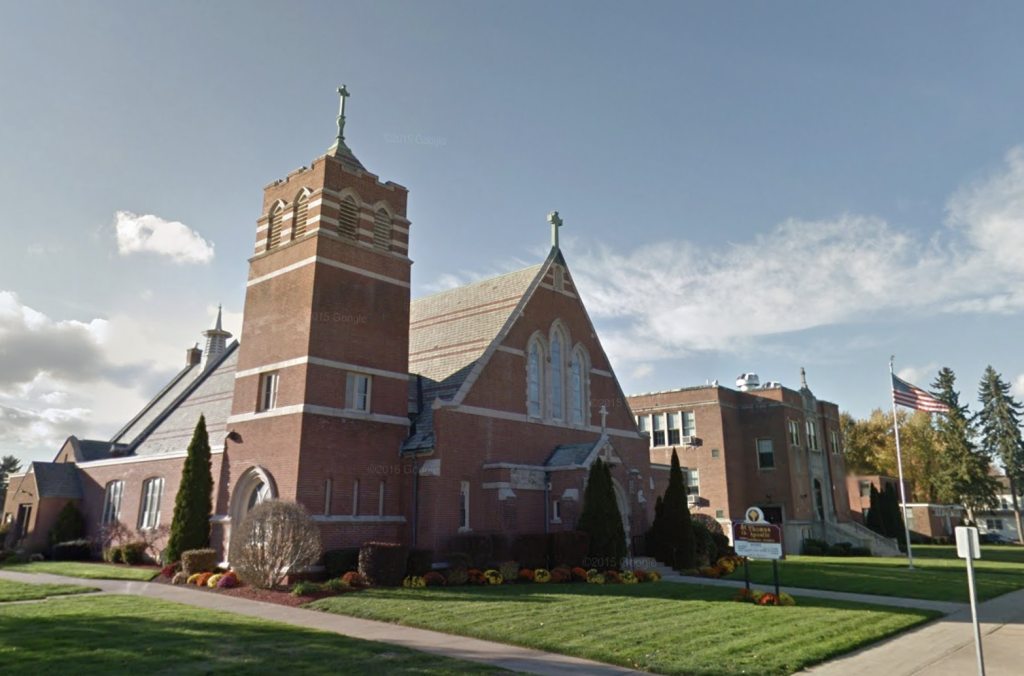
Podcast for St. Thomas of the Apostle Parish.
Episodes
Thursday Jan 02, 2020
Thursday Jan 02, 2020
The question put before John the Baptist, “Who are you?” is one of the great questions of life. We may struggle to answer honestly or fully, “Who am I?” It’s easy to reply at a certain level by telling people what we do for a living, “I am an engineer,” or perhaps, “I am retired.” However, going deeper than our job description to who we are in our innermost selves is a much more difficult task. It can be said that our answer to that deeper question changes as we move through life. How we answer it at this present moment in our lives is not how we would have answered it earlier in our lives nor how we will answer it in the future.
For people of faith, the answer to that question is inextricably linked to our relationship with Jesus, because that relationship touches us at our core being. Saint Paul is the great example of that truth: If he was asked, “Who are you?” he probably would answer in the words of his letter to the Galatians, “I live, no longer I, but Christ lives in me.” His identity had become strongly connected to the identity of Christ. When John the Baptist was asked, “Who are you?” in today’s gospel passage, he identified himself as “the voice of one that cries out in the desert, ‘Make straight the way of the LORD.’” His identity was formed by his relationship with Jesus. He is the voice who gives witness to the Word that became flesh. Our own baptismal calling is to keep on growing into Christ so that our personal identity is more and more formed by our relationship with Him. +
Wednesday Jan 01, 2020
Wednesday Jan 01, 2020
The Church honors Mary today because she is the mother of Jesus. We honor Mary because she is the mother of the eternal Son of God. She is, indeed, the Mother of God and our Blessed Mother as well.
Mary's life, as pure as it was, took on a deeper meaning when she agreed to allow Jesus to be born from her womb. She said to the angel Gabriel: "Behold, I am the handmaid of the LORD. Let it be done to me according to your word."
These words of Mary hold the key to the deeper meaning that we are all searching for. Our lives will take on deeper meaning only when we do what Mary did: only when we turn our lives over to God and let Jesus be born in our hearts and souls will our lives move toward their truest purpose. Today we say to God what Mary said, "Behold, I am the [servant] of the LORD."
It should be no surprise to the person who is constantly striving to grow in faith that to do the will of God, to open one's heart, to open one's soul to the love, grace and the movement of God, to allow Jesus to be born within us, is the only way to true fulfillment in this life.
To open our hearts to God implies a trust that God will be with us as we seek to answer His call; as we seek to do His will; as we seek to be God’s instruments of love and peace in our world. It was trust in the goodness, love, and presence of God in her life that helped Mary to open her heart and soul to what God was asking of her; it’s that same trust to which we aspire in our own lives; it’s that same trust that we ask Mary to teach us by her example and by her prayers on our behalf
At the beginning of each year, we are reminded of new beginnings and many people resolve to do better in certain areas of their lives. Perhaps, at the beginning of this year, as we look ahead to the weeks and months that will follow, we can work harder to trust in the LORD, to open our hearts and souls and our very lives to His will.
When we open ourselves the way Mary did, then, perhaps, we might one day pray as Mary prayed: "My soul proclaims the greatness of the LORD... For behold, from this day all generations will call me blessed. The Mighty One has done great things for me and holy is [God's] name... God has thrown down the rulers but lifted up the lowly. The hungry He has filled with good things and the rich He has sent away empty." +
Tuesday Dec 31, 2019
Tuesday Dec 31, 2019
Tomorrow begins the new year, roughly 2,020 years since the birth of our LORD. There is something fresh and hopeful about starting a new year. It is a time to think about the possibility of new beginnings. Although we are in mid-winter, we know that for the next six months each new day will now be that little bit longer than its yesterday. With the lengthening of daylight, comes the thought of new life.
The Prologue of John’s Gospel reflects this thought of new beginning with its new light dawning on the earth. Its opening words are “In the beginning.” It speaks of a light that shines in the darkness; a light that darkness cannot overpower; a true light that enlightens everyone.
The Gospel passage, of course, is referring, not to the light of the sun, but to a different kind of light. It is the light of the Word who was with God in the beginning. Because this Word became flesh, His light has become available to us. This is a light that envelopes all our living. We live and move in this extraordinary light. Later on in John’s Gospel, Jesus says of Himself: “I am the light of the world. Whoever follows me will never walk in darkness but will have the light of life.”
Most of us have known our own personal experiences of darkness. A darkness of spirit or mind or heart can engulf us; we can be suddenly plunged into some dark and difficult situation that we had not anticipated. It is to these kinds of situations that today’s Gospel can speak most powerfully: “A light shines in the darkness, a light that darkness could not overpower.” Our faith declares that there is no darkness in our world that the light of Christ cannot penetrate.+
Monday Dec 30, 2019
Monday Dec 30, 2019
The elderly widow Anna is yet another very faithful person featured in the opening two chapters of the Gospel of Luke. Mary, Joseph, Zechariah, Elizabeth, and Simeon are other examples of people of strong and active faith.
What distinguishes Anna from the others is her age — eighty-four years old — and the fact that she never left the Temple; she stayed there, day and night, in prayer and fasting.
Usually, when we think of ways of serving God, it is through some activity for others: visiting the sick or elderly, bringing them food, or taking care of other needs. Anna served God by remaining in the Temple, praying and fasting. By her life of prayer and fasting in the Temple, she was a powerful witness of God’s activity to others.
When Mary and Joseph took Jesus to the Temple, Anna praised God and spoke about the Child to all who looked forward to salvation. Anna’s prayer and fasting, and sharing the story of Jesus, made her a great witness to what God was doing in our world.
Anna’s life of prayer reminds us that there are many ways that we can serve God; one of the most vital ways is by our prayer. In prayer, we surrender ourselves to God. Such service of God will empower us, as it empowered Anna, to be witnesses to God’s presence and activity to all who are still longing for God’s coming.+
Sunday Dec 29, 2019
Sunday Dec 29, 2019
There is a city in Germany called Weinsberg. Overlooking the city is a high hill. On the very top of the hill stands an ancient fortress. The townspeople of Weinsberg tell an interesting legend about that fortress and that hill.
Back in the 15th century – in the days of chivalry and honor – an enemy encircled the hill, trapping all the townspeople inside the fortress. The enemy commander sent word to the fortress that he would allow the women and children to go free before he attacked.
After further negotiations, the enemy commander also agreed to let each woman take to freedom with her the most valuable possession she owned, provided she could carry it. A few minutes later, the women marched out of the fortress, each one carrying her husband on her back.
This is a great legend, not just because of its creative twist, but because of its eternal truth. Even with the imperfections of family life, it is a life of immeasurable value.
Today we celebrate the feast of the Holy Family, a feast that touches the heart of daily life for most people and our calling to be family to one another in so many different ways. It reminds us that we are called to be the kind of husband and father that Joseph was; that we are called to be the kind of wife and mother that Mary was, that we are called to be like Jesus in our roles as sons and daughters and, really, in all areas of our lives.
What advice might the Holy Family give us if we asked for one simple tip on how to be better persons? A newspaper article that came out several years ago when former first lady Ladybird Johnson turned seventy-five. The reporter asked Mrs. Johnson if she had any words of advice to give people on her 75th birthday. She said, “Yes. Each day, do a little bit more than you think you can.”
This is good advice and it might well be the kind of advice we could receive from the Holy Family:
Each day, do a little bit more than you think you can.
Each day, love a little bit more than you think you can.
Each day, forgive a little bit more than you think you can.
Each day, reach out to someone who is hurting a little bit more than you think you can.
Each day, sacrifice for others a little bit more than you think you can.
Each day, encourage one another a little bit more than you think you can.
If each one of us in this church made that our New Year’s resolution for the year ahead, it would be one of the greatest gifts we could give one another. +
Saturday Dec 28, 2019
Saturday Dec 28, 2019
King Herod was so obsessed with his power and any threat to it (real or perceived), that he was prepared to lash out at even innocent children. Throughout the history of world politics, there are many such characters, rulers prepared to sacrifice any number of people to ensure that they stayed in power. It still happens today.
This kind of kingship that Herod espoused was in total contradiction to the kind of kingship that Jesus proclaimed: the kingship of God. His was a kingship that finds expression, not in oppression, but in the humble service of others.
The infant Jesus, who escaped from Herod’s cruelty, went on, as an adult, to say to His disciples, “You know that the rulers of the Gentiles lord it over them and their great ones are tyrants over them. It will not be so among you; but whoever wishes to be great among you must be your servant.”
None of us will ever act like Herod, but we cannot afford to be satisfied with the ways in which we deal with others in our lives; there is something in human nature that can make us prone to seek to dominate others. The first reading today says that, “if we say we have no sin in us, we are deceiving ourselves and refusing to admit the truth.” We have to be alert to the ways we can fail to take that path of humble, self-emptying, service of others which is the way of Jesus. +
Friday Dec 27, 2019
Friday Dec 27, 2019
It is well to observe the feast St. John the Evangelist and Apostle so soon after our celebration of the Nativity of the LORD. The first few lines of his Gospel summarize very succinctly what we are celebrating at Christmas: “The Word became flesh and made His dwelling among us.”
This is the last of the four Gospels to be written and is based on the eyewitness testimony of a favored one described as “the one whom Jesus loved.” This could easily lead one to surmise that Jesus loved this disciple more than all the rest. Other texts, however, indicate that Jesus loved all of His disciples equally. He said to them and to us as well, “As the Father loves me, so I also love you.”
What sets this particular Apostle apart from the others, according to John’s Gospel, is that he received and responded to the love of Jesus more completely than the others did. According to John’s Gospel, he was the only male disciple who was present at the foot of the Cross; he remained faithful to Jesus when others had proven themselves to be unfaithful to Him. His faithful love brought him to the empty tomb quicker than Peter. His faithful love gave him the insight to recognize the true meaning of the empty tomb before anyone else understood it: “He saw and believed.” He is the disciple who encourages all of us to give ourselves wholeheartedly in love to Jesus as He has given Himself fully to us. +
Thursday Dec 26, 2019
Thursday Dec 26, 2019
Today the Church celebrates the feast of St. Stephen. He is the first martyr of the Church, being put to death by a mob in the year 36 A.D., with the approval of Saul of Tarsus (the future Apostle, Paul). He is the patron saint of deacons, as he was among the first group of seven deacons appointed by the Apostles with the task of caring for the poor.
During the season of Advent, which we just concluded, we found ourselves directing our thoughts to the less fortunate, especially the poor. We shopped for people who would not receive as many presents as our families. We donated food to the needy and some of us even volunteered part of our Christmas Day to feed the poor in “soup kitchens.” But Christmas Day has come and gone, and it could be easy for us to forget our Advent almsgiving and focus on our future for ourselves.
In his work entitled Pilgrim’s Almanac, Fr. Ed Hayes makes a suggestion about today’s feast as an opportunity to share some of our Christmas gifts with those less fortunate than ourselves. The feast of St. Stephen, known as “Boxing Day” in England and in Canada was, at one time, a day when people would box up some of their Christmas presents for the poor. Now, however, the re-boxed gifts are more likely the ones we didn’t like or couldn’t use and are returned to the store.
Most of us really have no need for all the gifts we receive. So, if you planned to return a sweater, why not share that sweater with someone who is in genuine need of one? It could be a learning opportunity for our youth to choose to share something with other kids who don’t have so much.
A couple of years ago, there was a horrible fire in the town of Monson, just a few days before Christmas; the family lost everything. Before Christmas, a friend’s granddaughter and her boyfriend gave up some of their own gifts so that the family victimized by the fire would receive something on Christmas morning. And let’s admit it, the spirit of that gesture was the greater gift. May we freely share that gift of generosity in many ways throughout the year ahead. +
Wednesday Dec 25, 2019
Wednesday Dec 25, 2019
In the Nativity scene in the front of our church, we have an image that touches the hearts and souls of all who gaze upon it: a serene new mother, a concerned father, and a vulnerable newborn child. As wearied travelers, they’re forced to take refuge in a stable. Their crude surroundings leave them barely protected, open to any and all who come their way.
And many do come their way: shepherds, townspeople, angels, and even kings. They come to see what there is to see. And we come here today, to celebrate this same birth, and to view this scene of the child in the manger, the one who inspires all wonder.
Why do the angels sing? Why have the magi traveled so far? Why do the townspeople gather, and the shepherds bow? What is going on in this mother’s heart? This father’s worried dreams? In all of these, there is wonder.
There are many ways to respond to wonder. Jesus encountered them all in His public ministry. Some people would marvel at His works, but that’s all they would do, marvel… and they would go on, their lives unchanged. There were those who wanted Jesus to perform wonders for their entertainment. They wanted a magic show. And then there were those who viewed the working of wonders as a kind of test to tell who has God’s favor.
But Jesus knew that the true purpose of wonder is to open our hearts; to help us see that there is more to life than we’ve come to expect; a simple reminder that there are, coursing through human life, elements of God’s action.
The Nativity scene inspires wonder because we have two realities captured in this one moment. We have an earthy reality—a vulnerable child in poor circumstances – and a heavenly reality – this same child is also the Word of God and who is God.
The appropriate response to wonder is to do as the shepherds did and fall on our knees; to do as the kings did and lay our gifts before Him; to give all of our attention and to open our hearts; to stand silently before this scene of wonder and let the truth of it seep into our hearts, minds, bodies, and souls.
The Nativity scene is an invitation and a promise: an invitation to enter into the mystery of God’s love; to be as vulnerable as this child and these parents; to be as open as the shepherds and as generous of heart as the kings; to praise like the angels and pay attention like the townspeople. The resulting promise is that we will meet God; we will discover not only that Jesus is God, but that we, too, can share in God’s life—not only in the afterlife but right here and right now.
And so here is an invitation to you in the days, weeks and months to come. It’s an invitation that been extended before. It’s an invitation to holiness:
Open your heart to the wonder of the scene in the manger.
Worship at Mass every week.
Nurture your relationship with Jesus by paying attention to His presence in your day.
Read the Gospel of Matthew, the Gospel we will be using on most Sundays this coming year.
Avoid demanding signs from God and observe the many that are right before you. Pray that God will give you the eyes to see Him at work in your life. And then start looking around.
Love the people you encounter each day.
Use your talents for the good of the world.
Say a prayer of gratitude, for all that we have, all that we are, and all that we may become is a gift from God. +
Tuesday Dec 24, 2019
Tuesday Dec 24, 2019
The background of Zechariah’s song is the biblical belief that God’s promises are fulfilled. When at first Zechariah had doubts of faith, he was rendered mute until the day the promised event occurred. Eight days after John’s birth, Zechariah and Elizabeth took him to be circumcised, following the ritual commanded to Abraham. When the time came to name the child, Elizabeth insisted that he be given the name John, as God had prescribed. Those present turned to Zechariah, who confirmed the name, and immediately he regained his speech and began praising God, whose promises are always fulfilled.
Zechariah’s song can become our own, this Christmas Eve, as we pray for a more personal awareness of God in our lives. We see light on the horizon, and we wait in hope for it to become the full, dazzling light of God’s incarnation in Jesus Christ
We live between the already and that which is to come. A light has dawned but yet to reach and illuminate the darkness in and around us.
As disciples of Jesus, we live in a time of waiting, knowing that the divine light has come to our world, yet still waiting for it to shine in fullest measure. We may even doubt that such a glorious future is possible. But with Zechariah, we can also look up at the dawn, as the first twinkling light of the radiance that God has in store for His people. +