
16.8K
Downloads
1457
Episodes
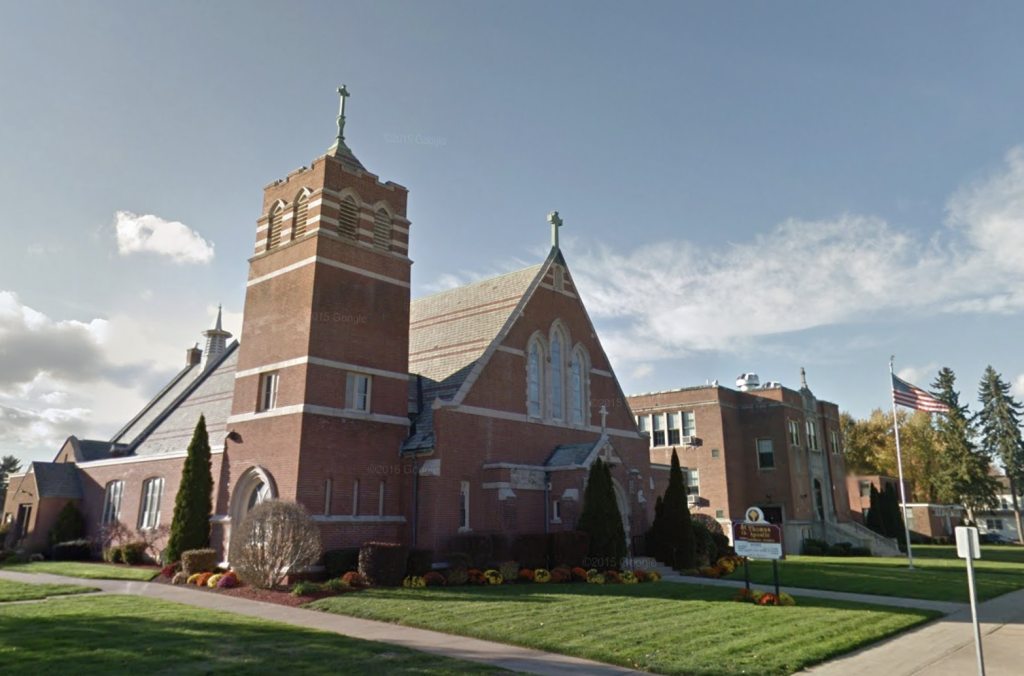
Podcast for St. Thomas of the Apostle Parish.
Episodes
Wednesday Jan 22, 2020
Wednesday Jan 22, 2020
Decisions and actions against human life are influenced by many things: feeling fearful, feeling unsupported, feeling pressured, feeling angry, or feeling alone. All of these feelings lead some people to make decisions that put the lives of others at risk, as well as their own lives.
Consider a college student who has conceived a child in her womb. Her boyfriend tells her that she must choose between him and their unborn child.
Consider expectant parents who have just been told their baby may have a serious disability. Our culture and our laws provide for them to consider a choice to end the child’s life so as to have the baby not suffer or struggle.
The disagreement between those who are “Pro-Life” and those who are “Pro-Choice” elicits very strong feelings on both sides. Nonetheless, we are called to love both the unborn children and their parents, even if they are considering abortion, providing concrete support to help those in difficult pregnancy situations to welcome their children before and after they are born. +
Tuesday Jan 21, 2020
Tuesday Jan 21, 2020
Our Scriptures readings today show us that there are extraordinary opportunities within what seem like very ordinary lives. Seemingly mundane encounters with family and friends can hold the key to our peace and holiness in the sight of God. It was not David’s older, stronger brothers that God chose to be king; it was the young man himself, because of what God saw in him. For “not as man sees does God see, because he sees the appearance, but the Lord looks into the heart.” (1 Samuel 16:7)
Questions about our purpose in life are raised by today’s Scripture readings, questions often raised by Pope Francis in his homilies: “Do I put my life actively at the service of others, seeking to serve them in the ways that today’s people need if they are to hear the Gospel?” “Do I appreciate the potential in other people, despite their limitations?” “Do I appreciate my own potential, despite my limitations?” “Am I more appreciative of others than judgmental of them?” “How well do I live out the principle of mercy stated by Jesus when He said, “The Sabbath was made for man, not man for the Sabbath?”
Such questions have been asked by Pope Francis, promoting a Gospel of Joy, and they invite us to ponder whether we are living out our faith to promote the love and mercy of God, or to pronounce judgment on others.+
Monday Jan 20, 2020
Monday Jan 20, 2020
The wine was a very important element at a wedding feast, the beginning of a marriage, as was clear from the story of the wedding feast at Cana, which precedes the story we just heard in today’s Gospel reading. Having spoken of Himself as the bridegroom, Jesus also compares His presence to that of new wine.
The new wine of the LORD’S loving presence and life-giving action calls for new wineskins to hold it and to dispense it. The LORD’S love is a grace, but it also makes certain demands on us, calling on us to continually renew our lives so that we can truly be molded by His love.
New wine, new wineskins. We have to keep shedding our old skin and develop new skin. We can never be fully satisfied with where we are at any moment of our lives.+
Sunday Jan 19, 2020
Sunday Jan 19, 2020
Across the street from where the World Trade Center in New York was, stands historic St. Paul’s Chapel. Completed in 1776, St. Paul’s is the oldest public building in continuous use in Manhattan – George Washington worshipped in the church following his inauguration as the nation’s first President.
Miraculously, the small church survived the collapse of the towers on 9/11 – some believe that a large sycamore tree in the graveyard that was uprooted in the blast shielded the small church with its branches and leaves.
The church immediately became a godsend of respite and refreshment for thousands of police, firefighters and rescue workers at Ground Zero. Two huge charcoal grills were set up on the portico where parishioners grilled hamburgers around the clock for workers; a large sign welcomed rescue workers to come and eat, rest and pray. St. Paul’s clergy and congregation coordinated volunteers and donations of food from local restaurants to provide hundreds of hungry, tired, dirty and often stressed-out rescue workers with everything from coffee and meals to eye drops and clean clothing, and a place to catch a little sleep.
Three days after the attack, the day that President Bush designated as a national day of prayer, the rector of St. Paul’s asked engineers if they could somehow get into St. Paul’s bell tower to ring the bells. Despite the devastation, two engineers managed to crawl into the wooden tower and, taking an iron rod, beat the bell by hand twelve times. The firefighters and volunteers heard the bell, removed their hats and helmets and paused.
In telling the story to the congregation the following Sunday, the rector said, “Now, God willing, we hope to [ring the bell at St. Paul’s] at 12 noon every day as long as we exist, remembering to announce to the world: ‘God reigns.’”
In opening their doors to the rescue and recovery workers at the site of the World Trade Center devastation, the St. Paul’s congregation took up the cry of the Baptizer: Behold, the Lamb of God. Behold, God is in our midst
Every one of us – of every profession, age, and group, possessing every talent, skill, and ability – have been called, as John the Baptist was called, to declare to our contemporaries that Christ, the Lamb of God, has come. John the Baptist declared his witness in preaching and baptizing at the Jordan River; our witness can be declared in less vocal but no less effective vehicles: in our unfailing compassion for others, in our uncompromising moral and ethical convictions, in our everyday sense of joy and purpose. May all of our actions and attitudes proclaim to all the world that God reigns in our midst.+
Saturday Jan 18, 2020
Saturday Jan 18, 2020
Our Gospel passage today shows how Jesus wants us to share His message. He has shared a meal with many, sinners, tax collectors, and with others who would have been classified as not the equal of law-abiding Pharisees. He broke bread with sinners at table and, at the same time, more likely than not, He broke open God’s Word for them — God’s healing and merciful Word. In defense of this, He said, “I did not come to call the righteous but sinners.”
Jesus reveals His Father who does not withhold His living Word or His grace from us, even when we show that we are unworthy of it. The Lord continues to speak that word of love and light into the darkest and most troubled places of our lives. He keeps offering us the bread of His word to satisfy our deepest hunger. As He does so, He waits for us to take and eat.
We are called to mirror God’s mercy; we are called to invite all people to the table of the LORD and not only those who seem to measure up to the ideal of Christian living. All are called, especially sinners. God’s grace and mercy are not rewards for perfection but, instead, are a necessity in our striving to be perfect as our heavenly Father is perfect.+
Friday Jan 17, 2020
Friday Jan 17, 2020
In our Gospel reading today, we hear the famous story of Jesus healing the paralytic on the stretcher and, yet, the healing of the man was kind of a supporting part of the larger story: the forgiveness of sins. The healing of the man was to show the doubters and the critics that he had the power to forgive sins. And, again, as we see in most healing stories, it is because of their faith that they are healed; that they are forgiven. And this is not so much of a reward; their faith is what opens them up to God’s healing power, which is always there.
So, the main focus of this story really is not the healing of a person’s body but the healing of our souls when we are transformed by God’s forgiveness of our sins and the healing of our relationships with God and with one another. This healing came about for the paralyzed man who believed that Jesus could heal him. Indeed, his faith, and the faith of his friends who placed him before Jesus, transformed his life and theirs.
Let us pray for the faith we need to allow God’s healing power into our hearts and souls.+
Thursday Jan 16, 2020
Thursday Jan 16, 2020
Jesus often healed people by His spoken word alone, “Be healed!” But in His attention to the poor leper, Jesus not only spoke to him but also touched him physically. In making physical contact with the man suffering from leprosy, Jesus did what was never done by people at that time and place.
For obvious reasons, people kept lepers at a distance, and lepers were expected to keep their distance from others. Yet, it was the character of Jesus to make contact people and to keep no one at a distance, not even one as sick as this leper. No one was beyond His reach; no one was untouchable. He came to touch our lives in a very perceptible way, all of our lives, regardless of our condition.
The leper wasn’t sure whether Jesus wanted to heal him, as is clear from his opening words to Him, “If you wish, you can make me clean.” By touching him, Jesus very clearly showed that He wanted to heal him.
Jesus wants to touch all of our lives because He wants to bring life to us all. Nothing we do or fail to do, no circumstance in which we find ourselves, need place us beyond His reach. As St. Paul says in his letter to the Romans, “Nothing can come between us and the love of God made visible in Christ Jesus.” The LORD touches our lives, where we are, as we are. All we need is something of the leper’s initiative in reaching out to our LORD.+
Wednesday Jan 15, 2020
Wednesday Jan 15, 2020
The Letter to the Hebrews says that Jesus shared fully in our humanity, even in the experience of loss and death. St. Paul explains that to be effective as our merciful high priest, Jesus had to become like His brothers and sisters in every way. He was Himself tested through life as are we, but He remained without sin. (Hebrews 2:14-18) If we take this at face value, we could say that there is no temptation, however ugly or strong, that He did not also experience, and it places our own temptations, however embarrassing or stubborn, right there within our relationship with our LORD.
The merciful side of our LORD is also seen when Jesus visits the home of Peter’s mother-in-law. He is never present as a mere spectator to people in difficulty. St. Mark says that Jesus grasped her hand, helped her up, and the fever left her. Then, reflecting the blessing she had received, the mother-in-law looked after the needs of her guests.
When the neighbors learned about Jesus’ presence, they crowded around looking for a blessing. All was in chaos as sick people were laid at the doorstep, and those with mental illnesses were brought to be freed of the demons tormenting them. Growing weary of all this pressure, early the next morning Jesus went off to a lonely place to think and to pray. And still, He was told, “Everyone is looking for you.” This drew Him back into ministry mode and He set off for the neighboring villages to proclaim the gospel. He acknowledged that His life had a clear purpose saying, “For this purpose I have come.” It is this mission that He would continue right up to His death, and after, through His Spirit, in the life of the Church. +
Tuesday Jan 14, 2020
Tuesday Jan 14, 2020
The witnesses in Capernaum wondered about Jesus; they were fascinated by the authority of His teaching and His power over evil spirits. But this really wasn’t new. Prophets who came before him Had struggled with evil spirits. Recall Moses’ encounter with the magicians in Egypt and his command over the forces of evil and destruction (Exodus 7:22; 8:3).
What was unique about Jesus is well-expressed in St. Paul’s letter to the Hebrews: He is the one who, during His earthly life, was made lower than the angels, but is now crowned with glory and honor, “that by the grace of God He might taste death for everyone.” He is the leader of our salvation, Himself brought to perfection by His sacrificial agony during His Passion. He brings us into a family relationship with God, for now “the one who sanctifies and those who are sanctified all have one Father.” (Hebrews 2:5-12)
We can take joy from this basic fact: Jesus considers us His own brothers and sisters. His life’s work was to gather us together as God’s family, and His intention was clear, “I will proclaim your name to my brethren, in the midst of the assembly I will praise you.”
This reality calls us to live life actively and prayerfully; to interact with others in promoting the Kingdom of God; to realize that Jesus has shared each of our trials and temptations so that in Him we arrive at our full character as children of God. +
Monday Jan 13, 2020
Monday Jan 13, 2020
Whenever there is an interaction between two or more people, there is a possibility for them to experience a life-giving moment. The interaction that Simon, Andrew, James, and John had with Jesus was such life-giving moments for those four fishermen; the life-giving power of God was present to them in the person of Jesus. That power of God present in Jesus was the power of love, a love that promised forgiveness, healing, acceptance, a love that gave them a mission in life.
The kind of encounter that Simon, Andrew, James, and John had with Jesus is offered to each one of us as well. Jesus is not just a figure from history, existing only in the past. He is the living LORD, still here with His church and in the world, constantly calling out to us and interacting with us in the course of our daily lives, just as He encountered Simon, Andrew, James, and John as they were going about their daily work as fishermen.
The LORD encounters us, and He speaks to us through the Sacraments, especially in the celebration of the Eucharist, through Scriptures, through people we encounter, through nature and from deep within our own souls. Each time we encounter the LORD, we hear the good news of God’s unconditional love for us. We also hear the call to mission, the call to be good news for others, to be the LORD’S body in the world: His feet, His hands, His mouth, His eyes, His ears. “Come after me, and I will make you fishers of [people].” Today we pray for the grace to be as open and responsive to the LORD’S presence and call as were Simon, Andrew, James, and John. +