
16.8K
Downloads
1457
Episodes
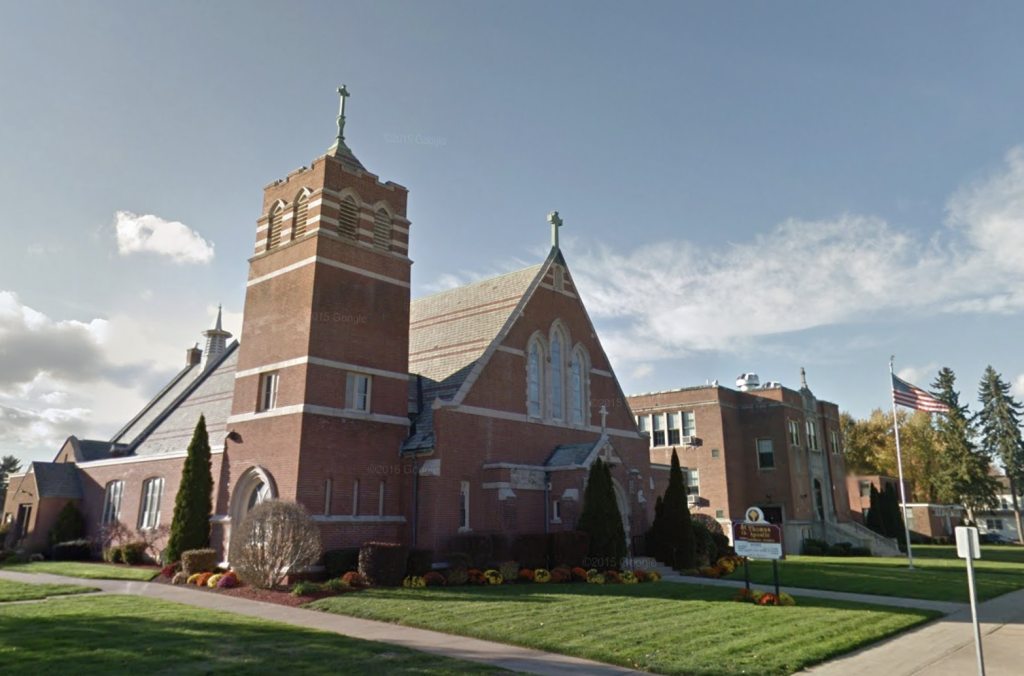
Podcast for St. Thomas of the Apostle Parish.
Episodes
Tuesday Feb 11, 2020
Tuesday Feb 11, 2020
Jesus accused His critics of ignoring the commandments of God while insisting on the adherence to merely human rules. Jesus recognized that the religious traditions of His time did not always correspond to God’s will as revealed in the Scriptures, and as revealed in a much fuller way now by Jesus Himself.
The Church needs to be always watchful to ensure that its own traditions conform to God’s Word to us, especially as spoken by Jesus. Every so often our Church has to renew itself, with the help of the Holy Spirit, to purify its traditions so that they correspond more closely to the true spirit of the Gospel. We can understand the Council of Vatican II as a significant attempt to do just that.
In our own personal lives, too, we can get into traditional ways of doing things that are not always in keeping with the core of God’s message to us in and through the Scriptures. Our own personal tradition, whether it is our religious tradition or our tradition in the broader sense, is always in need of reform in the light of the Gospel. We need to keep on hearing the Word of the LORD anew, and to invoke the Holy Spirit to help us to do so.+
Monday Feb 10, 2020
Monday Feb 10, 2020
Today’s Gospel passage highlights the great popularity of Jesus among the ordinary people of Galilee. In particular, He attracted the sick and broken because God’s healing power was so clearly at work through Him. People begged Him to let them touch even the tassel on His cloak, as the woman had done who was healed of her flow of blood. The Gospel says that people were hurrying to bring their sick to Him. The poor and the needy were especially desperate to get to Him and to make contact with Him.
In our own lives, too, it is often in our brokenness and weakness that we seek out the LORD with the greatest sense of urgency. Something happens to us that brings home to us our vulnerability, our weakness, our inability to manage things completely on our own. In those situations, when we come face to face with our limitations, we can seek out the LORD with greater energy and an urgency that we don’t normally display. It is those experiences, when we come face to face with our frailties, that bring home to us our need for the LORD and our dependence on Him. It is often the darker and more painful experiences of life that open us up to the LORD. When St. Paul was struggling with his “thorn in the flesh,” he heard the Risen LORD say to him, “My power is made perfect in weakness.” Our various experiences of weakness can be like doorways through which we reach out to the LORD and the LORD comes to us.+
Sunday Feb 09, 2020
Sunday Feb 09, 2020
Today’s readings remind us that each one of us has some gift or talent that has been given to us by God who has called us to use these gifts and talents to share with others so that we might be instruments of God’s love and compassion in our world.
The difficulty we often have is our inability to appreciate the gifts that each of us has to offer. Perhaps we think that we’re not good enough to actually be messengers of God’s glory. Perhaps we lack the self-esteem and self-confidence to believe that God would actually want to use us as instruments of peace and love in the world.
Several years ago, in my discernment about the priesthood, I kept procrastinating because I felt that I had to somehow be perfect or exceedingly holy to be a priest. But then I recognized that priests are people just like anyone else; that they, like me, are interested in things other than incense and vestments, that they have their faults and foibles. I recognized that priests didn’t have some special “connection” to God above and beyond the rest of the members of the Church. It was then that I was able to surrender myself to this tugging at my heart and say “yes” to God’s call.
Another difficulty is that we sometimes find it inconvenient to use our gifts. That using our gifts and talents is sometimes a painful thing to do is a very legitimate statement. But that is what sacrifice, more often than not, entails. When we make a choice to do something, we often make the choice not to do something else that we may very well have wanted to do.
Another personal story, again, several years ago, I was on my way to a store. On my way there I drove by a neighbor’s house whose father had recently died. My neighbor was sitting on the steps. My immediate feeling was that I should stop and talk to him, but I hesitated because I only had a short time to get to the store and get back. I kept driving by something inside me caused me to stop and go back to talk to him. When we started talking about his father he began to cry. We talked for about an hour. I never did get to the store, but I knew I had done the right thing by stopping. My neighbor needed to release his grief and sorrow and God put me in the right place to help him to do that. While I had no idea that stopping to talk would help my neighbor, farthest from my mind was the idea that I would benefit so much from his pouring forth of emotion. Indeed, sacrifice is often more life-giving than we can ever fully appreciate.
And so, we come back to the call of today’s readings, the call to recognize our gifts and talents, the call to share those gifts, the call to see that God can work through our imperfections and failings if we open our hearts to His grace.
In discerning our gifts and talents we must remember that not everyone has the same ones. Some of us are called to roles of leadership, some of us are called to roles of teaching, and some of us are called to roles that play themselves out quietly. But all of us are called to bestow God’s blessings on others by the use of our gifts, to see that our practice of faith means more than showing up for Mass on Sundays and Holy Days; that it means being an active part of the Church, the Body of Christ on earth. What we do the building should be reflected in all our actions so that the Gospel message of Christ might be heard and seen by all who know us.
“You are the light of the world. A city on a hill cannot be hidden. People do not light a lamp and put it under a bushel basket. They set it on a stand where it gives light to all in the house. In the same way, your light must shine before all people so that they may see goodness in your acts and give praise to your heavenly Father.”+
Saturday Feb 08, 2020
Saturday Feb 08, 2020
It is often the case that things don’t go exactly as we had planned. On some morning we might plan to get something done during that day, but something unexpected comes up and it does not work out as we had hoped. On a larger scale, some plan we might have had for our career or our family does not happen. There are different possible responses to our plans not working out, short of completely giving up in hopelessness.
In today’s Gospel passage, Jesus’ plans for Himself and His disciples did not work out as He had hoped. He planned for them to go away to a deserted place for a time of rest and reflection because they had been so busy. However, when they reached that deserted place, they found that the crowd had gotten there before of them. Rather than becoming angry at this intrusion on their time of retreat, Jesus was moved with pity for the people. His plans had to be changed. Something else happened that served God’s purpose.
Whenever our own plans go awry, sometimes something better can replace them, if we are flexible and open. God’s plan is always greater than our plans. Whenever we have to let go of our plans in place of His plan, the LORD’s life-giving purpose for our lives always abounds.+
Friday Feb 07, 2020
Friday Feb 07, 2020
The appeal made in St. Paul’s Letter to the Hebrews, “Let mutual love continue. Do not neglect hospitality,” (Hebrews 13:1-2) is a noble, genuine invitation to all that is good in Christianity. What a contrast with the cruel interchange of lust, resentment, cynicism and cold-hearted violence that led to the beheading of John the Baptist.
Herod’s superficial self-indulgence, which was criticized by John the Baptist, led him to this tragic execution. Urged on by the spite of Herodias and the immodest dancing of her daughter Salome, the frivolous king sent a soldier to bring John’s head.
What a far cry from the ideals of love, hospitality, faithful marriage, and simple dignity, as proposed in our first reading today. But even in this moment of dire crisis, and in danger of his life, John the Baptist must have renewed his act of faith with that ultimate Psalm of promise, “The LORD is my life’s refuge; of whom should I be afraid?” (Psalm 27)+
Thursday Feb 06, 2020
Thursday Feb 06, 2020
St. Mark shows how, early into His ministry, Jesus sent out the Twelve that He had chosen to share in His work. He sent them out to do what He had been doing: to preach the gospel and to heal the sick. Jesus understood that He needed the help of others to do the work He had been sent to do. Jesus still needs us today to do His work. We are to be His eyes, His ears, His hands, His feet, His voice, and His presence wherever we are. He wants to work in and through us.
St. Paul understood this very clearly. He saw the Church as the Body of Christ in the world. The Body of Christ could not be fully functioning unless everyone plays the role they are called and equipped to play through their Baptism. Each has a unique contribution to make to the life of the Body and, thereby, to the work of the LORD in the world today. Each is indispensable and necessary. The first reading from the letter to the Hebrews puts it very simply: In the Church, everyone is a “first-born child” and a “citizen of heaven.” There are to be no second-class citizens in the Church. Each of us is a vital member of Christ’s Body, uniquely graced by the LORD for His work and mission in the world.+
Wednesday Feb 05, 2020
Wednesday Feb 05, 2020
The people of Nazareth should have recognized how God the Father was working through Jesus in a distinctive way. Instead, they sneered at Him and despised him. He was too familiar for them, too local, too known. They knew His mother and His family. As one of their own, he was too ordinary for them to take Him seriously. It is a classic case of “familiarity breeding contempt.
We often fail to recognize the presence of God in the ordinary and in the familiar. In reality, we do not have to go long distances or witness miracles to recognize the wisdom and the power of God. It is all around us in the near, the familiar, and the ordinary, if we have eyes to see and ears to hear. The Gospel invites us to see the familiar and the ordinary with new eyes. The failure of the people of Nazareth to see in this way inhibited what Jesus could do among them. Our seeing in this way gives the LORD space to work among us in new ways.+
Tuesday Feb 04, 2020
Tuesday Feb 04, 2020
Throughout the four Gospels, Jesus asks many different questions. It can sometimes be valuable to take the questions He asks and to sit for a brief time to reflect upon them.
Today’s Gospel passage includes one of those questions, “Who has touched my clothes?” Jesus’ disciples were perplexed by His question, “You see how the crowd is pressing upon you and yet you ask, ‘Who touched me?'” There were so many people touching Him.
However, Jesus knew that one person touched Him in an act of hope, as a final effort for healing. Many people were touching Him, but one deliberately reached out to make personal and physical contact with Him. When Jesus saw who it was, he said to her, “Daughter, your faith has saved you.”
The LORD is always passing by; He is always among us. Sometimes we barely notice Him. The woman in today’s Gospel shows us the power of a personal and deliberate reaching out to the LORD. This is how we can better experience His life-giving presence in our lives.+
Monday Feb 03, 2020
Monday Feb 03, 2020
Our Gospel reading today tells us an unsettling story about a man who was possessed by demons. He was very much out of control, completely separate from himself and from others. He was more dead than alive, as is indicated by his living among the tombs. He was the absolute outsider. Yet, Jesus engaged with him and, as a result of his encounter, the man was healed and his relationship with his community was restored. Having just calmed a storm at sea, Jesus calmed the storm in this man’s mind and spirit and sent him out as a messenger of good news to his community.
Hopefully, we may never be as troubled as this man was, but we can all find ourselves out of sorts from time to time; out of sorts with ourselves and with others, feeling only half alive within ourselves, tossed and thrown about. It is then that we need to come before the LORD as the man in the gospel did. His initial approach to the LORD was quite aggressive; it was full of anger, “What have you to do with me, Jesus of Nazareth?” Perhaps, when we are distressed, that can also be our starting point when we come before the LORD in prayer. Yet, He is never put off by our disturbance within. If we let Him, He will pour His peace into our hearts; He will calm us as He calmed the storm, and having done so, He will send us out to share His peace and mercy with others, just as He sent out the man in the Gospel.+
Sunday Feb 02, 2020
Sunday Feb 02, 2020
In our Gospel reading today, St. Luke tells us about a very joyful day in the city of Jerusalem. A young couple, along with their young son, meet two elderly people named Simeon and Anna. Simeon responded to meeting Jesus by praying aloud. Cradling the infant Jesus in his arms, he blessed God in a prayer that has made its way into Compline, the Church’s official Night Prayer.
Anna’s response was to tell everyone about Jesus, especially those people who were waiting in hope for a sign of God’s favor.
These two very devout Jewish people of very advanced age embody two fundamental qualities of being aware of the presence of God. Simeon lifted up his heart in prayer, and Anna spoke out about Jesus before others. Simeon’s meeting with the Holy Family led him toward God in prayer; Anna’s meeting with the Holy Family led her to share the Good News.
Each of them has something fundamental to teach us about how to welcome the LORD. We are to thank the LORD in prayer and to bear witness to the presence of God in our lives. Like Simeon, we thank God in prayer for the gift of His Son, the Light who enlightens us. Like Anna, we proclaim God’s gift to others, by what we say and do. The LORD who entered His temple as the Light of the World has entered our lives too. Simeon and Anna show us how to respond to His gracious coming.+