
16.8K
Downloads
1456
Episodes
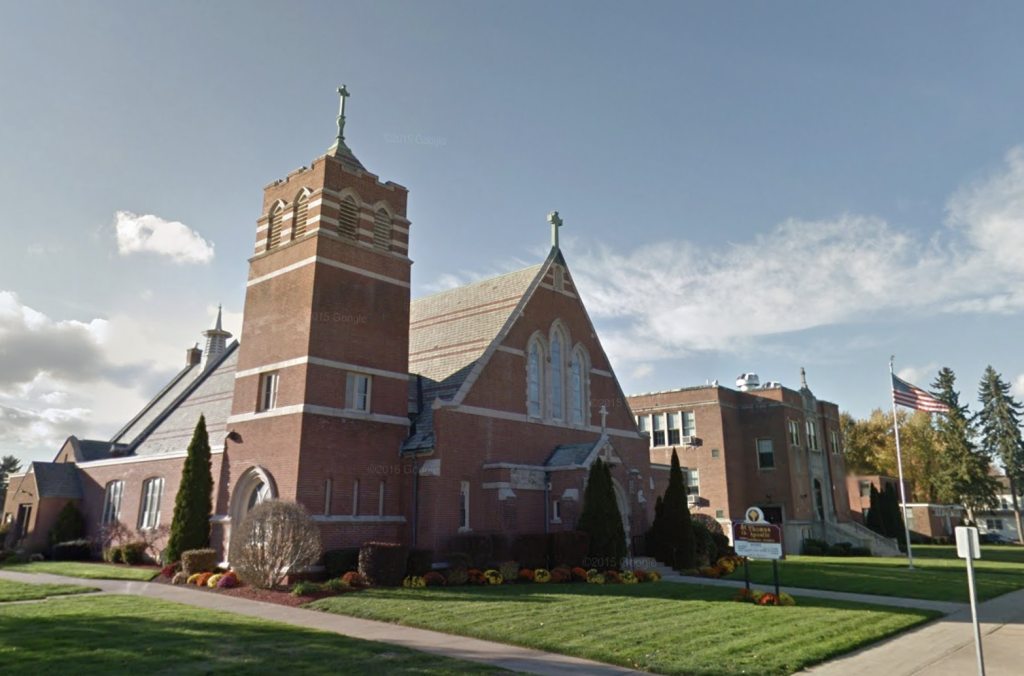
Podcast for St. Thomas of the Apostle Parish.
Episodes
Tuesday Mar 31, 2020
Tuesday Mar 31, 2020
“O LORD, hear my prayer, and let my cry come to you.”
I focus, once again, on our responsorial psalm for the day. Today’s Psalm begins with a pleading for God to hear the prayer of the psalmist and recalls how God has always heard the cry of His people.
In the end, the psalm seems to be reassuring that God hears our prayers made amid our struggles and that God keeps us from succumbing from our trials.
Of course, this last part of the prayer refers to the end times and to our belief that regardless of what happens in this life, there is joy and salvation in the next.
May we always trust that God hears our prayers and may we always trust in His promise of eternal life.+
Monday Mar 30, 2020
Monday Mar 30, 2020
“Even though I walk in the dark valley I fear no evil; for you are at my side.”
Our psalm today is another one of those things that we hear often in Scripture, and which sounds nice, but we have to ask if we really take it to heart. When it seems like our prayers are not being answered – or at least being answered as we would like – do we despair or do we take to heart these words of the great psalmist? Do we trust that God’s love and grace are with us regardless of what happens to us in this life? That trust (or at least that hope) is what marks the faithful people of God.
May we seek to trust that God is with us at every step of the way – in good times and in bad – and that, walking with us, he will lead us to the everlasting peace and joy of heaven.+
Sunday Mar 29, 2020
Sunday Mar 29, 2020
There is a story of a young couple who received a mirror as a gift on their wedding day. The frame of the mirror was an odd aqua color and they couldn’t find a place where it would look good in their home. They moved a couple of times and brought the mirror with them, but they never could find a place where that aqua color fit in.
A few years passed, and as they were preparing to move again, they decided to have a tag sale to get rid of all their unwanted belongings. Among the items was the mirror with the aqua-colored frame that never once hung on their wall. They put a price tag of $1.00 on the mirror and put it in the yard with all their other unwanted possessions.
During the tag sale, a man was looking at the mirror and called his wife over. He said to her, “Look at this beautiful mirror. The frame is gorgeous and still has the plastic on it.” The couple selling the mirror looked on in horror as the man peeled away the ugly aqua plastic from the frame that revealed a beautifully carved golden frame surrounding the mirror.
In our own lives, there is much beauty and joy that we may never recognize. They are “wrapped” in layers of discouragement and resignation, and even wrapped in the busyness of our lives and schedules.
In baptism, we have been called to the work of resurrection: that is, to remove the “plastic” that covers the goodness and giftedness of so many souls; to free the bound Lazaruses among us who are in need of our compassion, care, and healing, to raise up those who have “died”, in a metaphorical sense, in their own despair and desperation.
This is the kind of resurrection we can bring to our world right now as we await the fulfillment of the Easter promise to come.
During this unprecedented time in our lives, even those of us working from home perhaps find that our lives have a slower pace; we are not bogged down by heavy schedules and errands. Yes, there is plenty for us to do but the urgency, the pressure of our schedules is, hopefully, a little less right now.
Perhaps during these days that we find ourselves “entombed” in the reality of the restrictions this pandemic place on us, we might find the opportunity to peel off that “plastic” that frenetic schedules and constant activity place upon us. Perhaps we can peel back that “plastic” that can sometimes hide the beauty that dwells in our lives, in our families, in our very selves; a beauty that is the life and the love of God.
Let us take our own metaphorical mirrors of reflection and, through our prayer and worship, through our own personal searching, peel back the “plastic,” and recognize the image of God dwelling in us and may we look forward with hope to our Easter celebration of Christ’s Resurrection, as we look forward to our own resurrection from the tomb that is this pandemic, and the Resurrection of the Dead, at the end of time.+
Saturday Mar 28, 2020
Saturday Mar 28, 2020
Jesus came to proclaim a Gospel that is more than many bargained for. The reign of God Jesus proclaimed is founded on a concept of justice and an attitude of reconciliation that can scare some, that shatters our sometimes-self-centered approach to the world
To those who really understood him, Jesus’ teachings did not suggest comfort and joy; they objected to him as an idealistic radical who had no understanding of the complexities of the world.
And it's true: Jesus' Gospel is not one of comfort (at least to the comfortable), nor is it a Gospel of peace to those at war with themselves and those around them, nor is it a Gospel of love to those who are concerned only with themselves.
Love your enemies and pray for them, invite to your table the poor and those who cannot repay you, forgive seventy times seven, seek the lowest place, take up your cross and follow. To the Scribes and Pharisees back then (and to like-minded people today), these are dangerous, radical and revolutionary teachings that will definitely challenge comfortable and complacent lifestyles and threaten what the world often holds dear.
May we have the courage to look deep within our hearts and souls and look deeper into the Gospel message of Jesus and turn to Him for the support, help and guidance we need to follow in His ways.+
Friday Mar 27, 2020
Friday Mar 27, 2020
Like the people in today’s Gospel passage, we sometimes become so obsessed trying to find God where God is not, that we fail to see God where He actually is. We want to know where God is hiding when tragedy befalls us; we live our lives falsely thinking that God is found only at certain times and in certain situations, and in certain pious practices.
The reality is that God is profoundly with us in the simple dimensions of life: in the kindness and love of others, in the same that we show to others, in life itself and in the gifts that sustain our lives and, yes, God is with us even as we live in the fear of this pandemic.
Let us pray that we may recognize the presence of God in every moment and circumstance and action of our lives and may our lives be a reflection of that presence.+
Thursday Mar 26, 2020
Thursday Mar 26, 2020
Our readings today help us to focus on the fact that God does not give up on us; God wants to have a relationship with us while we live on this earth and He wants us to live with Him in eternity in His kingdom of heaven.
We may fail to follow God’s will, but God is always trying to point out the true way to His kingdom.
Sometimes, our faith seems to focus a lot on the wrath of God but, that focus obscures the relationship that God truly desires to have with us.
Let us pray for an openness to God’s call, that we may with faith and wisdom, live out that call and truly become the people God has created us to be.
Wednesday Mar 25, 2020
Wednesday Mar 25, 2020
Today we celebrate the Annunciation of the LORD – the moment when Mary learned about the LORD’S call to her to be the Mother of His Son.
What a scary time for Mary – to be visited by an angel and to put her reputation, and that of Joseph, in the crosshairs of those who would accuse them of wrongdoing.
Yet, despite her fears, she answered the call of God with all her heart, all her soul, all her mind, and all her body.
Let us pray that the example of Mary’s selfless giving over of her will to the will of God may inspire us to seek to follow God with all our hearts, even when doing so is difficult, unpopular, or puts us at odds with those around us.+
Tuesday Mar 24, 2020
Tuesday Mar 24, 2020
In the Gospel reading, Jesus faced the hypocrisy of the people who criticized Him because He performed a miracle on the Sabbath. There are other Scripture passages in which Jesus’ goodness and faithfulness are questioned for the same reason. The Scribes and Pharisees followed the precise letter of the law and ignored the spirit of the law. In doing so, they failed to see the greatness and goodness of Jesus’ actions.
It is easy to follow the letter of God's law and to ignore its spirit. In doing so, we fail to follow the two most important commandments: to love God and to love our neighbor.
Let us pray that we may be filled with the spirit of God’s law and that, in our adherence to that spirit, we may seek to be ambassadors of God’s love and grace in our world.+
Monday Mar 23, 2020
Monday Mar 23, 2020
“Unless you people see signs and wonders, you will not believe.”
Jesus seems to express a little bit of frustration in our Gospel passage today; while He came to heal people’s souls, many people wanted only to see signs and wonders – miracles – either for their amusement or as proof of Jesus’ greatness.
However, he does seem to recognize the sincerity of the Capernaum official’s request.
He was concerned for his son; he wanted him to live; he wanted him to get well. Jesus healed the son without even going to the official’s house and, as we heard, all in the house came to believe.
Our challenge is to believe without seeing; to have true hope in the love, the grace, and the promise of everlasting life, without seeing signs and wonders, trusting that God is with us in the deepest recesses of our hearts, minds, and souls.+
Sunday Mar 22, 2020
Sunday Mar 22, 2020
Several years ago, my sister Kelly sent me an email with a story about two brothers. You may have heard it. The brothers - Ryan, age 6 and Dan, age 4 - were sitting at the breakfast table one Saturday morning as their mother was preparing pancakes for them. Ryan and Dan began to argue about who would get the first pancake. As the argument escalated, the mother decided that this would be a good time to teach her sons a lesson in Christian charity.
She turned to her sons and said, "You boys should really think about how Jesus would act in this situation. Do you think Jesus would be arguing about who should get the first pancake? Of course not! Jesus would say, 'I don't need the first pancake. I can wait. I will let my brother have the first pancake.'"
The mother turned back toward the stove satisfied that she had put some food for thought in their heads. Then she heard Ryan turn to his younger brother and say, "She's right, Dan. You be Jesus."
You be Jesus - Ryan's three-word admonition to his younger brother, while funny, is the heart of our baptismal acceptance of the role of a disciple of the Risen Jesus, helping others to see God in all things and in all people; helping others to not be blinded to the presence, love, and providence of God in difficult times, especially during this time of crisis for our world.
So, as parents struggling to care for your children in these days of upheaval in our lives and in our homes: you be Jesus in your love and patience.
As neighbors and citizens: you be Jesus in your commitment to justice and the common good, helping those who are especially challenged by the coronavirus pandemic.
In seeking to bring the love of God into every life we touch: you be Jesus.
In seeking to do God’s will in all things: you be Jesus.
In embracing the Spirit of humility that opens up new possibilities for reconciliation and healing: you be Jesus.
God has not abandoned us; God is in all of us and acts through all of us if we allow Him to do so.
Each of us is called to be a messenger of the love and peace of Christ. Each of us is called to help others to see with the eyes of faith. We do this through our imitation of Christ in all things, in all situations, and toward all peoples.
Let us pray that our words and actions in imitation and on behalf of Jesus, may fill our hearts and our souls with the genuine and constant desire to bring Christ's presence to all people and that we may all be a part of leading others to the kingdom of God.+