
16.8K
Downloads
1451
Episodes
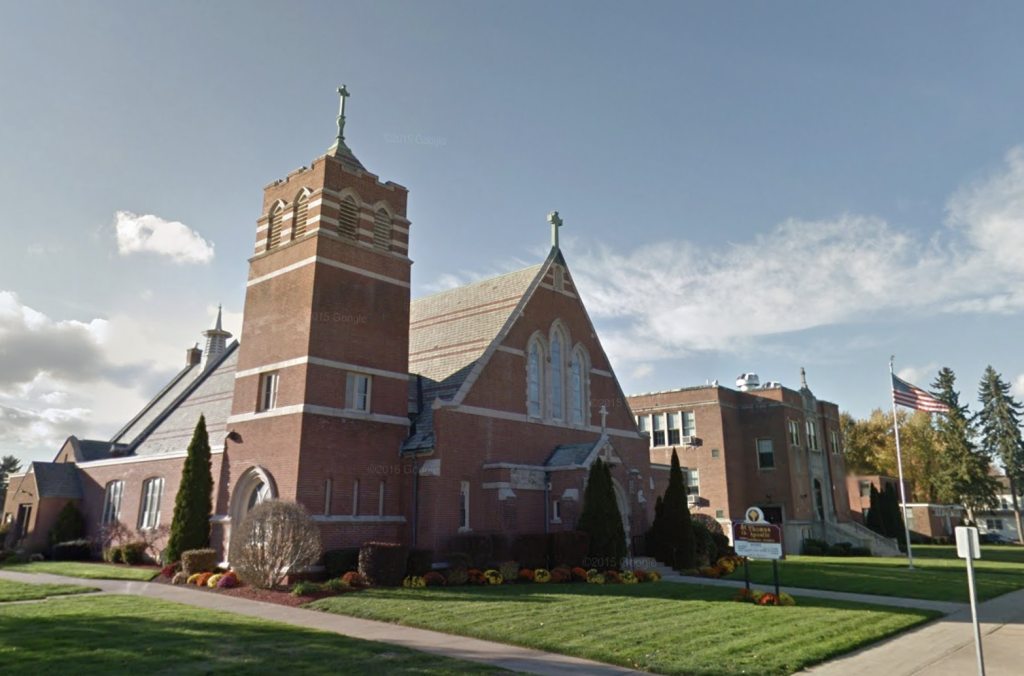
Podcast for St. Thomas of the Apostle Parish.
Episodes
Saturday Oct 24, 2020
Saturday Oct 24, 2020
Jesus used parables to get His followers and others thinking and reflecting, to see what they might mean for their lives. Two millennia later, they continue to do the same thing for us.
In today’s parable, we hear about a fig tree in a vineyard that failed to bear fruit for three consecutive years. The vineyard owner seems reasonable in asking to have the fig tree cut down because it uses resources and space that can be used for a tree that does bear fruit. The worker, however, sees it differently. He looked at the fruitless fig tree and believed that it still had a chance to bear fruit with some work and cultivation. He had a more promising vision about the fruitfulness of the tree.
All was not as hopeless as the vineyard owner believed; there was still time and opportunity for the fig tree to become fruitful. The parable may be saying that this is how the LORD sees us, not just what we have failed to do in the past, but what we are capable of doing in the future. He looks at us with hopeful eyes.
That is how we are called to see each other and every experience and situation in our lives. We must be patient and look beneath the surface for the signs of new life and possibilities that might be there. +
Friday Oct 23, 2020
Friday Oct 23, 2020
Here in New England, we talk a lot about the weather because it can change so quickly and can often be on the unpredictable side. In the midst of the rapid changes, we also have long periods of rain and some long periods of dry weather, too. Either way, it often seems to be the topic of conversation.
The Galileans of Jesus’ time were also very much aware of the weather. They knew what weather they could expect from the direction of the wind and could read the signs in the earth and sky.
Yet, as Jesus told them in today’s Gospel passage, they were unable to read signs of the times in which they were living; they failed to recognize that God was moving among them in a special way in the words and actions of Jesus.
Perhaps we, too, can be good at forecasting the weather but not so good at recognizing the presence of the LORD in our daily lives. Jesus promised to be with us always, and the signs of His presence can be rather subtle, but it is very real.
Let us pray that we may have a better spiritual insight and a better sense of the presence of the LORD in our daily lives. +
Wednesday Oct 21, 2020
Wednesday Oct 21, 2020
Many people do not like to be taken by surprise. We like to know what is coming down the road and when it is coming. However, we know from experience that the unexpected does happen, and it happens all the time.
It is that experience of the unexpected from which Jesus draws today’s parables. The burglar breaks into a house at an hour nobody expects; the master arrives home at a time when his careless servant is not expecting him. Jesus suggests that there can be an element of surprise in His relationship with us.
The Son of Man comes at an hour we do not expect. This warning may be about sudden and unexpected death, but it is just as likely to be about the unexpected coming of the Son of Man to us in the course of our everyday lives. The LORD may call us to do something we had never given any thought about; He may take us down a path we might never have gone down on our own. The LORD can come to us through unexpected people, through people we would never associate as the LORD’s messengers. The Gospel suggests that when it comes to the LORD, we can always expect the unexpected. +
Tuesday Oct 20, 2020
Tuesday Oct 20, 2020
Jesus shocks His listeners with the image of the master of a household putting on an apron, inviting his servants to sit down at table, and then proceeding to wait on them. The scene would be very strange, completely in opposition to the normal social practice of His times, although it does call to mind Jesus washing the feet of His Apostles. Jesus blends the roles of master and servant in a most unconventional manner; normally, they are quite separate and distinct.
The master performs this gesture of honor to his servants in response to their faithful watchfulness. The LORD who supports us expects us to be faithful and alert, so that we are ready to open the door to Him, at whatever moment in time He arrives.
In the Book of Revelation, the Risen LORD says, “Behold, I stand at the door and knock.” Jesus is always knocking at our door. If we welcome His daily coming, He will serve and support us in endless ways. +
Monday Oct 19, 2020
Monday Oct 19, 2020
Our Gospel today may seem to be speaking against wealth, but one can argue that God does not have a problem with our being successful. The psalmist of old often prayed that God would "prosper the work of our hands."
We know from the words of Jesus that we should use our wealth, the gifts that we have, the prosperous work of our hands, and do something positive with them for others' good.
We live in a society where people are overflowing with possessions, schedules, and empty busyness; many are overwhelmed with pursuing more and building larger "barns" to store more. To be people of faith, to be real disciples of the Gospel Jesus, begins with emptying ourselves of our stuff and our busyness to create a place and a time for God to dwell and fill. The most tragic kind of poverty is the emptiness of a life filled with things but possessing nothing of God.
Christ calls us to "think of what is above" — love, forgiveness, compassion, mercy, and gratitude. God has given us this priceless, wonderful life to embrace and be embraced by His selfless and affirming love, to discover how to love one another as God loves us. +
Sunday Oct 18, 2020
Sunday Oct 18, 2020
I had a conversation with a friend a few years ago who was telling me why she liked a particular presidential candidate. She went on and on about how she liked the things that this particular candidate was proposing, what she thought of his character, et cetera. At the end of the conversation she said it was too bad she would have to vote for the other candidate. When I asked her, “Why?” she responded, “Well, my candidate is down in the polls and I don’t want to waste my vote on someone who is going to lose the election.”
Voting a particular way to just to be a part of the majority or, worse, not voting at all is a serious problem in our nation and our world. There are many instances where just one vote may have changed the course of history.
Had it not been for one vote in 1776, our official language in the United States would have been German instead of English. Had it not been for one vote in 1845, the state of Texas would not have been a part of the United States. One vote caused King Charles I of England to be executed in 1649. In 1923, Adolf Hitler became the leader of the Nazi Party in Germany by just one vote. One vote can, literally, change the word.
Today’s Gospel reading contains a crucial message for every Christian: Jesus makes it clear that we possess dual citizenship. We are citizens of two worlds: citizens of earth and citizens of heaven. Because of our dual citizenship, we have responsibilities toward both worlds: toward God and toward Caesar, to use Jesus’ term. We have a very serious responsibility as Christians and as citizens of our world to elect people who will promote our ideals, who will fight for what is just and right. We have a responsibility to work with our government leaders, to help them to fulfill their responsibilities, that justice, peace and prosperity might be a part of our secular society.
What happens, however, if our dual citizenship leads us into an open conflict between our God and our country? We hope this will never happen but, if it does, we must resolve the conflict in such a way that we do not compromise our primary responsibility to God. Christians have had to do this throughout history. They did it in Roman times when thousands of Christians accepted death rather than worship the emperor. They did it in the 17th century when thousands of European Christians fled to America to practice their faith, and they’re still doing it in modern times.
Consider the case of Franz Jägerstätter, an Austrian peasant, a husband and father of three young children back in the 1930’s. He strongly opposed Adolf Hitler as he rose to power. When Hitler marched into Austria and held a mock vote to show that people supported him, Jägerstätter was the only person in his small village who didn’t vote for Hitler. When war broke out in 1939, Jägerstätter refused to fight in Hitler’s army. He even refused noncombatant service because his opposition to everything Hitler stood for was so strong. Finally, on August 2, 1943, he was arrested and executed by the military.
Jägerstätter had two obligations: one to God and one to his country. When they conflicted in his own conscience, he chose to remain faithful to his primary obligation: to God. This is sometimes difficult to do, for following our conscience, following the ways of God may not be popular and may have consequences in this life that are not to our liking. We know, in faith, however, that the life to follow is forever and that the rewards of this life are nothing compared to those in the life to follow.
Let us close with President Thomas Jefferson’s prayer for our nation: “Almighty God, you have given us this good land as our heritage. Bless our land, save us from violence and every evil way. Defend our liberties. Endow with the Spirit of wisdom those to whom, in your name, we entrust the authority of government. In time of prosperity fill our hearts with thankfulness, and in the day of trouble, do not allow our trust in you to fail.”+
Saturday Oct 17, 2020
Saturday Oct 17, 2020
As followers of Jesus, we must be fearless in our witness to Him, in our sharing with others His message of love, mercy, compassion, and redemption. Jesus promised us that in our efforts to follow His call, we will not be left to our own devices, that the Holy Spirit will help us and give us the words we need when we are faced with challenges and difficulties in this mission.
Sharing our faith in today’s world is very difficult; our culture can be very hostile to religion in general and, particularly, to the Catholic faith, because of the many scandals in which our leaders have been involved, and which the media has so strongly publicized.
With so much negative commentary and feelings against our faith, we can be intimidated into silence and invisibility. But we need to be strong and share our faith with others. We have Jesus’ promise that the Holy Spirit will be with us and we have the hope that the same Spirit will bring healing to our Church and its members. As St. Paul says, the Holy Spirit helps us in our weakness. We need to keep on praying for the courage to be true to the LORD who gave Himself for us, giving us life through His death on a cross. +
Friday Oct 16, 2020
Friday Oct 16, 2020
The words about sparrows are a strong statement about God. The sparrow is a common bird of no great distinction. Yet not one sparrow is forgotten in God’s sight. God knows even the least and smallest of creatures. If the humble sparrow is cared for by God, how much are we cherished by God?
God knows the smallest detail of our lives. In the larger scheme of things, this is incredible. If God the Creator is transcendent above all things, worthy of reverence and awe, how can He pay attention to each individual in this crowded world?
Yet Jesus assures us that God is a caring Father close to us and caring for each one. If that is so, we can trust ourselves to God without hesitation.+
Thursday Oct 15, 2020
Thursday Oct 15, 2020
In today’s Gospel passage, Jesus criticized the experts of the Jewish Law for taking “away the key of knowledge.” They had rejected the teaching of Jesus and tried to keep others from coming to know God through that teaching. They had not been true to their calling as teachers of the ways of God. Jesus revealed God more fully than any other human being could. In rejecting His teaching, they were failing to recognize that God was at work in Jesus.
God has given us the key to knowing Him by giving us Jesus. He is the key to this special knowledge, and we will always be learning from Him. The mistake is to think that we are fully informed about the things of God. We are more like infants, always having so much to learn. That is why Jesus had prayed to the LORD of heaven and earth, saying, “You have hidden these things from the learned and the clever and have revealed them to infants.” Only when we recognize this, will we come to know God more fully. +
Wednesday Oct 14, 2020
Wednesday Oct 14, 2020
Once again, in today’s Gospel, Jesus is expressing His displeasure with the Pharisees and goes after them for their efforts at attaining status within their society. Public honor and status were highly prized in the culture of the time. Most of the generous giving for public parks, baths, and temples was not so much to provide for the people but with gaining honor among the people. The donor’s name would be clearly inscribed for all to see. In a sense, things haven’t really changed very much since that time. People still seek status.
Jesus never sought honor or prestige for Himself, nor did He want His followers to look for it, even though they were prone to doing so, each one competing to appear important.
The mother of James and John wanted her sons to have the most prominent seats in the kingdom of God. But according to Jesus, we should direct all honor to God and not seek it for ourselves or our families. All the good things we do should be for the honor of God and not to for our own glory. At the beginning of the Sermon on the Mount Jesus invites us to, “let your light shine before others, so that they may see your good works and give glory to your Father in heaven.” +