
16.8K
Downloads
1450
Episodes
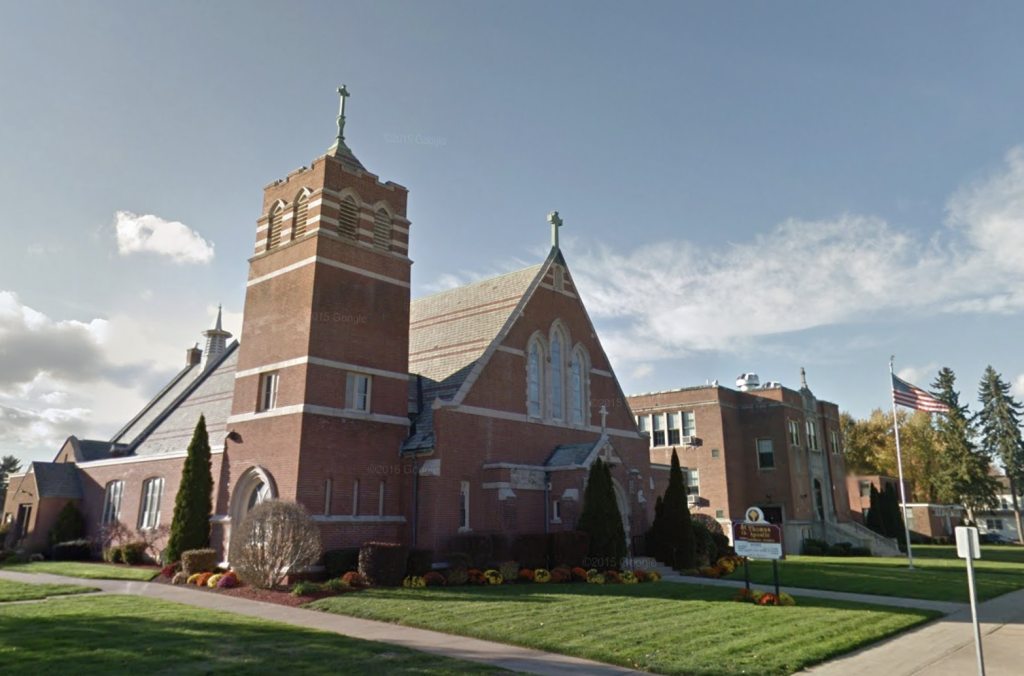
Podcast for St. Thomas of the Apostle Parish.
Episodes
Monday Nov 02, 2020
Monday Nov 02, 2020
Today we celebrate the Commemoration of All the Faithful Departed (or the Feast of All Souls), a day when we remember those we have known in life, who have died. The whole month of November is especially dedicated to remembering our departed loved ones. This is a prayerful remembering, keeping their memory in our hearts, while we continue on our earthly journey.
We commend all who, by their passing, have entered eternity are gone ahead of us to God, and we acknowledge our hope that they, in some way, continue with us on our journey of life
Today, we entrust them all to God and pray that we will see them again, when we, too, cross over to eternity. +
Sunday Nov 01, 2020
Sunday Nov 01, 2020
Back in April of 2005, billions of people turned their attention to the ancient city of Rome for the celebration of the life and to mourn the passing of Pope John Paul II, who had died a few days earlier. In the course of the funeral, an amazing thing began to happen: amid the throngs of people at the funeral, the people started to chant, “Santo Subito!” People also held signs with those same words: “Santo Subito!” Loosely translated, it means, “Make him a saint immediately!”
Pope John Paul II lived a very public life, and it was a life rooted in God; it was a life of holiness. His holiness was so evident to the people that they could do nothing but acclaim the sanctity of this man who lived in our time and our midst. This call for sainthood showed that the people saw him as holy and worthy of being viewed as a saint in God’s eyes. So, they called the Church to see him in that same saintly light, and that call came to fruition at his canonization as a saint in April of 2014.
All Saints Day, which the Church celebrates today, is not just a day in which we honor those who have attained sainthood; it is also a day when we celebrate our common call to follow and become disciples of Jesus, our common call to live the lives of the saints.
One of my favorite spiritual writers is the late Trappist monk, Thomas Merton. Merton was once asked, “How does one become a saint?”
There are many answers to that question: the proof of a miracle and the living out of a holy life. Of course, technically, one isn’t made a saint by the Church; the Church simply recognizes the sanctity of the person’s life and the belief that the person is in heaven.
But sainthood is the byproduct of a larger goal – to know and to love God with all our heart, with all our mind, and with all our soul. Such a strong and pure desire is what each of us is called to possess, and those who live out that desire in every aspect of their lives achieve that byproduct of sainthood.
But sanctity is something that we should all strive for in our lives, and the lives of the saints that we celebrate today and throughout the year are models of inspiration for us in our quest to be one with God.
Let us pray today and always that the saints will be examples of holiness for us and that their lives will give us the inspiration we need to truly live as God’s holy people.+
Saturday Oct 31, 2020
Saturday Oct 31, 2020
Before Paul's words in our first reading, the Christian Philippians asked about men who were preaching about Christ but did not participate in their worship. They didn't think they had the right to do that. However, Paul answers that whenever anyone proclaims Christ, whomever they are or whatever their motivation, it makes him joyful. He reduces the entire message to that single word, "Christ," the one who lives among us as our Risen Savior. He says, "It is not ourselves we preach but Jesus Christ as LORD." (2 Cor 4:4-5).
Unlike those of the Gospels, Paul's writings do not report the words or actions of Jesus. His message centered on the Risen Christ, living among the people. The Church's actions and words become acts or statements of the "Body of Christ." Paul was happy when that message was passed on to others by merely mentioning the name "Christ."+
Friday Oct 30, 2020
Friday Oct 30, 2020
In today's Gospel passage, Jesus is sitting at a meal at which some Pharisees and other pious people were present. There is a theory that the man with the open wound was deliberately brought into the dinner to trap Jesus to see if He would perform a healing him on the Sabbath. Usually, a sick person would never have been invited as a guest. But Jesus was quite happy to take the bait. Immediately, He healed the man, then sent him on his way.
Even today, there are many instances when people appear extraordinarily religious and pious, all while failing to show respect for others and failing to care for others in times of need.
Our LORD's approach is always to treat others with love and respect regardless of the circumstances. He calls us to follow His example. Jesus' way of relating to others must be our way as well. All religious and pious practices are nothing if we do not have love, mercy, and compassion in our hearts and act upon these qualities to help those in need.+
Thursday Oct 29, 2020
Thursday Oct 29, 2020
In our Gospel passage today, Jesus compares Himself to a mother hen who would gather her brood under her wings. He wanted to gather together the people of Jerusalem and show them the way to salvation. But His yearning to gather and save the people went unfulfilled because they refused to listen to Him.
Jesus could not force the people to accept His message or invitation. God gave us the great gift of human freedom and so, God needs to find in us some wish for salvation; He doesn’t impose it on us. While St. Paul said that nothing can “separate us from the love of God in Christ Jesus our LORD,” he also taught us that we must put in some effort and cooperate with the grace of God.
Let us pray that the Holy Spirit will fill our hearts with a real desire to be with our God and the salvation offered by our LORD.+
Wednesday Oct 28, 2020
Wednesday Oct 28, 2020
While all of the Gospels tell the story of Jesus choosing His Apostles, only Luke tells us that, before choosing them, Jesus spent the whole night in prayer to His Father. This was something He prayed about; His choice of those twelve people came as a result of His prayer. Actually, Luke stresses that Jesus prayed before all the crucial moments of His life — just after His baptism, just before He set out to go to Jerusalem, while in the Garden of Gethsemane as He neared His passion and death; on the Cross only moments before He died.
We, too, should turn to our Father in prayer at significant moments in our own lives. During those moments, we need to appreciate our need for guidance, strength, and courage from God. Our prayer does not necessarily mean that all will work out perfectly for us. We know that, although Jesus spent the whole night in prayer before He chose the Twelve, one of them would go on to betray him. Yet, we can be sure that our prayerful surrender to the LORD at such times will always create space for Him to work, even when things do not work out as we had hoped. +
Tuesday Oct 27, 2020
Tuesday Oct 27, 2020
Both of the scenarios in today’s gospel passage — one about a man gardening, and the other about a woman baking — have the same focus: They both compare the initial smallness of an object to the enormous impact it goes on to have. A tiny mustard seed grows into a massive tree, which provides a home for the birds of the air. A tiny bit of yeast transforms a small amount of flour into a large amount of bread. As images of the kingdom of God, Jesus seems to be saying that in God’s sight, what is very small can become extremely significant.
Even our smallest acts of kindness can result in good beyond anything we might imagine. Small acts of kindness, mercy, and acceptance, performed in the service of the LORD, can create an opportunity for the LORD’s grace to work quite powerfully in our lives.
We might be tempted to think that unless some event within the Church is great and extraordinary, it does not matter very much. However, today’s gospel passage suggests that it is often the small actions, the little initiatives, that often go overlooked by most people, that can become the harbingers of the kingdom of heaven. +
Monday Oct 26, 2020
Monday Oct 26, 2020
As we hear from today’s Gospel passage from St. Luke, a synagogue official has maintained work should not take place on the Sabbath. In reply, Jesus contends that God’s work may be done on any day of the week. He was doing God’s work by releasing a woman from whatever prevented her from standing upright. He untied her bonds; He set her free from what was keeping her back.
For Jesus, life-giving work is always timely. There is no day, no time when it may not be done. He wants all of us to share in some way in His work of freeing people from what holds them back. We are to be friends to others, kind to others, forgiving others as God has forgiven us, loving as Christ has loved us. In this way, we share in the LORD’S life-giving and redeeming work.
Such work is always timely; there is never a wrong time to do it. Jesus’ cure of the woman led her to glorify God the Father, rather than Jesus. We hear that when she straightened up, she glorified God. That should always be the goal of our sharing in the LORD’S work too. We do the LORD’S work, not so that we may receive glory, but so that through it others may give glory to God.+
Sunday Oct 25, 2020
Sunday Oct 25, 2020
There is a legend about a boy named Emmanuel who came from an African nation. He was always asking questions. One day he asked, “What language does God speak?” No one could answer him. He traveled all over his own country but could find no one who could tell him what language God speaks.
Eventually, he went off to other continents in search of the answer. One night he arrived in Bethlehem, and, as there was no room in any of the inns, he went outside the village in search of shelter. He arrived at a cave and saw that a couple and an infant occupied it.
He was about to turn away when the young woman spoke to him, saying, “Welcome, Emmanuel, we’ve been expecting you.” The boy was amazed that the woman knew his name. He was even more amazed when she said, “You have been searching the world over to find out what language God speaks. Your journey is over. Tonight you will find that God speaks the language of love, which is expressed in sharing, understanding, mercy, and acceptance.”
The Pharisees in today’s Gospel passage are trying to trip up Jesus. They are very concerned with the nuances of language and following the letter of the law while ignoring God’s call to love.
Jesus was a very revolutionary figure, who tried to put aside all the distractions that had crept up in the Jewish faith and to teach people the real language of God, the real relationship that God wants to share with us: that of love.
Jesus’ response to the Pharisees’ question of which law is most important is very simple: First, we love God with all of our being. Second, we love others as ourselves. On these two laws, rest all other laws. All the rules, important as they may be, are nothing if we do not love God, our neighbor, and ourselves. It is this law that gives substance to our lives.
When I was at a youth ministers’ convention in Colorado Springs back in 1994, a youth minister from Baltimore named Robert McCarty spoke about how everyone knows what Catholics are against. While the things we are opposed to are undoubtedly important, we must ask: are they our focus? While people know what we are against, do they know what we are for? Do they know what we believe to be true and good? If they don’t, it’s up to us to speak out in word and action so that people know that we stand for love, that we stand for life, that we stand for spreading God’s love to all people.
We do this through sharing the Good News Jesus came to bring, through our sharing with the less fortunate the gifts God gives us, through working to understand one another, through showing mercy to others. We do this in our total acceptance of God’s will for us in our lives.
God calls us to be a people of love, to be instruments of God’s love in our world, to speak out against evil and injustice, and to do our part to bring peace and justice to our world. This doesn’t mean we condemn others; it means we show others how to love through our example.
In John’s Gospel, Jesus says, “By this shall [people] know that you are my disciples: if you love one another.” (John 13:35)
As we seek to bring today’s Gospel alive in our hearts and our lives, let us pray that God might allow the fire of His love burn brightly in our hearts so that we might show God’s love to all people and that God’s love will be expressed in our love and service to one another.+
Saturday Oct 24, 2020
Saturday Oct 24, 2020
Jesus used parables to get His followers and others thinking and reflecting, to see what they might mean for their lives. Two millennia later, they continue to do the same thing for us.
In today’s parable, we hear about a fig tree in a vineyard that failed to bear fruit for three consecutive years. The vineyard owner seems reasonable in asking to have the fig tree cut down because it uses resources and space that can be used for a tree that does bear fruit. The worker, however, sees it differently. He looked at the fruitless fig tree and believed that it still had a chance to bear fruit with some work and cultivation. He had a more promising vision about the fruitfulness of the tree.
All was not as hopeless as the vineyard owner believed; there was still time and opportunity for the fig tree to become fruitful. The parable may be saying that this is how the LORD sees us, not just what we have failed to do in the past, but what we are capable of doing in the future. He looks at us with hopeful eyes.
That is how we are called to see each other and every experience and situation in our lives. We must be patient and look beneath the surface for the signs of new life and possibilities that might be there. +