
16.8K
Downloads
1450
Episodes
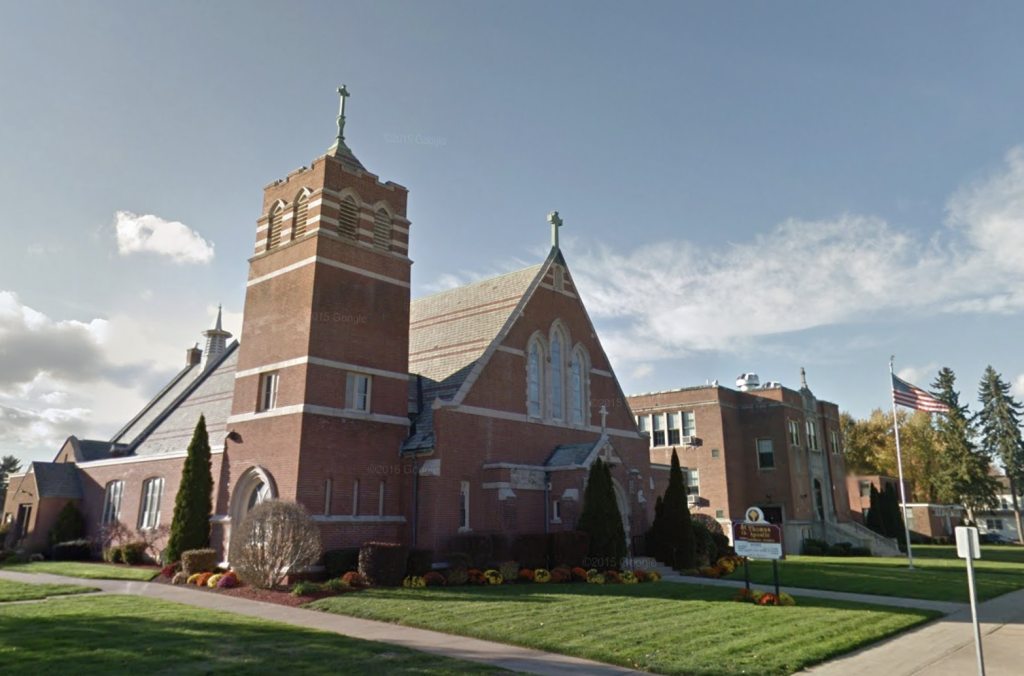
Podcast for St. Thomas of the Apostle Parish.
Episodes
Sunday Nov 22, 2020
Sunday Nov 22, 2020
A grieving mother stood beside her son's casket as mourners slowly passed by, offering their prayers and condolences. This young man had died in a tragic accident. Everyone who had gathered to pay their respects ached inside, wondering what they might say to this sorrowful mother. But she smiled at them through her tears, and she said, "At least I know where my son is right now."
The mourners looked a little puzzled, so she explained that a disheveled man hobbled in on crutches earlier that day. Even though he was choked up, he found the words to tell her that he just had to come and pay his respects. He sold newspapers and sometimes begged for spare change near the expressway entrance. He told her that every morning the woman's son would stop by. He always smiled, said hello, and asked how the man was doing. He usually had a cup of coffee for the man, and sometimes a sandwich. He treated him with great respect.
And those who came to offer words of comfort to this grieving mother were themselves comforted as they heard this story, which reminded them of the words of Jesus: "Come, you who are blessed by my Father. Inherit the kingdom prepared for you from the foundation of the world. For I was hungry and you gave me food, I was thirsty and you gave me drink, a stranger and you welcomed me."[1]
The family and friends who came to grieve that day walked away having had a final lesson in faith from this fine young man.
Some of us may use the yardstick of the Ten Commandments or Church laws or even civil ones to measure our virtue. If we have kept these obligations and refrained from breaking these prohibitions, we might ask, "Isn't that enough to get into heaven?" It might be if heaven were a game, but Jesus broadened His followers' requirements when He made the command to love a higher and more binding principle than the observance of laws. When we have fulfilled every detail of the rules, we have only laid the foundation for a lifestyle of loving. With every commandment kept, we still need to build the house.
Today's Gospel and the story of the grieving mother who hears of her son's good actions remind us of the need to be the hands and feet and voice of our loving Savior in the world today. Jesus calls us to much more than piety; He calls us to action so that those in need may experience the love, mercy, and compassion of God through our words and actions.
We have been given an immense challenge and responsibility, by our Baptism, to be the Church, the people of God, and to assist the Church in our responsibility to feed the hungry, clothe the naked, care for those who are ill, welcome the stranger, and to help the prisoner in the ways of justice and rehabilitation.
As we begin a new liturgical year next Sunday, as we await the celebration of the birth of our Savior, let us resolve to answer, with all our hearts, the Gospel call to stewardship, being instruments of God's loving presence in our world.+
[1] Luke 25:34-35
Saturday Nov 21, 2020
Saturday Nov 21, 2020
Today the Church celebrates that from the time she was a young child, and for the rest of her life, Mary was totally committed to letting God’s plan be realized through her life. As a result of her devoutness throughout her life, she was called by God to become a living temple, a place where God was present in a unique way. God dwelled within her, in a real physical sense, through Jesus, because she was fully open to divine inspiration from the earliest years of her life.
Our Blessed Mother is the first and most perfect example of those to whom Jesus refers in today’s gospel passage as “doing the will of my Father in heaven.” Again, today’s memorial celebrates how, from childhood Mary was devoted to the will of God and was, therefore, fit to become the temple of God’s Son as He prepared to enter this world.
We, too, are called by God the Father to do His will so that we, too, may be temples of the LORD, carrying the LORD’s presence to others. This memorial echoes St. Paul’s words, “Do you not know that you are the temple of God and that the Spirit of God dwells in you?”
And so, we ask our Blessed Mother to pray for us so that we may always do the will of the Father and so become temples of the living God, that God’s Spirit may truly dwell in us. +
Friday Nov 20, 2020
Friday Nov 20, 2020
We have only a few stories about Jesus’ life before He began His ministry. We really have nothing from the time He was about twelve until the time He was about thirty. And those last three years had a real whirlwind quality about them.
We see this in today’s Gospel, as we do in so many stories about Jesus whenever He visited Jerusalem. Even early secular works like that of Flavius Josephus, a first-century Jewish historian, refer to the fire with which Jesus was filled in His visits to Jerusalem.
In today’s passage, Jesus goes after those who are looked upon as “pillars of society” and expresses His righteous anger over the disrespectful way that they use the Temple for their own gain. At the same time, He has been speaking well of those on whom these “pillars” look down.
In His short time in ministry, Jesus has really upset the apple cart, which has led to a desire among the leaders, whom He has challenged, to eliminate Him from life.
Indeed, the task of evangelization can often times put us at odds with others, even with those whom we love most. May we never turn away from our Baptismal call to spread the Good News of the Gospel, and may we live the message and spirit of that Good News in our everyday lives, that our actions and attitudes may give greater power to our words. +
Thursday Nov 19, 2020
Thursday Nov 19, 2020
In today's Gospel passage, we encounter Jesus in the depths of sadness because Jerusalem did not welcome Him and did not recognize God the Father working in Him. As a result, the Holy City will suffer the consequences of denying Him. In the pain of rejection, Jesus sheds real tears. His life's mission was to unveil God's welcoming love for all people. However, many of them rejected the Good News he so wanted to give to them.
In this particular passage, Jesus appears to be helpless in the face of such rejection. He grieves the results of human stubbornness. He went to Jerusalem to seek and save the lost, but He did not force His hope on the people.
Jesus relates to us in the same way; He does not force us to accept Him. To be transformed by His love, we must be responsive to Him. He invites us into his friendship, but every so often, we need to stop and say to Him, like the disciples on the road to Emmaus, "Stay with us, for it is nearly evening and the day is almost over." (Luke 24:29)+
Wednesday Nov 18, 2020
Wednesday Nov 18, 2020
The parable we just heard from Luke’s Gospel tries to counter the expectation that the coming of God’s kingdom was imminent. The people following Jesus were fascinated with thoughts about the future. So, in telling this parable, Jesus tried to turn their attention to the present.
The parable is about a nobleman who went away to a foreign country and eventually returned to his land as king. However, his servants’ attention should have focused not on the day of his return but on their present needs, using the resources he left them for what they truly needed in the present.
Too much concern about the future can distract us from the present. What matters is the generous and courageous use of the gifts and resources the LORD has given us for the service of others who are here right now. This is the approach to life that the LORD is urging us to take. The servant who put his gold coin away for safety, because of his fear, goes against this approach to life. In our use of our gifts and resources, we may fail and make mistakes, but the truth is that failure is preferable to fearful inactivity. +
Tuesday Nov 17, 2020
Tuesday Nov 17, 2020
Saint Teresa of Calcutta often said that God doesn’t call us to be successful but to be faithful. Every one of us can respond to the great love of God in some positive, meaningful way.
The greatness of our efforts is not measured in the scale or the scope of what we do but in the sincerity of our commitment to bring that love into the lives of others.
In today’s Gospel, Jesus affirms and upholds the compassion and integrity of the shunned tax collector Zacchaeus, transforming the life of the man in the sycamore tree. We are called by Christ in the same way: He calls us to respond to the love of God in whatever way we can and to enable and encourage others to do the same, thus transforming the darkness that engulfs us into the light of God’s peace, love, and justice. +
Monday Nov 16, 2020
Monday Nov 16, 2020
In the story of healing that we just heard in our Gospel passage, there is something appealing about the blind man, especially in his perseverance in prayer. When he prayed aloud, “Jesus, Son of David, have pity on me,” the people around Jesus admonished him and told him to be still, but he shouted even louder, “Son of David, have pity on me!” He was not discouraged by other people’s intolerance; he showed us how to be persevering in our prayer.
The blind man’s prayer was rooted in his need to see with his physical eyes once again. Our most genuine prayers to the LORD are motivated by needs found in the depths of our hearts and souls. By voicing those needs to God, we beg Him to respond to our requests, just as Jesus responded to the request of the blind man.
The blind man did not stop praying after his sight was restored but his prayer did change. After his healing, he followed Jesus, giving praise to God. His prayer was transformed from a prayer of petition to a prayer of praise.
We should note that the prayer of praise may not come to us as naturally or as readily as the prayer of petition but all of us have something for which we should be thankful to God. The blind man teaches us to be mindful of this kind of prayer, too, in response to how the LORD has blessed and continues to bless us in our lives. +
Sunday Nov 15, 2020
Sunday Nov 15, 2020
There is a story of a village chief who had three sons. Each of them had a unique talent. The oldest son had a talent for raising olive trees and he would trade the oil for various products. The second son was a shepherd and he had a talent for raising very healthy sheep. The third son was a dancer; he would entertain people and help to raise their spirits when they were feeling down.
One day the father had to leave on a long journey; he called his sons together and said, "The villagers are depending on you. Each of you has a special talent. See that you use your talents wisely and well so that, when I return, I will find our village happy and prosperous." He then departed.
For a while, things went well. Then the winter winds began to blow, and blizzards came. The village ran out of firewood. So, the people began to cut down the olive trees. The first son knew that the people would die without heat. So, he helped cut down his own trees.
Icy roads made it impossible for traders to reach the village and food became scarce. So, the villagers suggested that they kill the sheep for food. The second son refused but finally gave in recognizing that the sheep would be worthless if all the people died of hunger.
In this way, the villagers had just enough firewood and food, but the bitter winter had broken their spirits. They began to lose hope. Soon, they deserted the village in search of a better environment.
As spring arrived, so too did the chief. As he entered the village, he saw that smoke was rising from only his chimney. When he reached the house, he asked his sons, “What happened?"
The first son said, "Father, forgive me. The people were freezing and begged me to cut down the olive trees and so I did. I am no longer fit to be an orchard keeper." The second son said, "Don't be angry, father, the people were starving, so I sent my flock to the slaughter.
The chief understood and told his two oldest sons that they did the best they could. He told them that they had used their talents wisely in trying to save the people. Then he asked where all the people were.
The third son said, "Welcome home. It has been a hard time. I thought it would be insensitive to dance during such suffering. Besides, I needed to conserve my strength so that I could dance for you when you came home."
So, the father told his son to dance, to fill the village with hope, courage, and joy again. But when he stood up, his legs were sore and stiff from lack of use and he could not dance. The father became very sad. He said to his son, "Our village was strong. It could survive the lack of fuel and food, but not without hope. Because you failed to use your talent wisely and well, our people gave up what little hope they had left.”
The story in our Gospel reading today and this story contain the same message: God gives each of us certain gifts, talents, and strengths and we must recognize them, develop them, and use them to bring about the kingdom of God on earth. To use our gifts and talents for our own purposes or to not use them at all presents a serious problem in our relationship with God, our Church, and our family and friends.
We are called to recognize the gifts and talents God has given to us and to discern how to use them to do the work of the LORD. We may think we have little to offer, but that is never the case. God has given each of us the gifts of life and faith to share with others. We share these gifts through the unique talents that God has given to each person. We pray today and always for the wisdom and courage to use our talents to fulfill the mission that God has given to each one of us.+
Saturday Nov 14, 2020
Saturday Nov 14, 2020
The experience of prayer can be a confusing and frustrating thing for us. So much of our prayer is intercessory prayer, asking God for certain things, for certain outcomes to situations, and yet, we know that God doesn’t direct every thought and action in our world; we know that we don’t always get that for which we pray.
Still, we are called to be persistent in our prayer, to trust that God hears our prayers and that God answers our prayers. However, we do need to pray for things that are possible and we need to pray as Jesus taught us: in praise of and thanks to God, that God’s will take precedence over our will, that we be nourished each day in body, mind, and soul, that we may have the grace to be forgiving people and that we may be forgiven for our transgressions, and that we may have strength in temptation, that we may always choose the good.
If our prayer is that God be with us at all moments of our lives; if our prayer is that God will give us wisdom, courage, and strength in our difficulties; if our prayer is that the Holy Spirit will open our minds and hearts to the presence of God in all things, then we can be sure that our prayers are, indeed, answered and that the grace of God will truly help us in our lives. +
Friday Nov 13, 2020
Friday Nov 13, 2020
There is a true story about a man who was away on a business trip and was using a rental car on a highway that was a toll road. In the process of driving, he kept going through tollbooths without paying because he was used to doing that at home as his tolls were tracked through his transponder and paid through his credit card. After he went through a couple of tollbooths without paying, he realized that there was no transponder in the car and that he probably should stop. But he kept going through the tollbooths anyway, figuring that either the rental company would pay the tolls or that the state wouldn’t bother billing him for what was most likely a small amount.
A few months passed and the man received a toll violation notice. When he opened it up and read the bill, he found that he was right about the small amount of the tolls; they came to a total of $3.90. However, he blew through five toll booths and that cost him $20 each, for a total bill of $103.90! Indeed, the state did catch up with him and, in the end, he paid a high price.
In a sense, that is what Jesus is warning us about in today’s Gospel passage. While it may seem like we have a lot of time and that, perhaps, our failures will not catch up with us, Jesus lets us know that our time may be short and that we can be sure that all that we have done in this life – both the good and the bad – will be dealt with at the end of time.
Some may look at this message as “fire and brimstone,” but it really comes out of Jesus’ love for us and out of His sincere desire that we join Him in Paradise one day.
Let us pray that we may see this message as one of hope and not one that is meant to scare us, and may each day be for us a day of preparation for the Day of the LORD. +